USDA Has Canceled Partnerships for Climate-Smart Commodities
May. 28, 2025
UPDATE: NEFF is pursuing opportunities through the alternative AMP program
Read More

Creating a Climate-Smart Forestry Incentive Program, 10 Million Acres in Size
One of NEFF’s boldest projects is ramping up, and in a way that helps us move forward with our 30 Percent Solution and its goal of expanding climate-smart forestry across the working-forest landscape of New England.
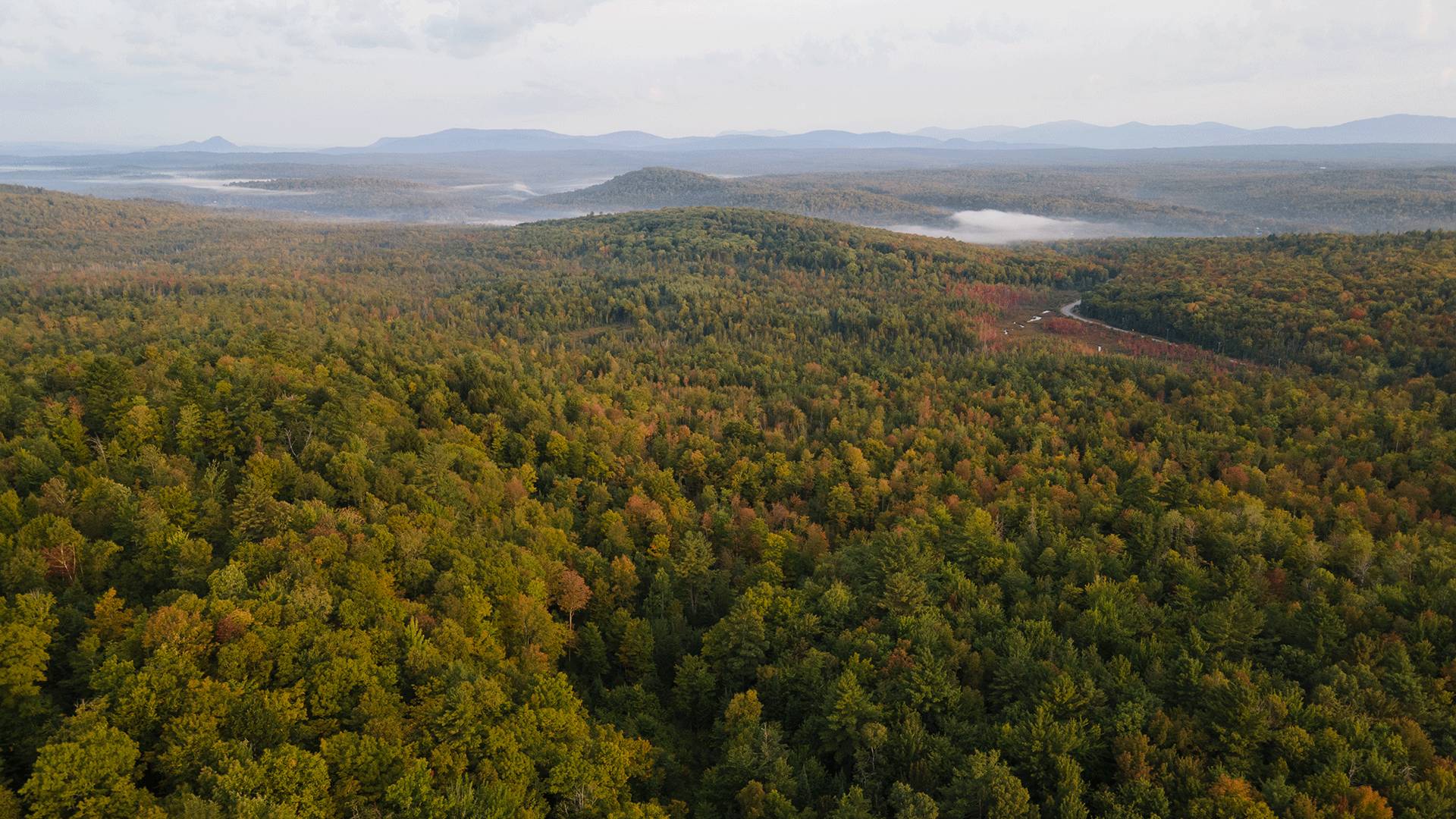
Through the Forest Carbon for Commercial Landowners (FCCL) Initiative, NEFF is working with commercial forestland owners and diverse partners to develop practical plans for getting climate-smart forestry implemented across 10 million acres of commercial forestland in Maine, which is home to some of the most widespread commercial harvesting in the northeastern U.S. This work has the potential to make an astonishing contribution to the region’s climate goals and is a major bright spot on the horizon.
The FCCL Initiative is conducting an ambitious study dedicated to creating an evergreen, or self-sustaining, incentive program for climate-smart forestry practices. It’s a creative and flexible project that includes research, analysis, program planning and design, and coalition building. It’s also years in the making.
The FCCL Steering Committee commissioned a report in 2021 to determine if 7+ million commercially owned acres in northern Maine could, over a 60-year period, sequester more carbon through improved forest management while maintaining harvest levels and profitability, and if so, how much it would cost to incentivize landowners to implement.
The FCCL Steering Committee issued the resulting 2023 Forest Carbon for Commercial Landowners report, which showed the forestlands could store at least 20 percent more carbon each year without reducing harvest levels. While the forestry practices needed to achieve this are not usually profitable in the short term, they provide longer-term financial benefits. In the near term, they require financial incentives to accomplish this change in practices.
Based on this 2023 report, the initiative has now launched a research and analysis stage where experts are developing a scalable and financially feasible forest-carbon program, primarily for commercial forestland owners in Maine. The final shape of the program won’t be determined until the study is completed, but it could range from supporting landowners’ efforts to develop their own carbon offset projects to the proposed third-party program you’ll read about below. Either way, the program will seek to:
Why maintain harvest levels? The wood we use needs to come from somewhere. If we lower or restrict harvesting in New England, then that wood will have to come from somewhere else. Carbon gains also have to be real to make progress on climate change — if we import wood, any atmospheric CO2 reductions we claimed from not harvesting our local trees would essentially be cancelled out by the carbon emissions of the other places supplying our wood. This principle is called “leakage,” and it occurs when attempts to reduce atmospheric CO2 in one place result in CO2 emissions increasing in another location or forestry sector.
As the region and nation shift to a sustainable, low-carbon economy that also maintains forest health and wildlife habitat, we need continued access to sustainably grown wood from climate-friendly forest management — and our best chance to do this starts here at home.
The 2023 report used one forest growth model, LANDIS, and one economic optimization model, Maine Integrated Forest System Model, to determine if landscape-scale forestry investment has merit, but it did not provide enough information to design a full-fledged program intended for 10 million acres.
So, the FCCL Initiative will deepen this work, refine and expand its research, and add economic and financial modeling on how to support the costs of changing forest management to increase carbon storage while maintaining harvest levels. As this research is ongoing, NEFF is working with its partners through the FCCL Steering Committee to build consensus around the design and launch of a self-sustaining incentive program.
There’s still much about the incentive program we don’t yet know, given that the stage-two study is ongoing, but the big picture is taking shape. The program should be nimble, nonprofit, financially self-sustaining, able to incentivize climate-smart practices across 10 million Maine acres, and able to be adapted to meet the needs of forested regions across the U.S.
NEFF sees great potential in the carbon markets as a funding source for an incentive program because Exemplary Forestry and other climate-smart approaches as laid out by FCCL deal with the market’s most difficult issues in a new way: the program’s carbon gains would be truly additional (above what would occur under business-as-usual management), and the program’s forestry approach would eliminate leakage. However, a self-sustaining incentive program is likely to incorporate multiple sources of funding, as documented in a series of case studies NEFF has conducted to learn from what else has been done around the world.
Regardless of what funding model we might pursue, it’s worth pausing to appreciate that NEFF and FCCL are developing a thorough, science-driven plan for mitigating an extraordinary amount of carbon pollution — in the hundreds of millions of metric tons. As our expert staff helps build this plan, please support their crucial work however you’re able, and remember — the 30 Percent Solution will soon have a path to implementation. We’re building a brighter future, right here at NEFF.
This is a pivotal moment. Your support will drive the next phase of NEFF’s climate work — transforming bold research into action across 10 million acres. Together, we can set a national example for how forests can shape a livable future.
Advance the next era of climate-smart forestry at newenglandforestry.org/donate