Forest Carbon for Commercial Landowners Report
Read More

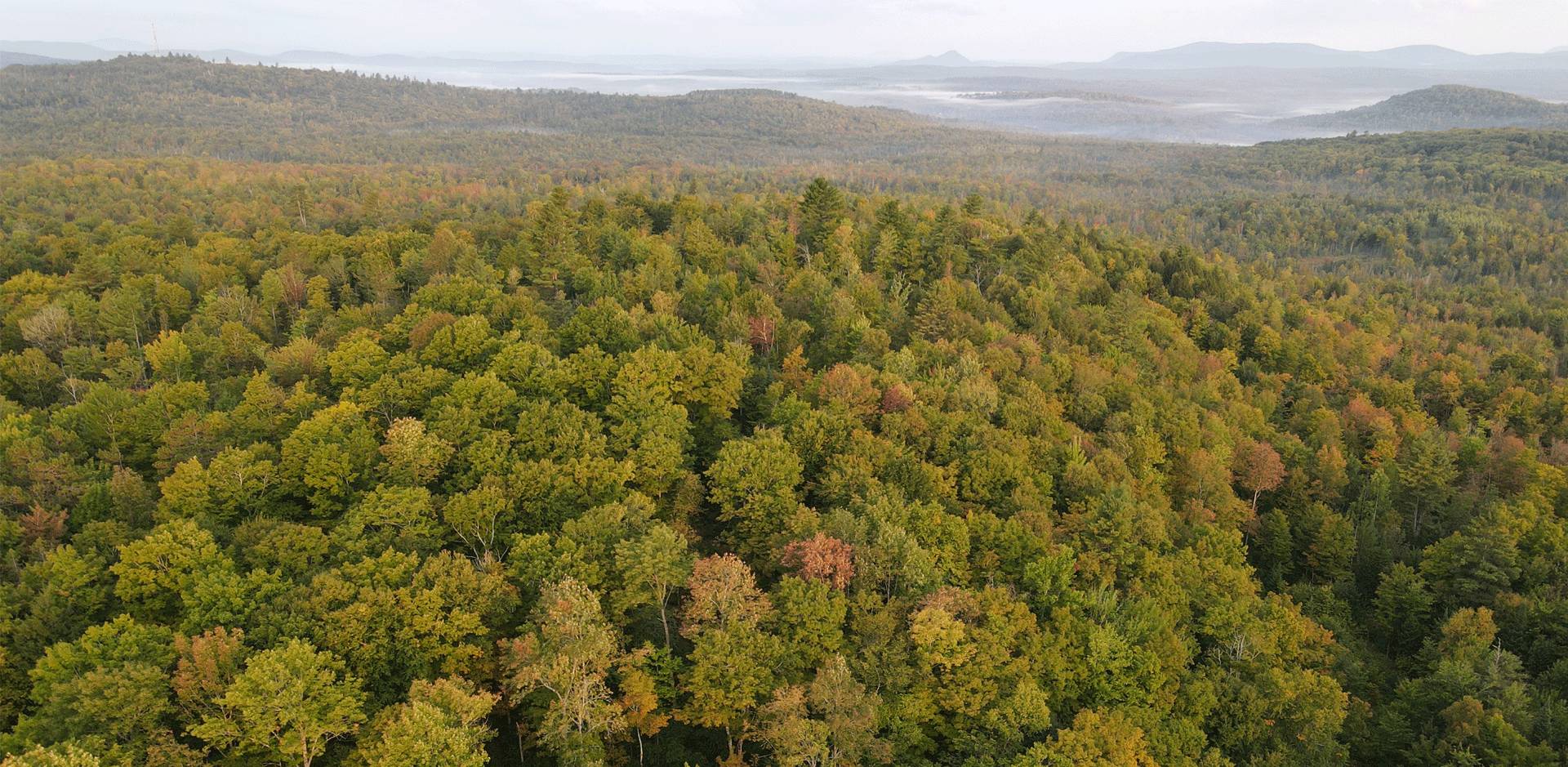
Maine, home to the most widespread commercial harvesting in the northeastern U.S., offers a significant climate opportunity: Implementing climate-smart forestry on commercial forestlands at a landscape scale.
Through the Forest Carbon for Commercial Landowners (FCCL) Initiative, NEFF is working with commercial forestland owners, scientists, and conservation interests to develop practical plans for getting climate-smart forestry up and running on 10+ million commercial acres in Maine. This work has the potential to make a very substantial contribution to the region’s climate goals.
NEFF staff members have learned many Maine commercial landowners would like to implement climate-smart forest management, but financial constraints limit widespread adoption.
The FCCL Initiative aims to create an evergreen, or self-sustaining, financial incentive program that would enable landowners to change the way forestry is practiced on Maine’s commercial lands to benefit the climate. It’s a creative and flexible project that includes research, analysis, program planning and design, and coalition building. It’s also years in the making, and split into three stages.
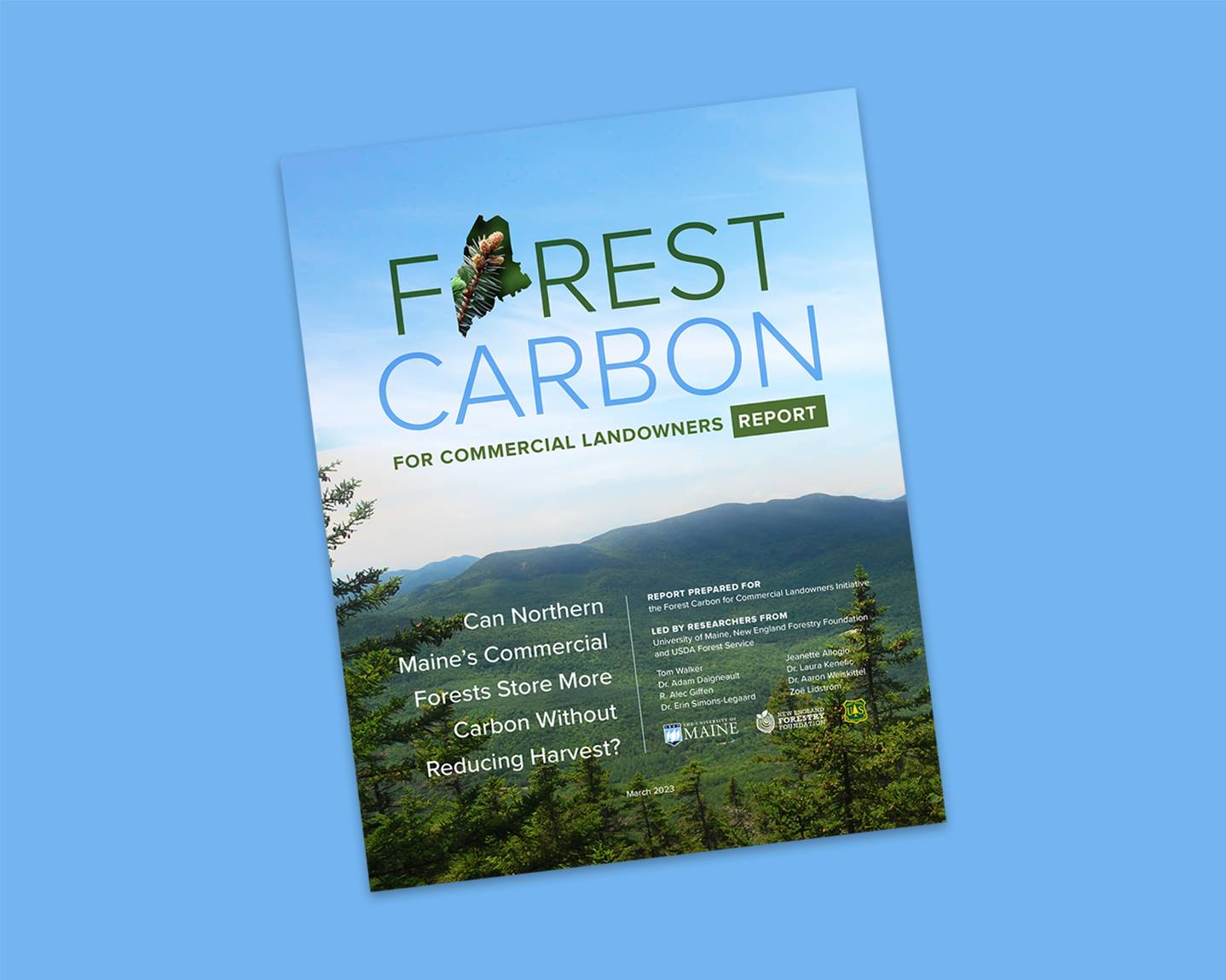
NEFF staff members partnered with landowners and scientists to develop the 2023 “Forest Carbon for Commercial Landowners” report, and have served on the FCCL Steering Committee, which includes conservationists, nonprofit organizations, scientists, and economists, as well as large forest landowners.
The Committee commissioned the report in 2021 to determine if 7+ million commercially owned timberland acres in northern Maine could sequester more carbon through climate-smart forest management while maintaining harvest levels and profitability, and if so, how much it would cost to incentivize landowners to implement.
The resulting report showed the forestlands could store at least 20 percent more carbon each year without reducing harvest levels. There is reason to believe these results may even underestimate the amount of carbon that could be stored by the investigated practices.
Based on the 2023 report, the initiative has now launched a research and analysis stage where experts, stakeholders, and commercial landowners are working to develop a scalable and financially feasible forest-carbon program, primarily for commercial forestland owners in Maine. The final shape of the program won’t be determined until the study is completed, but it could range from supporting landowners’ efforts to develop their own carbon offset projects, or partnering with existing programs, to the potential third-party program you’ll read about in the next tab. Either way, the program will seek to:
The 2023 report used one forest growth model, LANDIS, and one economic optimization model, Maine Integrated Forest System Model, to determine if landscape-scale forestry investment has merit; this was very useful, but it did not provide enough information to design a full-fledged program intended for 10 million acres of large commercial ownerships.
So, the FCCL Initiative will deepen this work, refine and expand its research, and add more refined economic and financial modeling on how to support the costs of changing forest management to increase carbon storage while maintaining harvest levels. As this research proceeds, NEFF is working with its FCCL partners to build consensus around the design and launch of a self-sustaining program.
The wood we all use needs to come from somewhere. If we lower or restrict harvesting in New England, then that wood will have to come from somewhere else. Carbon gains also have to be real to make progress on climate change — if we import wood, any atmospheric CO2 reductions we claimed from not harvesting our local trees could essentially be cancelled out by the carbon emissions of the other places supplying our wood. This principle is called “leakage,” and it occurs when attempts to reduce atmospheric CO2 in one place result in CO2 emissions increasing in another location or forestry sector.
As the stage-two study is ongoing, FCCL’s members are crafting their vision for this final stage and how it can best motivate and enable adoption of climate-smart forestry at scale in the Maine woods. However, some things are clear — the future program needs to be nimble, financially self-sustaining, able to incentivize climate-smart practices across 10 million Maine acres, and provide a model that could be adapted to meet the needs of forested regions across the U.S.
NEFF sees great potential in the carbon markets as a funding source for an incentive program because Exemplary Forestry and other climate-smart approaches as laid out by FCCL deal with the market’s most difficult issues in a new way: the program’s carbon gains would be truly additional (above what would occur under business-as-usual management), and the program’s forestry approach would be aimed at eliminating leakage. However, other sources of funding may prove essential to providing a viable financial model. These options are documented in a series of case studies NEFF has conducted to learn from what else has been done around the world.
Regardless of what funding model we might pursue, it’s worth pausing to appreciate that NEFF and FCCL are developing a thorough, science-driven plan for mitigating an extraordinary amount of carbon pollution — in the hundreds of millions of metric tons. As our expert staff helps build this plan alongside partners and stakeholders, please support their crucial work however you’re able, and remember — NEFF’s 30 Percent Solution will soon have a path to implementation. We’re building a brighter future, right here at NEFF.
Your support will drive the next phase of NEFF’s climate work — transforming bold research into action across 10 million acres. Together, we can set a national example for how forests create a livable future.
High- and low-res PDF versions of the 2023 Forest Carbon for Commercial Landowners report are available to read and download, as are the report’s appendices.