Landmark Deal Marks Step Toward Permanent Protection for 500 Acres of Rare Oldest Forest in Northern Maine
Jun. 23, 2026
NEFF and Irving Woodlands Maine have signed an agreement to defer timber…
Read More

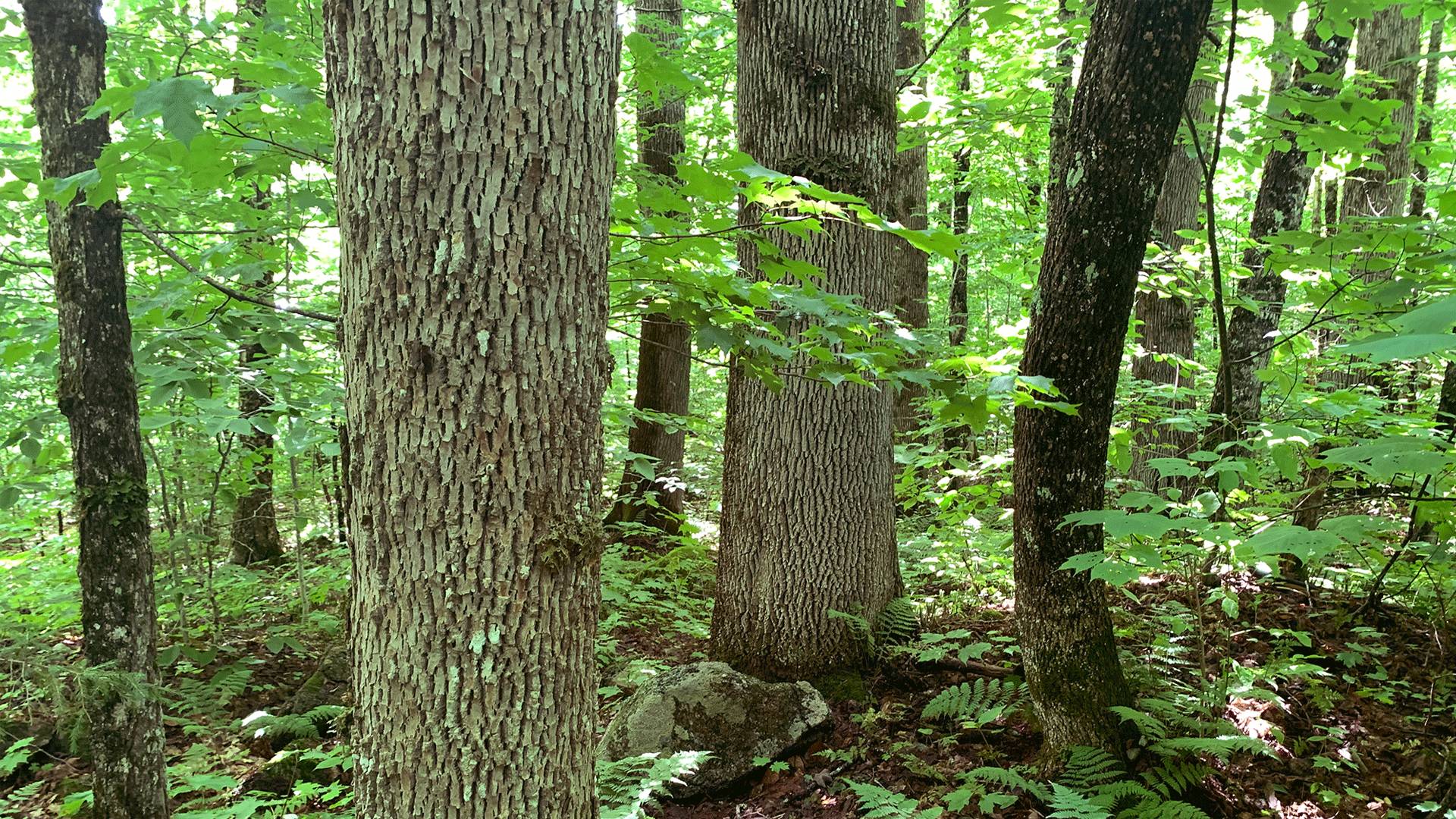
It turns out there are 191,500 combined acres of late-successional — meaning at least 150 years old — and old-growth forests in the private industrial forests of northern Maine. We have the organization Our Climate Common to thank for this shocking news, as they identified the long-lived trees in question and announced their findings in the 2024 report, Using LiDAR to Map, Quantify, and Conserve Late-successional Forest in Maine.
New England Forestry Foundation (NEFF), who has worked with Our Climate Common for years, knew these newly discovered forests presented a crucial opportunity to both mitigate climate change and benefit biodiversity — and took action. With $4.3 million in funding from a US Forest Service grant, NEFF has launched a program to help landowners protect Maine’s oldest forests and implement forestry practices on nearby lands that will help grow more commercial timber and store more carbon in wood products.
Interested Maine landowners can find more detailed information at the bottom of the page.
Forest stands of more than 150 years of age are the powerhouses of forest carbon and biodiversity, as they store far more carbon than any other stand type and provide key habitats for a wide range of sensitive fungi, lichen, bryophyte, insect, bird, and mammal species. An acre of older forest stores approximately five times more carbon than the average wooded acre in the 4.3 million acres of commercial forests in Maine’s unorganized townships.
But these critically important late-successional and old-growth forests (sometimes abbreviated as LSOG forests) currently make up less than 4 percent of the area.
Our Climate Common reports LSOG forests are being harvested at a much faster rate than the rest of the forested landscape and, unless LSOG receives protection, that most such stands remaining on private lands will be harvested in the next two decades.
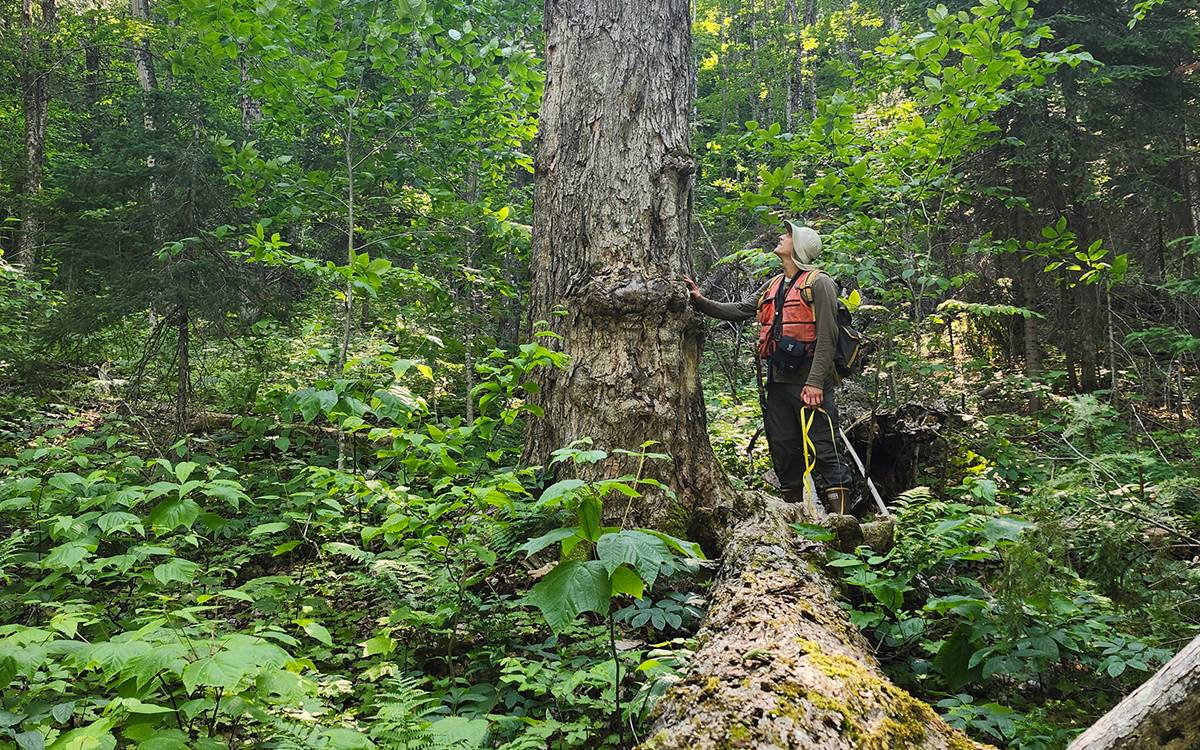
NEFF’s project targets stands in imminent danger of harvest, meaning, prioritizing forests that were included in a multi-year or active harvest plan before the announcement of NEFF’s project.
NEFF experts built off Our Climate Common’s exceptional research and advocacy work to devise an ambitious, three-pronged program.
This new undertaking is a pilot project. The US Forest Service grant provides an opportunity to experiment with landowner agreements and develop recommendations on how to scale up conservation and sustainable management opportunities for Maine’s oldest forests.
The Our Climate Common report “Using LiDAR to Map, Quantify, and Conserve Late-successional Forest in Maine” was authored by:
John Hagan, Ph.D., President, Our Climate Common
Benjamin Shamgochian, Research Associate, Our Climate Common
Molly Taylor, Ph.D. Student, Tufts University
Michael Reed, Ph.D., Professor, Tufts University
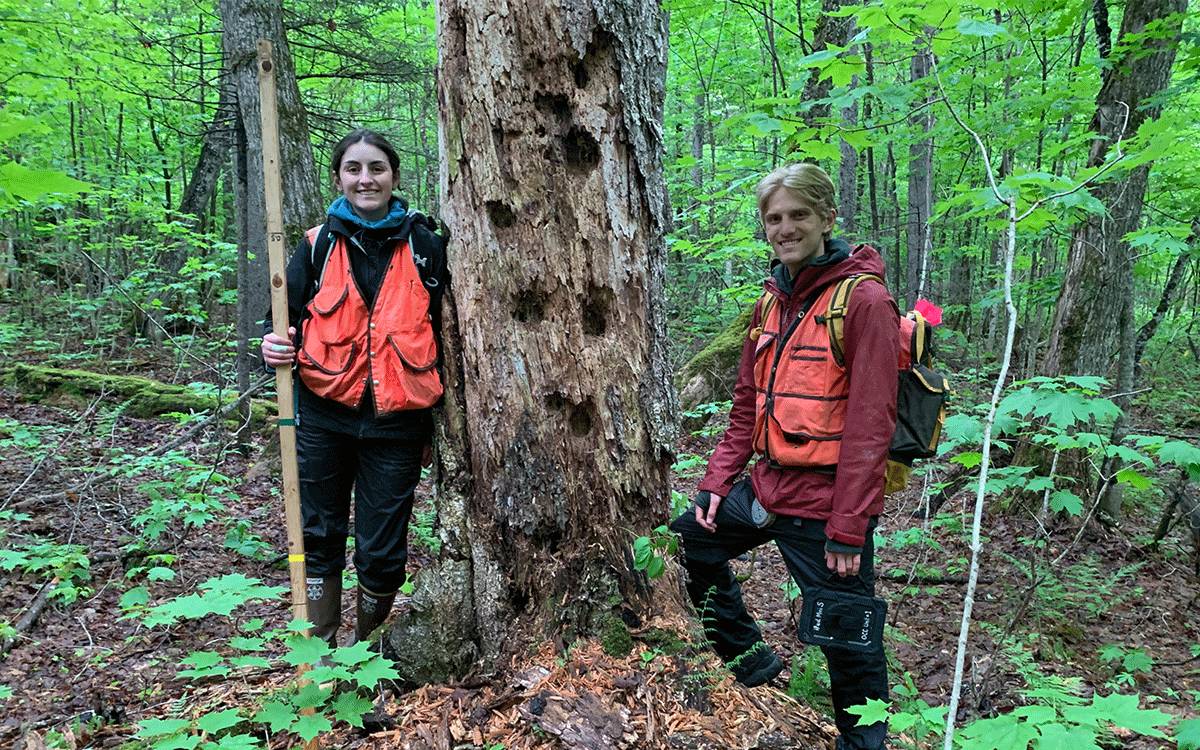
More in-depth and technical information about the program is available below for Maine forestland owners. Landowners who have questions or are interested in participating may contact NEFF Senior Forester Brian Milakovsky at [email protected].
NEFF is working to aggregate resources from other forestry and climate programs, private conservation funds, and the growing markets for carbon and ecosystem-service credits to offer landowners incentives to protect significantly more acres of LSOG while also maintaining wood supply and livelihoods. NEFF’s grant provides an opportunity to begin experimenting in this direction with willing landowners. To be clear, this trial program is designed to delay (or defer) harvest of LSOG forestlands while longer-term conservation strategies are developed in collaboration with landowners.
NEFF will prioritize LSOG forests that were included in a multi-year or operational harvest plan before the announcement of this project. We will discuss with willing landowners the potential to receive funds from this grant to defer timber harvesting in LSOG stands for varying periods, while also incentivizing the expansion of silvicultural practices in younger forests at a rate of approximately 2.5-3 acres for each acre of “deferred” LSOG.
The amount of the deferral incentive will be negotiated individually and will depend both on the timber values present and on the duration of the deferral. Each agreement will impact at least several hundred acres.
The intention of incentivizing harvest deferrals is to use the resulting period to bring conservation funds to the table for long-term protection, or for the carbon and ecosystem-service markets to become sufficiently lucrative and accessible to incentivize maintaining the exceptional carbon stocks in LSOG. According to calculations by Our Climate Common, today’s per-ton carbon prices for Improved Forest Management projects may already make conservation of LSOG a competitive option, but participation in carbon markets is still modest in Maine, and many landowners are not yet prepared to use these opportunities.
The incentives for silvicultural practices to accelerate growth of quality timber and to maintain wood supply from non-LSOG stands are intended to cover 70 percent of the full cost of such practices as planting high-yield spruce plantations, pre-commercial thinning, early commercial thinning, crop tree release, beech control, and other timber stand improvement. The goal is to more rapidly replace timber volumes that were not harvested from LSOG forests and avoid “leakage” of these harvest volumes to other regions, where the climate consequences are unknown and where the economic benefits will not accrue to Maine.
NEFF and its partners will also work to quantify and address the impact this model would have on logging contractors should it successfully scale up. The profitability and operating expenses of logging contractors could be negatively impacted by an increase in the proportion of early commercial thinning or similar small-diameter harvests in their wood “diet.” NEFF believes that if such a shift is being stimulated by taxpayer funds, private conservation or carbon market funds (such as through our LSOG grant), then we must also provide financial incentives to contractors to help them with this transition. We must find ways to make progress on Maine’s climate and biodiversity goals that do not undermine the viability of our logging workforce.
NEFF recognizes that economic and wood supply constraints mean that many LSOG forests will remain under management, even when conservation incentives are available. NEFF can also work with landowners interested in transitioning from even-aged prescriptions to other silvicultural options that allow for maintenance of the structural complexity of LSOG forests while still harvesting commercial timber, such as the irregular shelterwood (expanding gap harvesting) or selection with variable retention. NEFF can also incentivize retention of permanent legacy trees with exceptional carbon storage and biodiversity value. Such incentives aim to compensate landowners for foregone revenue from the transition from one prescription to another.
Achieving this range of goals and considering so many interests is a challenge, but NEFF is excited to tackle it with Maine landowners. This grant provides an opportunity to experiment with three to five “deals” and develop recommendations on how to scale up conservation and sustainable management opportunities for Maine’s oldest forests.