New England Forestry Foundation
Lauren Owens Lambert

Forest Management

Exemplary Forestry Resources and Glossary

A One-Stop Shop

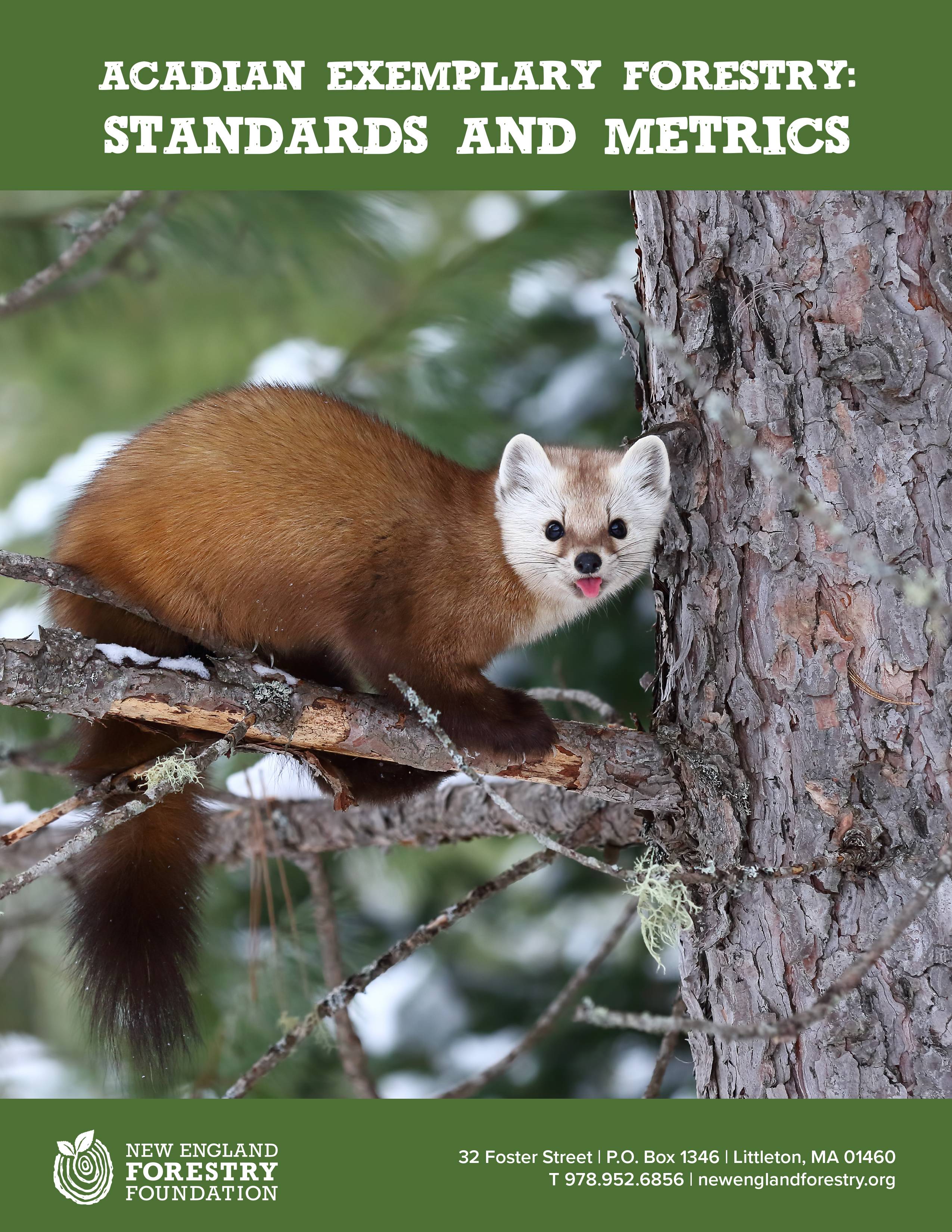
On this page, visitors will find NEFF’s standard definition of Exemplary Forestry, all PDF Exemplary Forestry reports and accompanying documentation, a glossary of forestry terms used in Exemplary Forestry documents and across the website, and videos about forestry and climate-smart wood.

Standard Definition

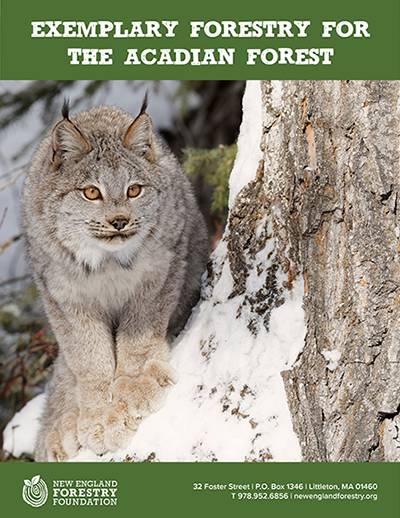
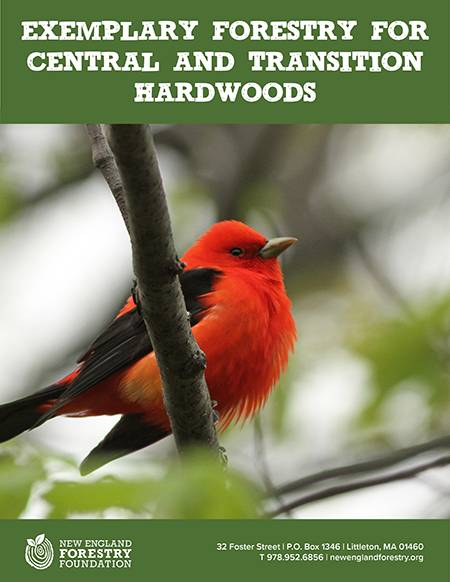
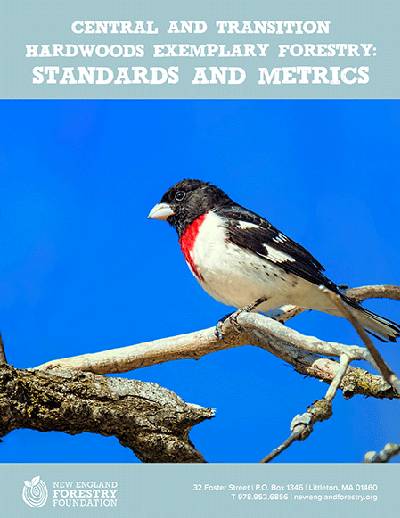
Exemplary Forestry is a forest management approach created by New England Forestry Foundation (NEFF) that prioritizes forests’ long-term health and outlines the highest standards of sustainability currently available to the region’s forest owners for three key goals: enhancing the role forests can play to mitigate climate change, improving wildlife habitat and biodiversity, and growing and harvesting more sustainably produced wood. NEFF’s Exemplary Forestry approaches—Exemplary Forestry for the Acadian Forest and Exemplary Forestry for Central and Transition Hardwoods—are tailored to the conditions of a particular New England forest region or forest type.

Forest Management Glossary

For readers unfamiliar with the technical aspects of forestry and how forestry impacts climate change, this glossary of terms as used by NEFF may prove useful when reading the Exemplary Forestry standards and accompanying materials.

NEFF staff provided the definitions marked by an asterisk, and most other definitions were taken from Thom J. McEvoy’s Introduction to Forest Ecology and Silviculture-Third Edition. A few have in-line citations.

Note: Dbh is an abbreviation for “diameter at breast height,” or 4.5 feet above ground.

  • Additionality: the extent to which a given climate benefit would not have occurred in the absence of a proposed action.
  • B-line stocking: The number of trees per acre for any given mean diameter that results in trees having no crown competition, but also no wasted space.*
  • Best Management Practices: Guidelines for how to conduct an activity in an environmentally responsible manner, such as installing drainage control on a forest road. Best management practices are typically defined by state agencies in each state.*
  • Continuous cover: a silvicultural system involving frequent, light harvests to improve the forest over time while also producing timber.
  • Consulting forester: A consulting forester is a private forester, not affiliated with a mill or government agency, that helps a landowner meet their objectives for the land and the forest. They should be licensed in the states in which they practice. Using their knowledge of silviculture, wildlife habitat, and harvesting operations, a consulting forester can recommend a course of action to best meet a landowner’s goals.*
  • Cord: The volume of wood equivalent to that found in firewood stacked 4’x4’x8’, or 128 cubic feet of wood.*
  • Crop tree: a healthy, vigorously growing, straight tree that a forester selects to grow bigger and faster for the future to produce high-quality, high-value timber. Competing trees are carefully removed so the crop tree canopy gets more sunlight, space, and nutrients to thrive.*
  • Crop tree release: An intermediate silvicultural treatment aimed at providing increased growing space and resources to selected trees (aka “crop trees”) through the removal of crown competition from adjacent trees to meet management objectives. | Technical guide to crop tree release in hardwood forests. Publication PB1774. Knoxville, TN: University of Tennessee Extension. 24 p.
  • Early commercial thinning: An intermediate thinning treatment in a young stand that reduces stand density to minimize competition and accelerate growth of residual trees and often yields little to no saleable products.*
  • Even-aged management: A timber management method that produces a forest or stand composed of trees having relatively small differences in age. The difference in age between trees forming the main canopy level of a stand usually does not exceed 20 percent of the age of the stand at rotation age.
  • Forest management: Through forest management, a person or organization takes a thoughtful, considered approach to the long-term stewardship of a forest’s natural resources to meet specific goals. Goals can vary widely depending on the management project, and may include wood production, improving wildlife habitat, and protecting the forest’s interconnected waterways. Forest management and forestry are conducted by licensed foresters, and are umbrella terms that encompass many different ways of treating a forest.
  • Forest stand: A community of trees occupying a specific area and sufficiently uniform in composition, age, arrangement, and condition as to be distinguishable from the forest on adjacent areas.
  • Irregular Shelterwood: A silvicultural system involving multiple partial harvests spread unequally across a stand area over time while providing shelter to the natural regeneration, resulting in an eventually uneven-aged stand with a varied (aka “irregular”) tree size distribution. | The irregular shelterwood system: review, classification, and potential application to forests affected by partial disturbances. Journal of Forestry, 107(8), 405-413.
  • Leakage: The spillover of in-forest carbon sequestration gains and losses from one economic market to another, given that the wood products we all use have to come from somewhere. If the United States or a region in the U.S. reduced the amount of wood it produced, any progress we claimed to make in reducing global atmospheric CO2 levels by storing more carbon in our unharvested trees would, in practice, be eclipsed by CO2 emissions from other forestry markets that increased harvesting to meet our unchanged demand for wood products.*
  • Legacy tree: A tree of critical value left standing during a timber harvest to grow forever. The tree’s value can include serving as an ideal seed source, contributing to tree species biodiversity, providing wildlife habitat, and supporting general biodiversity in managed forests. Examples include super canopy trees, trees with large crowns suitable for raptor nesting, trees with large cavities used by wildlife to rest and raise their young, and key mast trees (trees that provide food to wild animals), and more.*
  • Patch irregular shelterwood: Creating small gaps in the canopy (generally less than one acre in size) to regenerate a forest stand in patches that are expanded over time.
  • Planting: the artificial regeneration of tree seedlings via manual or mechanical planting techniques to meet objectives such as ecological restoration or species composition goals.*
  • Pole timber: A dbh size class representing trees that are usually more than four inches dbh but less than ten.
  • Pre-commercial thinning: An intermediate treatment in a young stand that does not yield any saleable products.
  • Regeneration: The natural or artificial renewal of trees in a stand.
  • Saplings: Generally refers to a tree at least six feet tall but with a dbh less than five inches and greater than one inch.
  • Sawtimber: Trees that are 12+ inches in diameter at chest height and big enough to produce lumber,* or trees that have obtained a minimum dbh that can be felled and processed into sawlogs.
  • Sawlog: a log considered suitable in size and quality for producing lumber.
  • Seedlings: Generally refers to trees less than 4.5 feet tall.
  • Shelterwood: A silvicultural system involving two or more partial harvests that gradually open a stand over time while providing shelter to the natural regeneration, resulting in an eventual new even-aged stand.*
  • Silviculture: The art and science of growing trees for timber and other values.*
  • Stocking: Amount of wood growing on a given area of land, calculated based on the number and size of trees per unit area. Stocking is expressed as volume per unit of area, for example cords per acre.*
  • Thinning: Generally, a reduction in the number of trees in an immature forest stand to reduce tree density and concentrate growth potential on fewer, higher quality trees.
  • Third-party certification: An official review of management practices on a particular property by an independent body for adherence to standards for sustainability.*
  • Uneven-aged or all-aged management: A timber management method that produces a stand composed of a wide range of ages.
  • Waterbar: A structure used to divert water off of a road to prevent erosion.*
  • Wood quality: Higher-quality timber includes logs suitable for veneer and sawlogs without significant defects like knots. Lower-quality timber includes pulpwood and, at the extreme end, wood suitable only to be used as fuel or ground for mulch.*

Video Gallery

Take a fun and introductory look at Exemplary Forestry. If we take care of the region’s forests, they’ll take care of us, right when we need it the most.

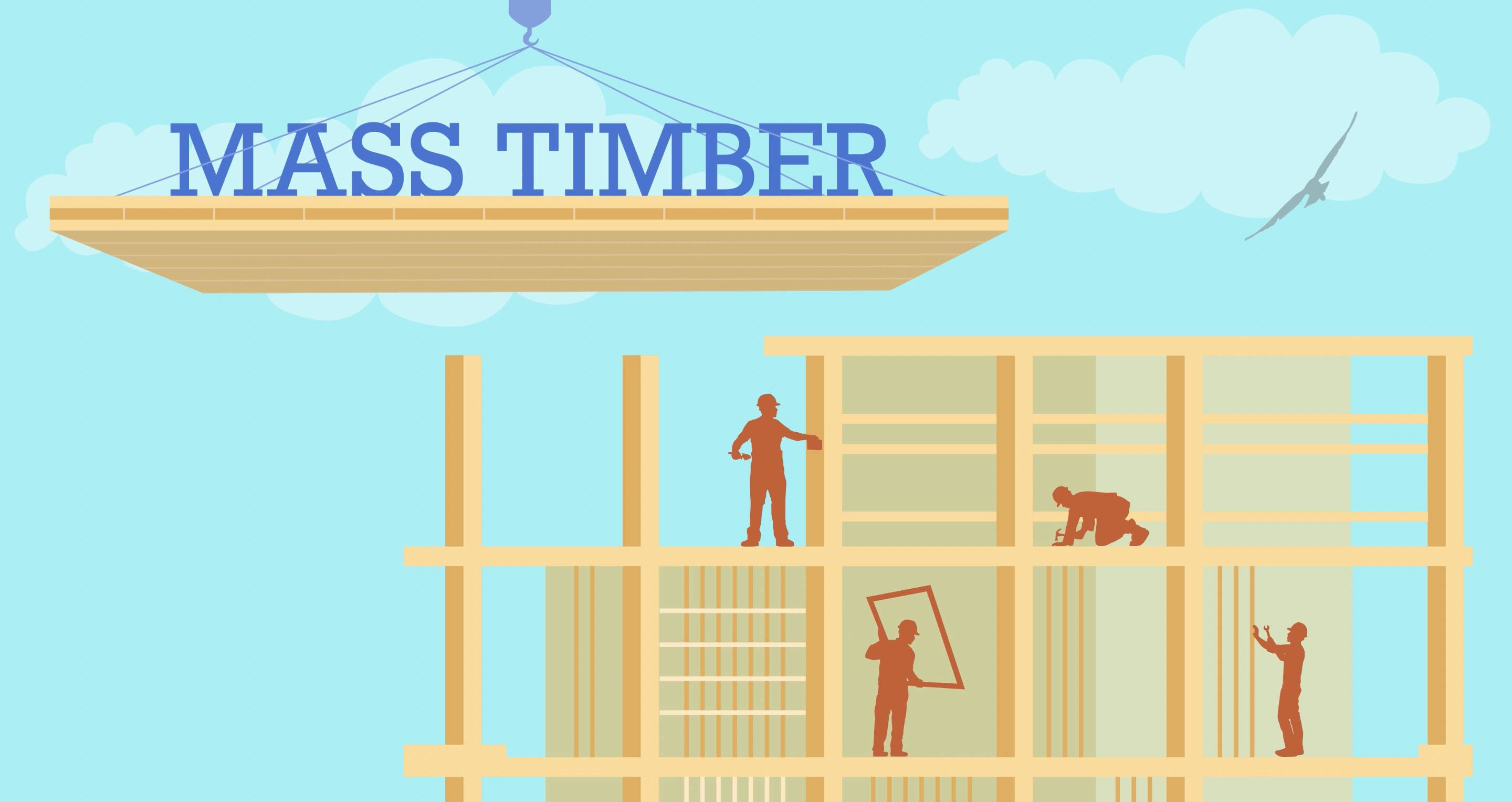
First, learn how sustainable wood produced by climate-smart management approaches like Exemplary Forestry makes mass timber a particularly powerful tool in the fight against climate change. Then, watch Exemplary Forestry go global. In support of the global Sustainable Markets Initiative, now-King Charles launched a video platform called RE:TV in 2020 that showcases inspiring stories of sustainability innovation and ingenuity, including NEFF’s Exemplary Forestry work.
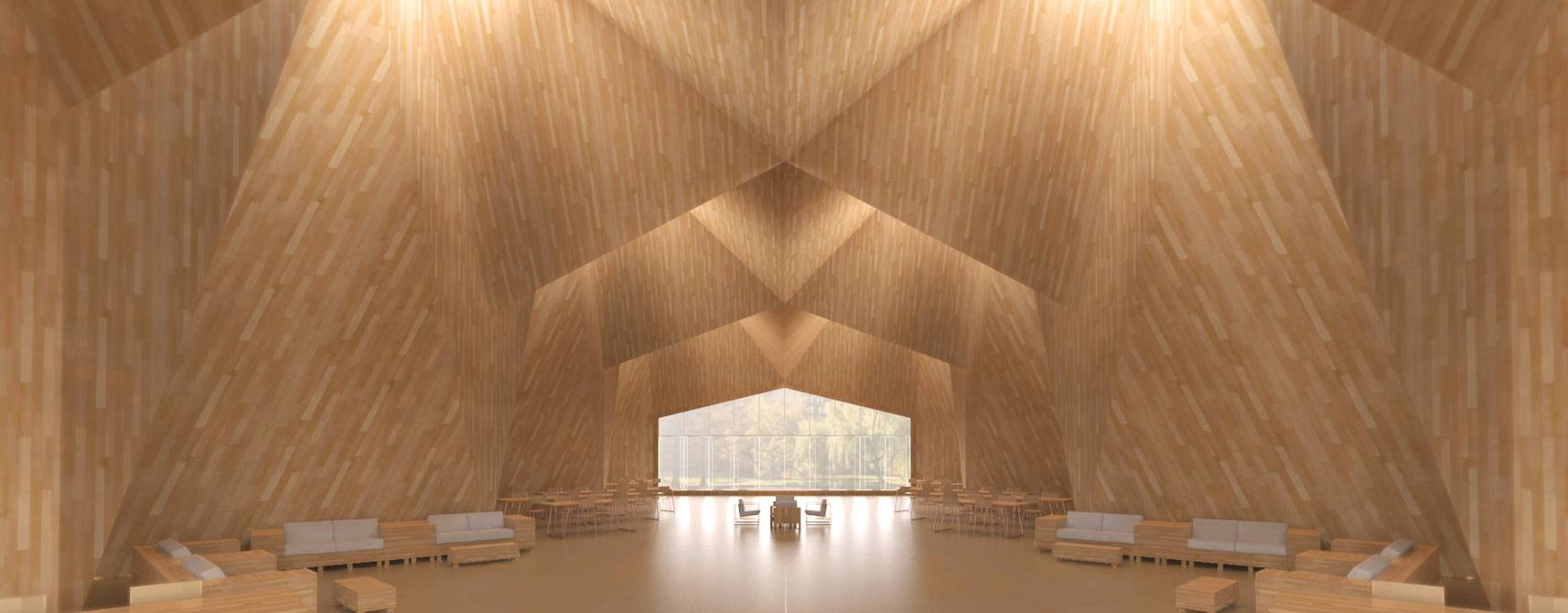
Design of a building interior made with sustainable cross-laminated timber

A NEFF Climate Initiative

Build It With Wood

Build It With Wood’s standalone website provides resources for experts like construction firms and forestland owners. Members of the public are also encouraged to explore, and to help us build a climate-secure future with wood.