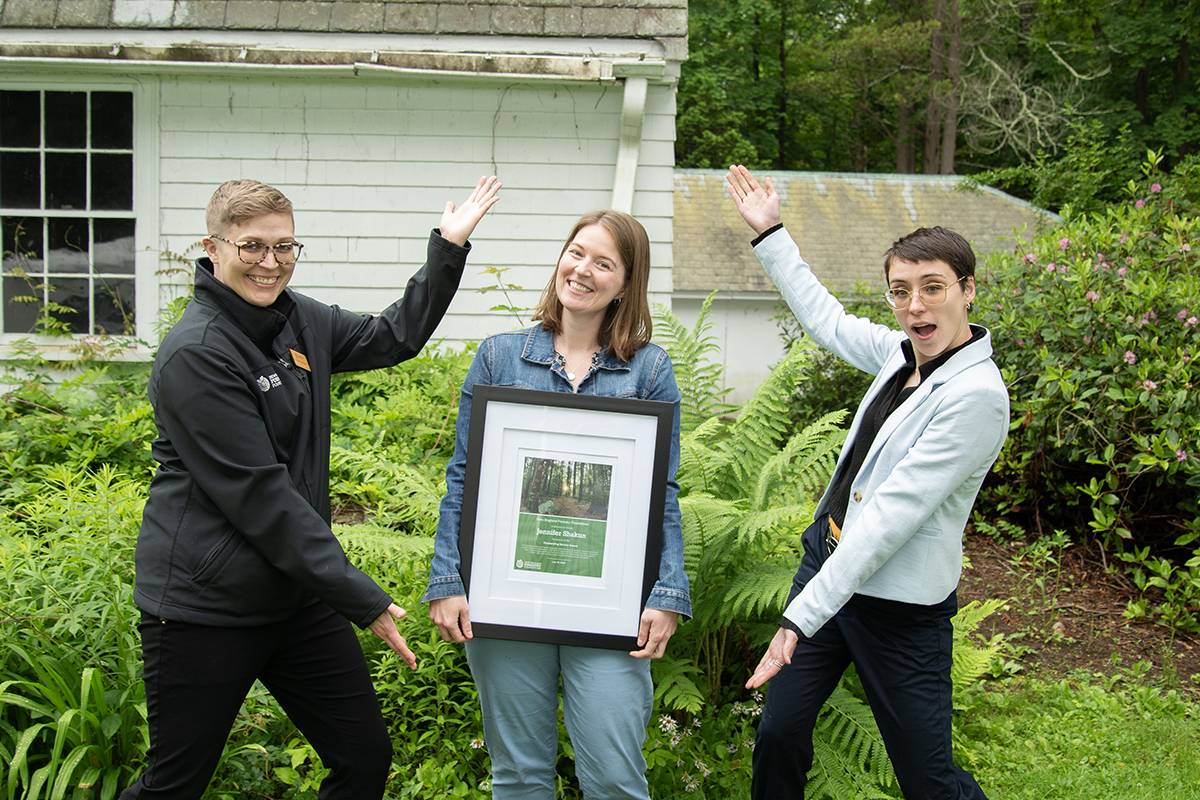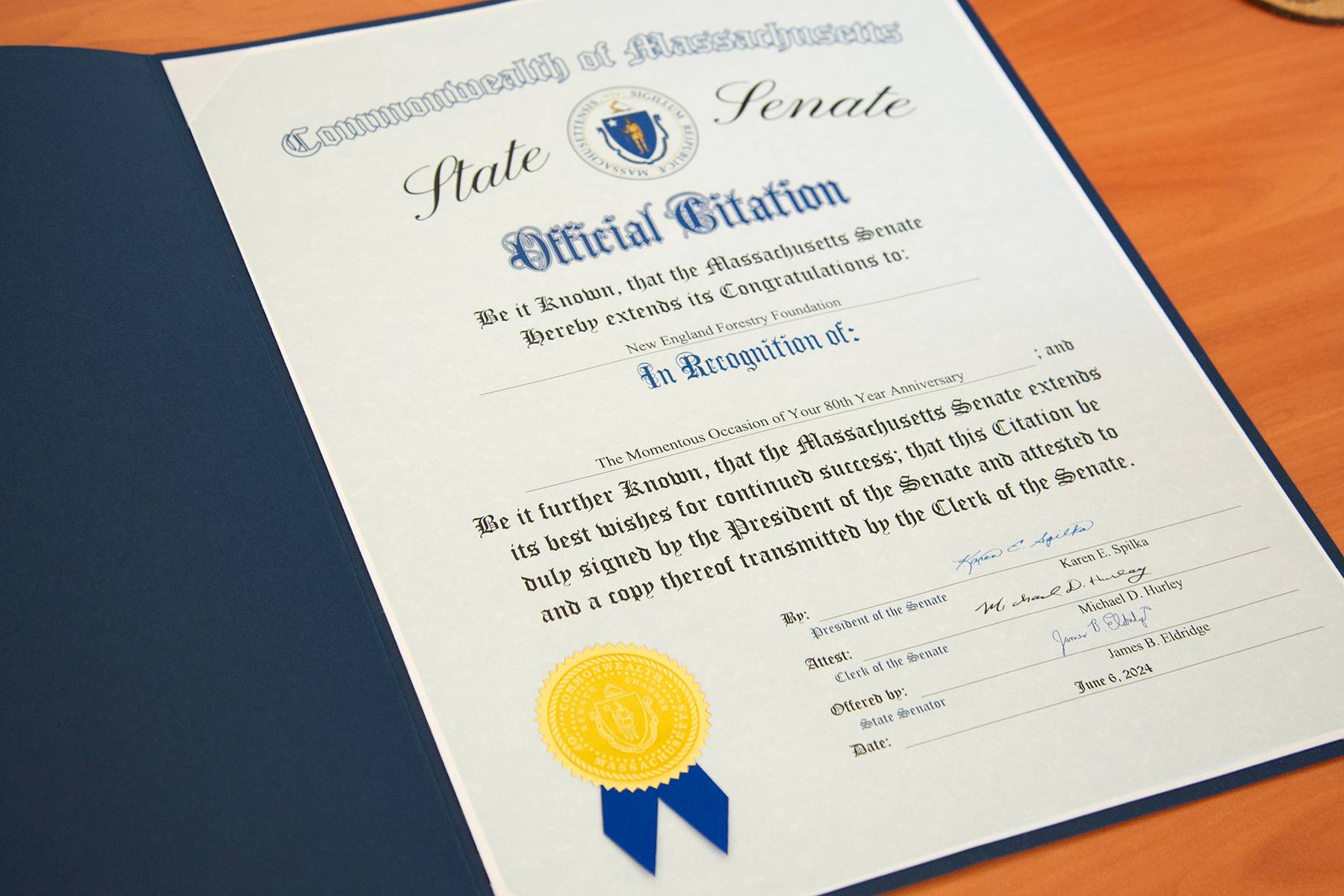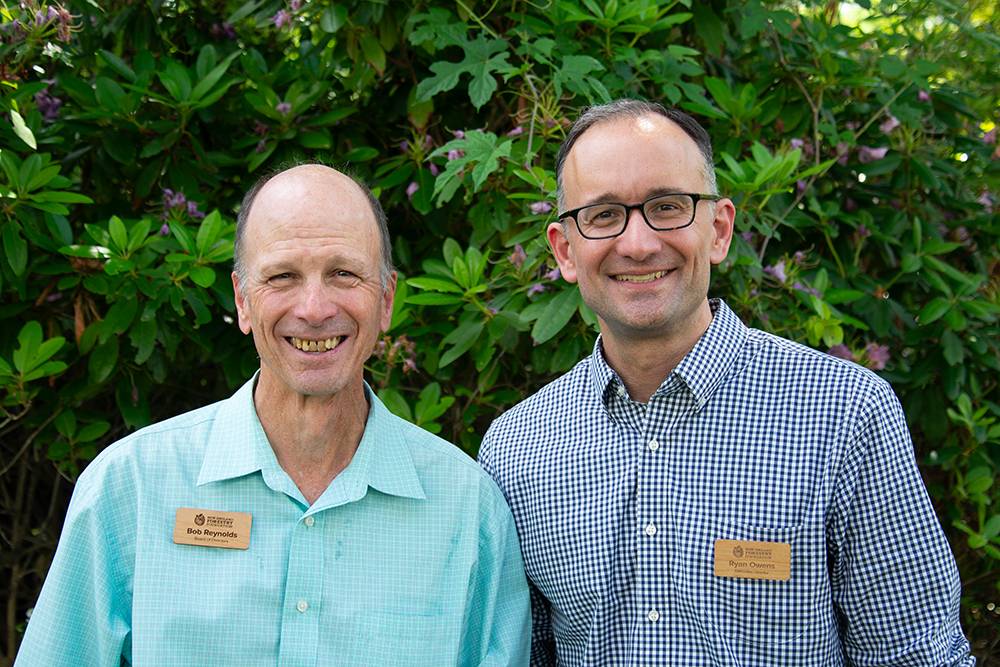
Reflecting on NEFF’s 82nd Annual Meeting
Jun. 23, 2026
The NEFF community recently gathered for our 82nd Annual Meeting
Read More


At this year’s Annual Meeting (celebrating our 81st anniversary!), NEFF had the pleasure of hearing from Ethan Brietling, Vice President for Strategic Communications at the National Alliance of Forest Owners (NAFO). What started as a talk about trust, perception, and public narratives around forests turned into something deeper: a reflection on human nature and how we choose to see one another.
Brietling leaned into the ideas of Enlightenment philosopher Jean-Jacques Rousseau, who believed that people are inherently good and well-meaning. That view stands in contrast to the more skeptical thinking of someone like Thomas Hobbes, who approached the world through doubt and suspicion. Brietling encouraged us to think about how that difference plays out not just in philosophy, but in real-world conversations about forestry, land use, and environmental policy.
He shared examples from history. Moments shaped by truly awful circumstances. But when we looked closer—truly looked closer—stories of heroism and compassion rose to the surface in times of extreme hardship. These were moments of goodness that, unsurprisingly, didn’t make headlines. His point was simple but powerful: We’re often conditioned to assume the worst, to lead with fear or skepticism, especially when the stakes feel high. But if we slow down, ask questions, and really listen, we’ll often find that there are people trying to do the right thing.
That message hit home. In a space like forestry, where public opinion can swing quickly and the narratives are often polarized, it’s a reminder we need.
This tension between perception and reality, between emotion and reason, is something we know well in the forestry world. That’s why Ethan’s talk felt so timely. Public skepticism, emotionally charged narratives, and long-standing assumptions have shaped how people think about forest management—and now, how we respond to it. Organizations like NEFF and NAFO, who advocate for private forest owners and the public benefits their lands provide, are right at that crossroads. It’s not always easy to communicate nuance — and boy, is there a lot of nuance! — in a world that moves fast. But we have to try. We can, and should, do better.
For decades, forest management has been lumped into debates about what’s right and wrong — who’s protecting the land and who’s exploiting it. But here’s the truth: forest management is conservation. These aren’t opposing ideas. It’s the conservation of natural resources, yes, but also the conservation of forests (keeping forests as forests) regardless of the gut reactions to a timber harvest. The tension we often find exists between conservation and preservation — two different but valid approaches. Preservation is about leaving land untouched. Conservation is about managing land actively, thoughtfully, and sustainably to support everything from carbon storage and biodiversity to rural livelihoods and recreation.
Unfortunately, public conversations often flatten these differences into stereotypes. The forester becomes the villain: someone only out for profit, indifferent to the damage they’re doing. On the other side, the preservationist gets cast as the idealist or even the hypocrite, preaching “leave no trace” while living in a world built from natural resources.
These characterizations aren’t just unfair, they’re flat-out wrong.
I’ve met a lot of loggers and foresters who care deeply about the woods they work in. They know their forests inside and out, and they’re doing this work not to tear it all down, but to keep it standing strong for the long haul. And I’ve also met some of the most committed preservationists — folks who genuinely want to leave the lightest possible footprint, but who understand that being human means having some kind of impact. The point isn’t to be perfect. The point is to do better.
And that’s where real conversation can begin. Not by assuming bad intent, but by recognizing shared values and a passion to do better. Most of us, whether we’re managing the land for a variety of values or setting aside land as true wilderness, are doing it because we care. We care about the land, the future, and the planet. We just bring different perspectives to work.
That’s why we need more listening, more respect, and better communication. Not more lines in the sand. Forestry doesn’t need more sides — it needs more bridges. And at NEFF, that’s the work we’re committed to.
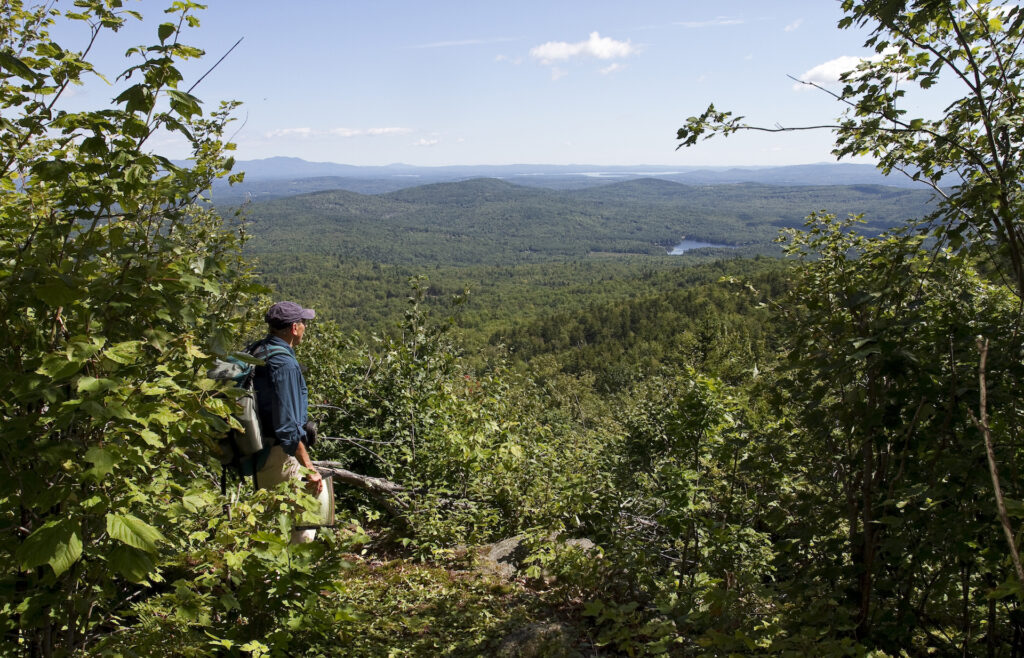
A hiker takes in sweeping views of the forested landscape from atop Hersey Mountain. Photo by Kari Post
A great example of that? Our partnership with Northeast Wilderness Trust (NEWT). On paper, our missions are pretty different. NEFF works to manage forests in a way that sequesters carbon, supports biodiversity, and provides renewable wood products. NEWT focuses on preserving wilderness — their forever-wild approach allows ecosystems to rewild and mature naturally, free of any timber harvesting. And while our approaches differ, we both understand something essential: New England needs both. The planet needs both. Desperately.
You can see this shared vision in action at Hersey Mountain Forest in New Hampshire, where NEFF and NEWT partnered to protect more than 3,000 acres through a combined strategy of working woodlands and forever-wild forest. Together, we created a protected landscape that demonstrates how conservation and preservation can work hand in hand to meet ecological, climate, and community goals.
It’s also a reminder that forests don’t obey lot lines. They’re contiguous ecosystems — wildlife corridors, watersheds, and carbon sinks — that function at a regional scale. That’s why NEFF’s Exemplary Forestry takes a landscape-scale approach. We look beyond the boundaries of any one parcel and consider what’s happening on neighboring lands. By doing so, we can identify special conservation values like rare habitats, sensitive wetlands, and key migration routes that deserve focused care and coordination. Whether that means actively managing for climate resilience or partnering to preserve wilderness, our goal is always the same: to strengthen the long-term health and integrity of the entire forested landscape.
We’re not so wrapped up in our own worldview that we can’t recognize the value of both approaches. We’ve got our biases, sure, but we also know that this work is bigger than any one method. And when we collaborate — sharing our strengths, learning from each other, respecting our differences — we do better by the planet.
We need science-forward, strategic forestry that supports healthy forests, strong communities, and a stable climate. But we also need wilderness; places that stay wild and let ecosystems unfold without interruption. These aren’t either-or options. They’re both essential. Conservation and preservation are tools we need to use together. We don’t always need to agree, but we do need to be open to respectful conversation, deep listening, and a shared understanding that our intentions are good.