How to Spot Spring Ephemerals
Apr. 20, 2024
Look for one of the natural world’s most beautiful heralds of spring: the…
Read More


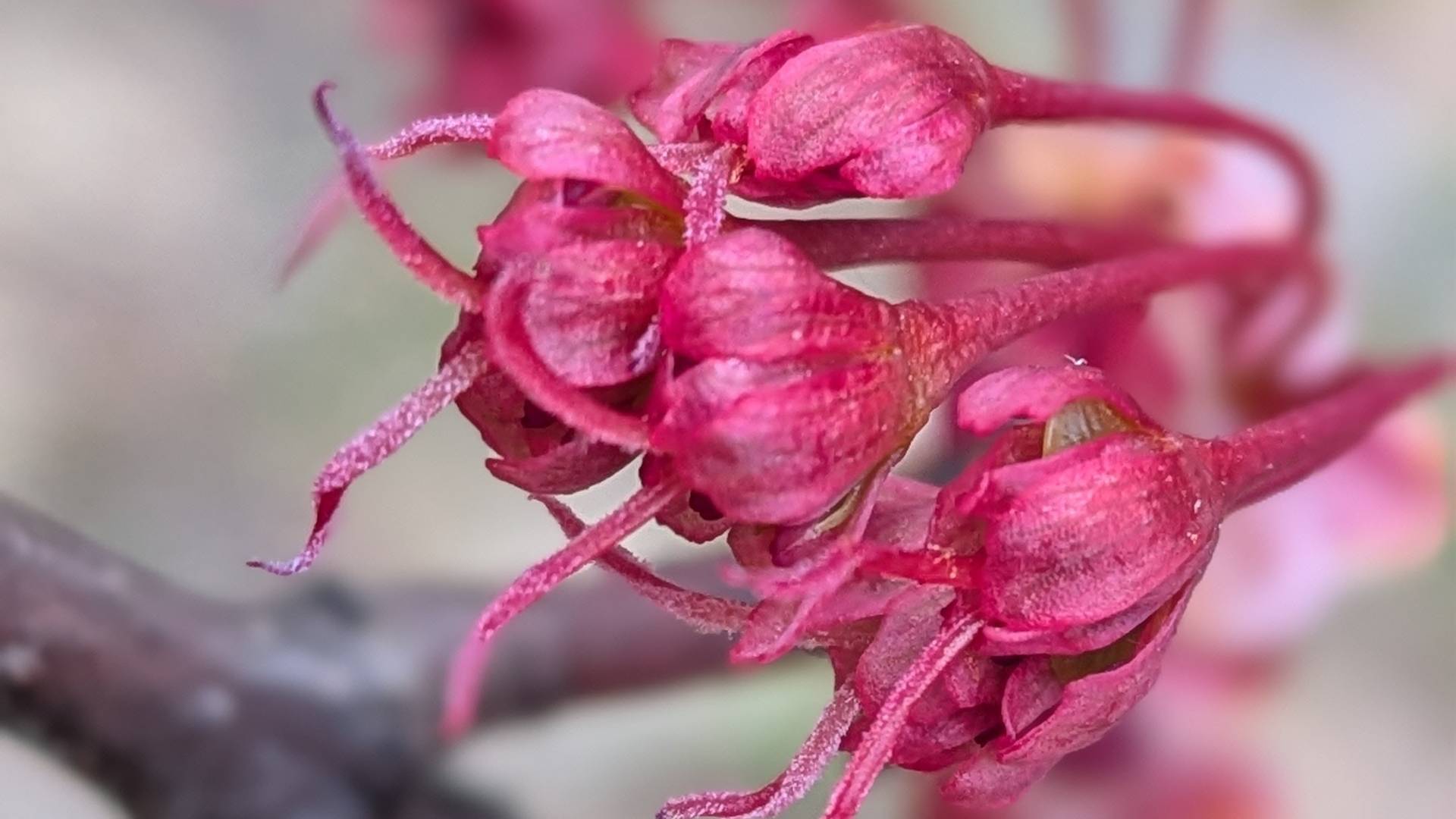
As you may have noticed, spring has arrived! Cherry trees and magnolias are in full bloom in the cities and towns across the country, as well as the trees within our forests, where color is now dotting the hillsides and stream beds. During my early spring walks, I keep an eye out for flowering trees because they are hard to see up close if you don’t have a low-hanging branch nearby. I want to take the time to appreciate how incredible these flowers are.
Trees evolved to have flowers roughly 130 million years ago, once rare among a world of spore and seed-producing plants. Now they make up about 90 percent of all terrestrial plant species* and have crucial global ecological importance. Trees, shrubs, and herbs will flower, producing pollen to attract the assortment of pollinators that assists the plant’s reproductive cycle. We get nuts, seeds, vegetables, fruit — you name it! It all started with flowers.
Backing up here for botany 101: to create a seed or nut, the tree needs pollen producers (stamens on flowers) and pollen receivers (pistils on flowers).** Some trees only have one type of flower, called dioecious trees, while others will have both types of flowers, called monoecious trees. Red maples (Acer rubrum) and maples in general are very special trees, as they can have one, the other, or both, making them polygamodioecious trees! Truly incredible!***
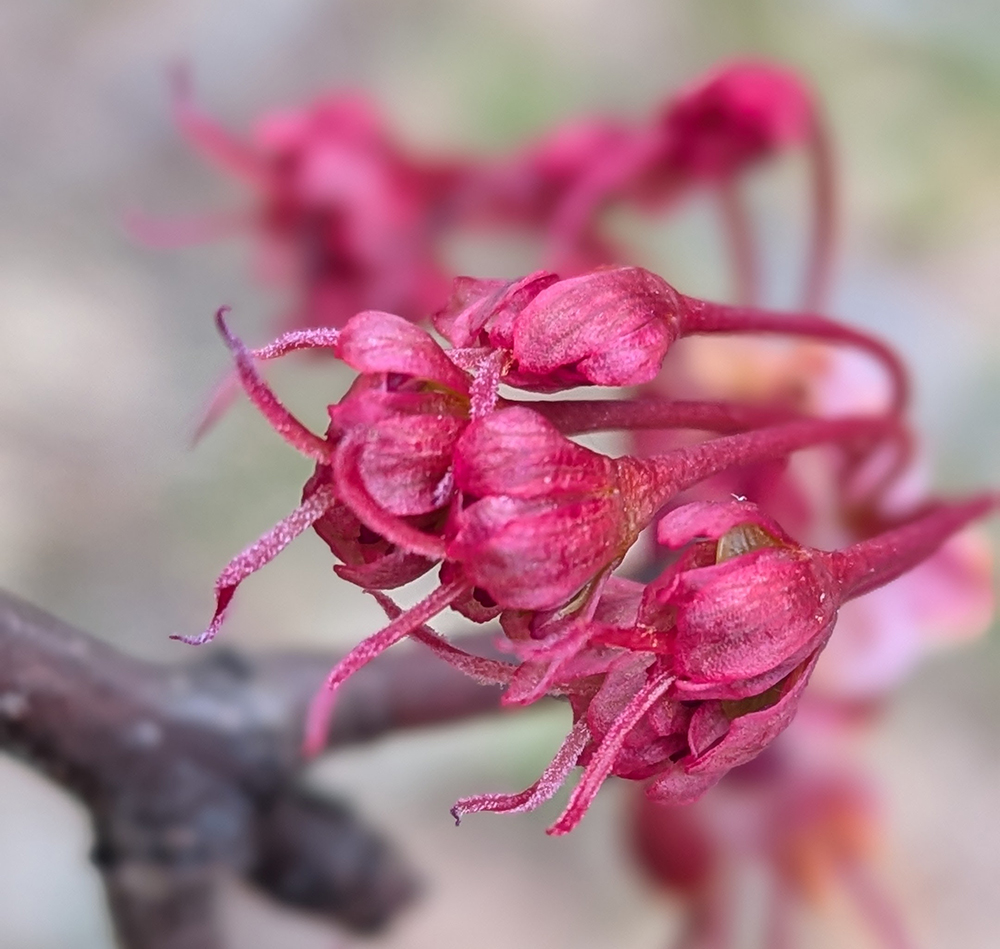
Red maple (Acer rubrum) photographed at Cate Memorial Forest in Alton, New Hampshire by Corey Wrinn
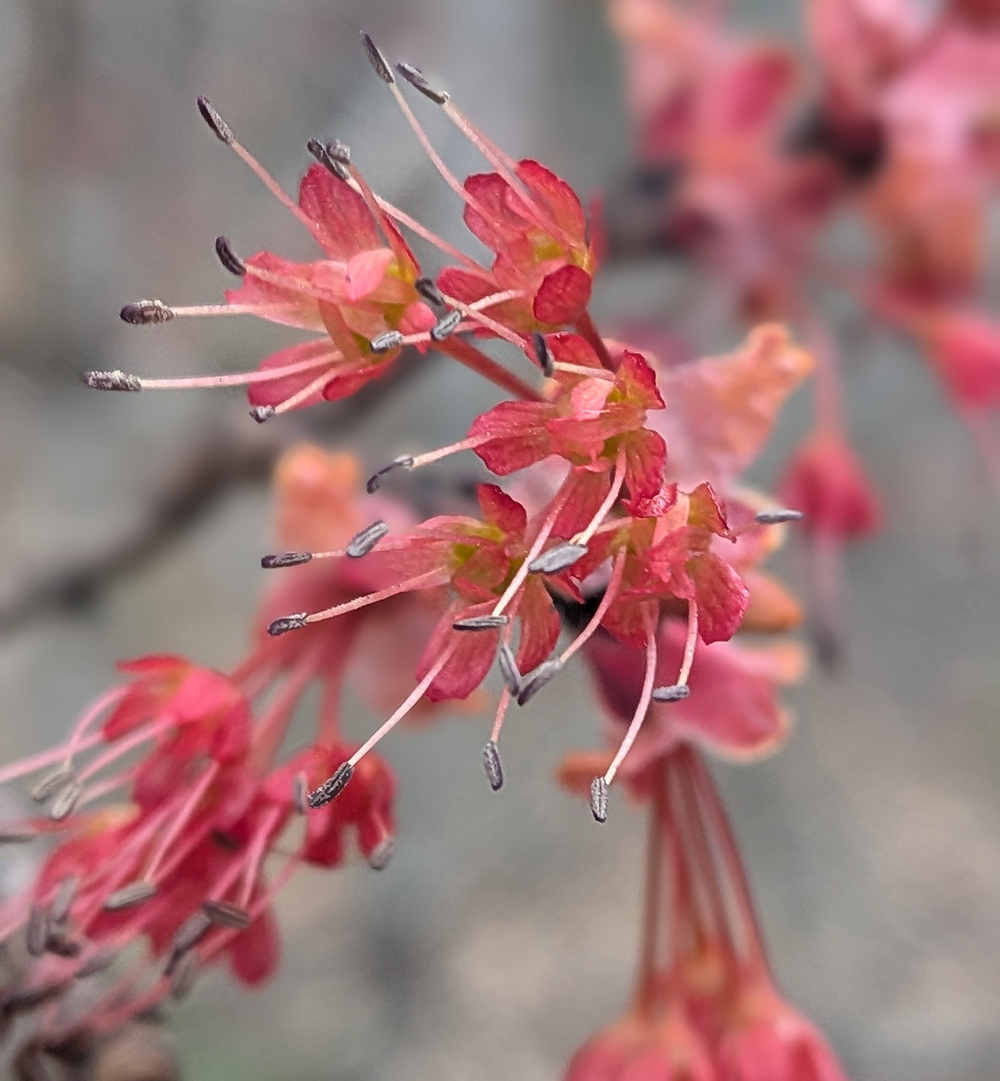
Red maple (Acer rubrum) photographed at Cate Memorial Forest in Alton, New Hampshire by Corey Wrinn
Above are examples of the pollen-producing and -receiving flowers on an Acer rubrum, found at Cate Memorial Forest in Alton, New Hampshire in late April 2026. These flowers were found on the same tree: a polygamodioecious tree!
I was also very lucky to find an American hazelnut (Corylus americana), and sweet fern (Comptonia peregrina) on my site visit to Cate Memorial Forest, both classic examples of monoecious plants. Note how on the Comptonia peregrina, the pollen-receiving flowers are located on the stalk, below the catkins — the pollen-producing flowers of the plant.
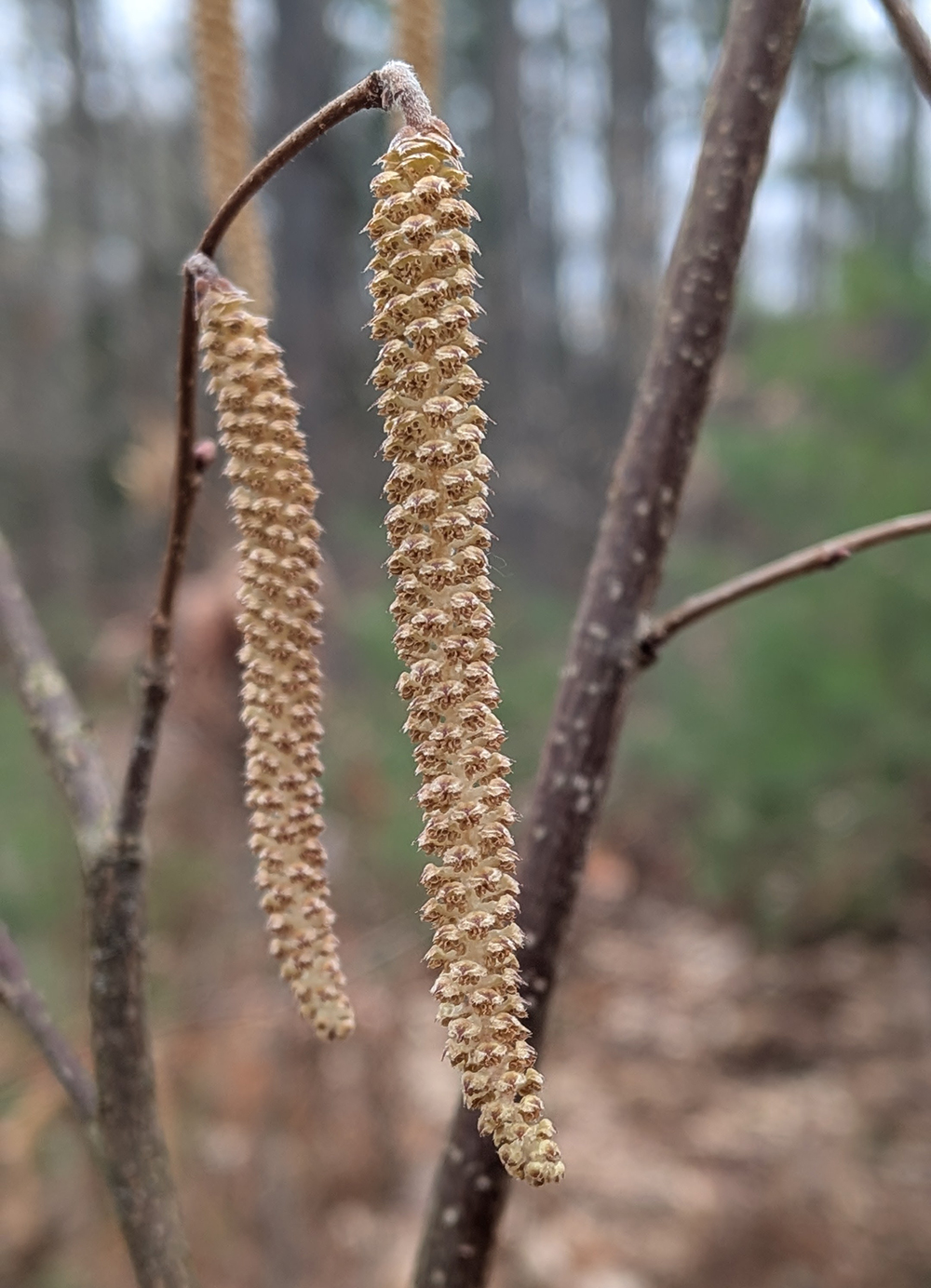
American hazelnut (Corylus americana) photographed at Cate Memorial Forest in Alton, New Hampshire by Corey Wrinn
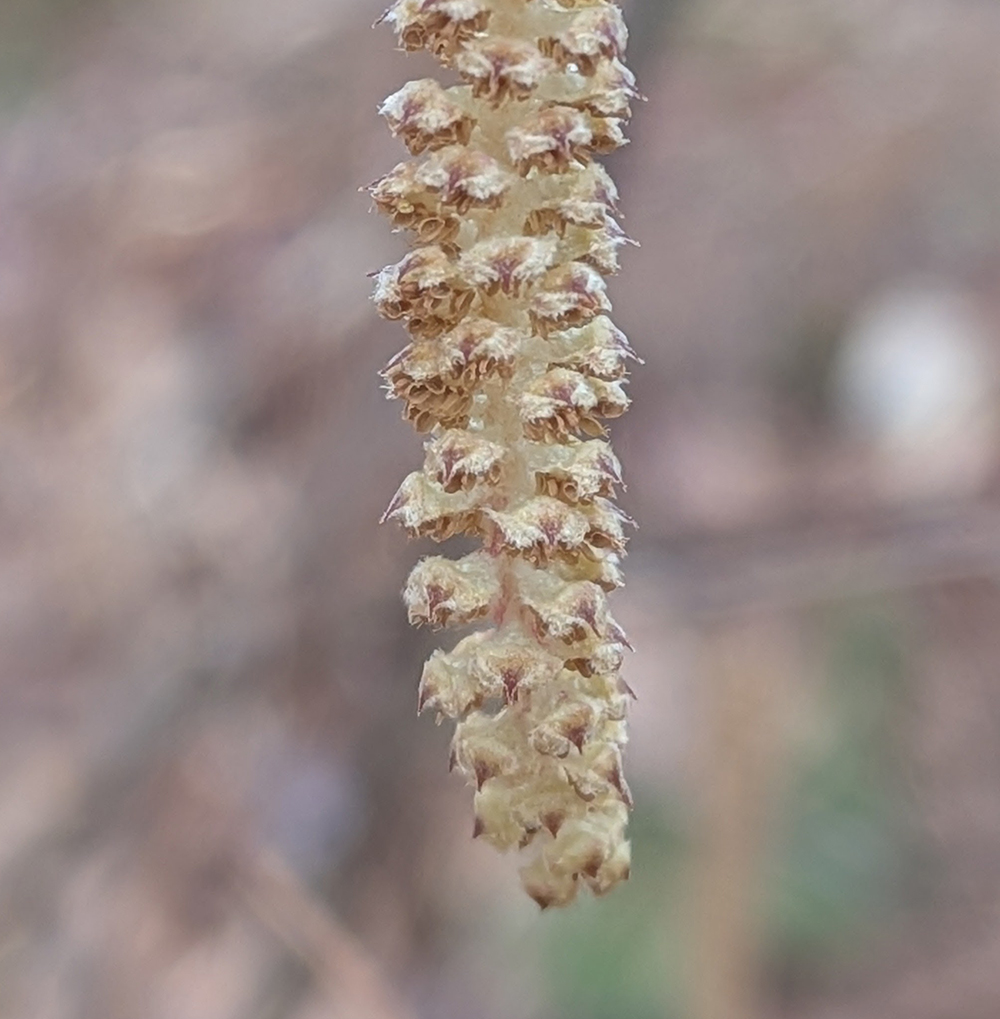
American hazelnut (Corylus americana) photographed at Cate Memorial Forest in Alton, New Hampshire by Corey Wrinn
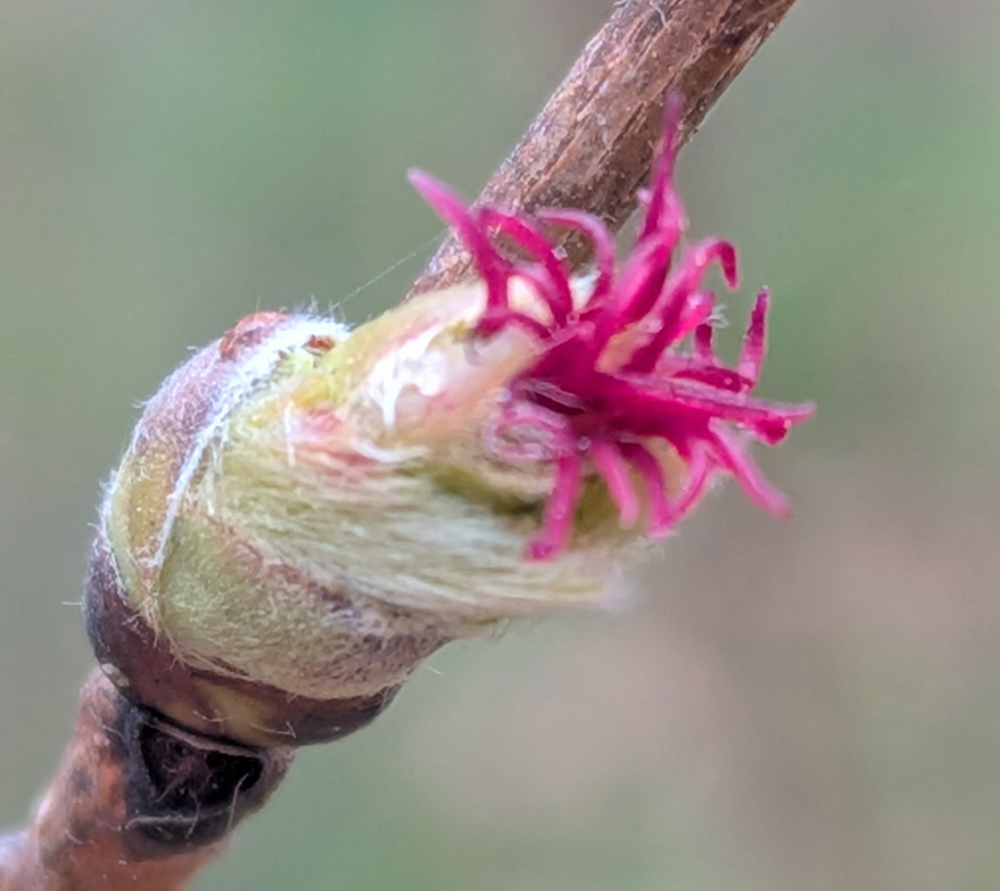
American hazelnut (Corylus americana) photographed at Cate Memorial Forest in Alton, New Hampshire by Corey Wrinn
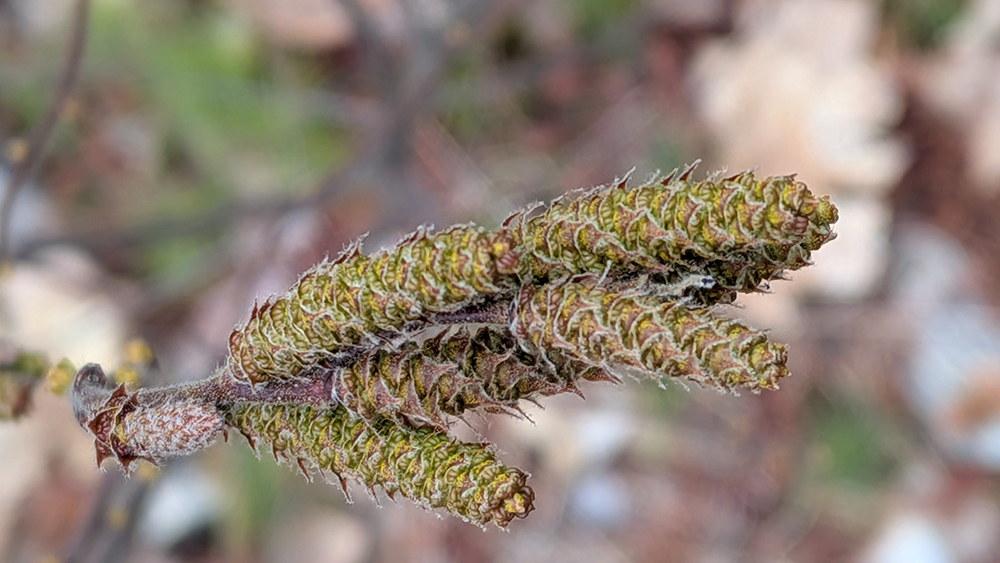
Sweet fern (Comptonia peregrina) photographed at Cate Memorial Forest in Alton, New Hampshire by Corey Wrinn
Next time you are on a walk, whether it is today or sometime this week, I encourage you to take note of what types of flowering trees you find and post your findings on iNaturalist, especially if you’re hiking in a NEFF forest! Tracking the phenology of trees through a citizen science app like iNaturalist or Go Botany can help amateur and professional scientists understand the life cycle of trees in comparison with seasonal weather and temperature variability.
* nature.com/articles/s41586-024-07324-0
** amnh.org/learn-teach/curriculum-collections/biodiversity-counts/plant-identification/plant-morphology/parts-of-a-flower
*** bryanpfeiffer.com/2019/05/01/red-alert/