New England Forestry Foundation Signs First Contract to Protect Maine’s…
May. 15, 2026
The contract protects 23 acres of forestland in Naples.
Read More


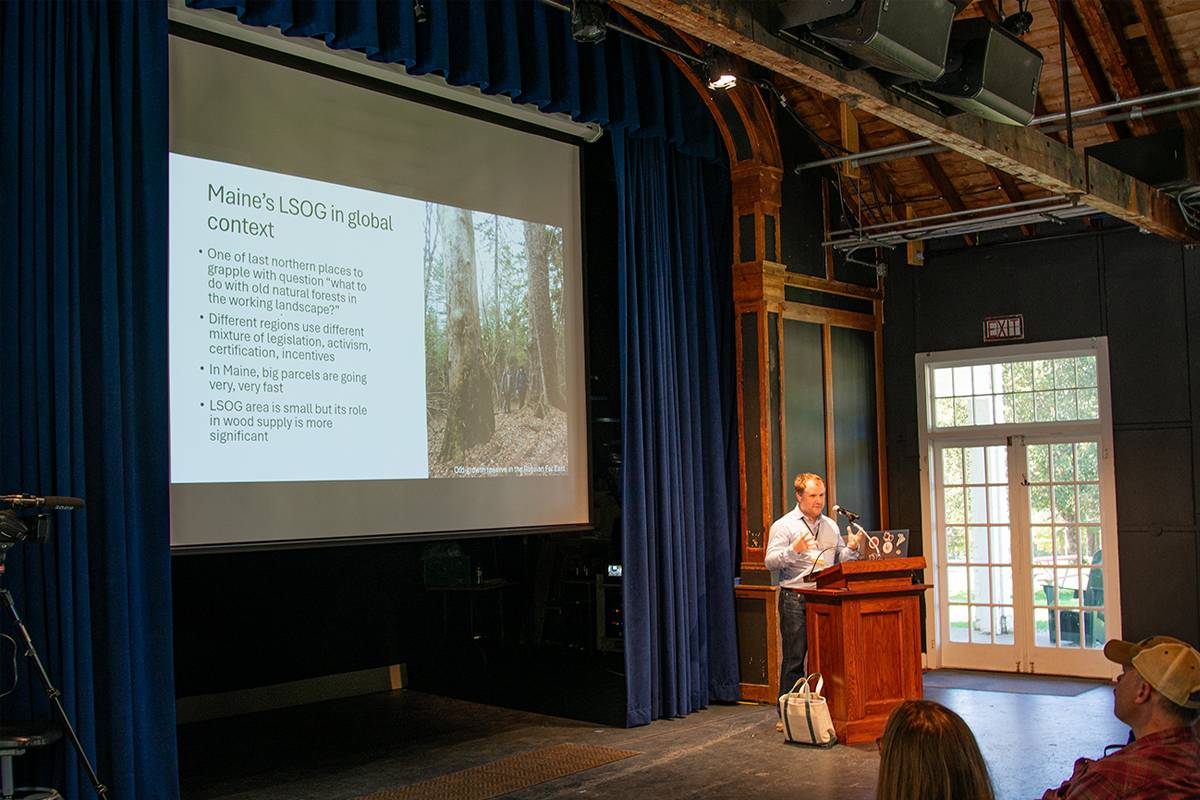
New England Forestry Foundation (NEFF) knows its region needs both protected wilderness and well-managed forests to thrive, due to the organization’s research and what it’s learned as a member of the Wildlands, Woodlands, Farmlands & Communities coalition. NEFF staffers were therefore excited to have NEFF Senior Forester Brian Milakovsky representing NEFF at this year’s Northeastern Old Growth Conference in Middlebury, Vermont.
NEFF is used to moving in “working forest circles,” or amongst professionals who are familiar with forest management, and who know woodlands and working forests are forested land that is actively managed to accomplish the landowner’s or manager’s specific goals (within the bounds of regulations), which can range from wood production, to improving wildlife habitat, to protecting the forest’s interconnected waterways.
This made the conference a great opportunity to interact with participants who are mostly passionate wildlands advocates. As a forest conservation organization, we’re particularly concerned with forested wildlands, which can be forest tracts of any size and condition that are permanently protected from development, and whose forest management style — if they have one at all — is explicitly intended to allow natural processes to prevail with minimal human interference on the land.
“I spent a lot of time in exciting, challenging and important discussions,” Brian said, and on the topic of, “how much wildland, and how much woodland, is enough? How do we decide?”
For instance, in some of those conversations about the “right” balance of active forest management and wilderness establishment in White Mountain and Green Mountain National Forests, Brian and other participants started in very different places… and sometimes ended there as well! But they learned a lot from each other and even committed to future discussions of these difficult questions.
Brian also presented on NEFF’s incentive-based approach to conserving late-successional and old-growth (LSOG) forests in northern Maine. These are forests primarily influenced by natural processes — not human intervention — and dominant trees are at least 150 years old, with the distinction being that late successional forests have some signs of historic logging, while old growth has no signs of that earlier management.
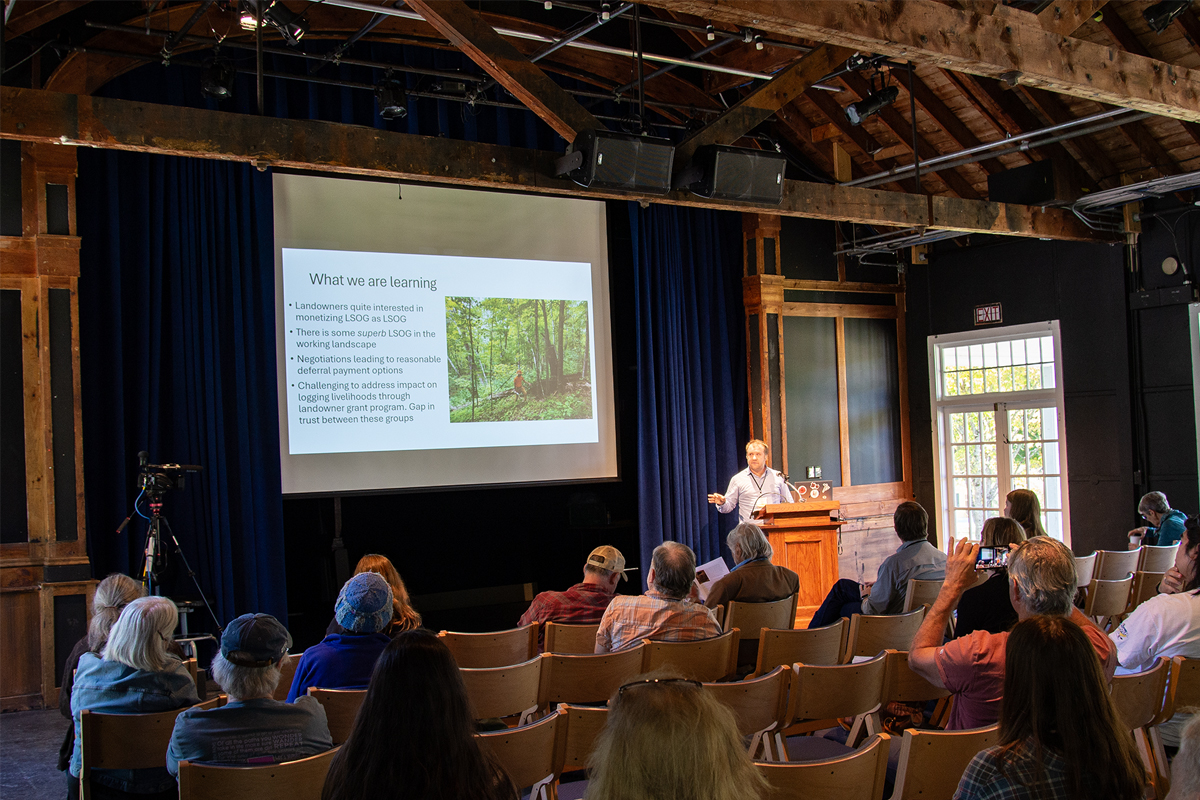
NEFF received $4.3 million from the US Forest Service to pay landowners to defer timber harvesting in such forests for 5-15 years, which buys time to design and fundraise for long-term conservation solutions with these landowners. NEFF will also incentivize the landowners to conduct timber stand improvement in younger forests elsewhere on their owned lands in an attempt to address the impact on regional wood supply from removing LSOG from production.
This talk inspired lively discussion and excitement from conservation stakeholders in the audience. It was followed by a wider discussion by Dr. Jonathon Thompson of the Harvard Forest of how LSOG forest conservation might be financed. The ideas and impressions generated will feed into NEFF’s further efforts to galvanize interest and financing for LSOG conservation in working forests in the autumn 2025.
Finally, the conference was a wonderful opportunity to learn about the legacy of New England’s “old-growth champions,” who worked to identify and conserve the region’s last old growth forests over the past thirty years. Foremost is Bob Leverett, an engineer who discovered a passionate interest for the unexplored old growth of western Massachusetts in his middle age, and later established the Northeastern Old Growth conference, of which this was the eighth. Mr. Leverett and his wife Monica shared their rich experience and presented a moving film about his life’s work.
The Northeastern Old Growth conference was a rich opportunity for NEFF to interact with its peers in the conservation community to discuss the urgent problem of conserving old natural forests in our working landscapes.