Star Singer of the Northern Forest: The Wood Thrush
Jun. 18, 2026
Learn about wood thrush natural history and conservation, and how a NEFF…
Read More


In 2024, the Smith family agreed to participate in a NEFF study to determine whether migratory tropical songbirds would benefit from NEFF’s Exemplary Forestry approach on their 250-acre forest located at the eastern edge of the White Mountain National Forest in Bethel, Maine.
NEFF’s Western Maine Habitat Restoration Program (with the Natural Resources Conservation Service) works with family and non-profit landowners to increase forest productivity while restoring and enhancing existing fish and wildlife habitat.
My goal for the study was to see which species of migratory birds were returning to three study locations after planning forest practices for the sites but before implementing them. This would provide a baseline to measure future changes in songbird habitat as forest complexity increased due to the impact of planned forest practices specific to each site, including thinning, creating gaps, crop tree release, commercial harvests, and creating snag trees.
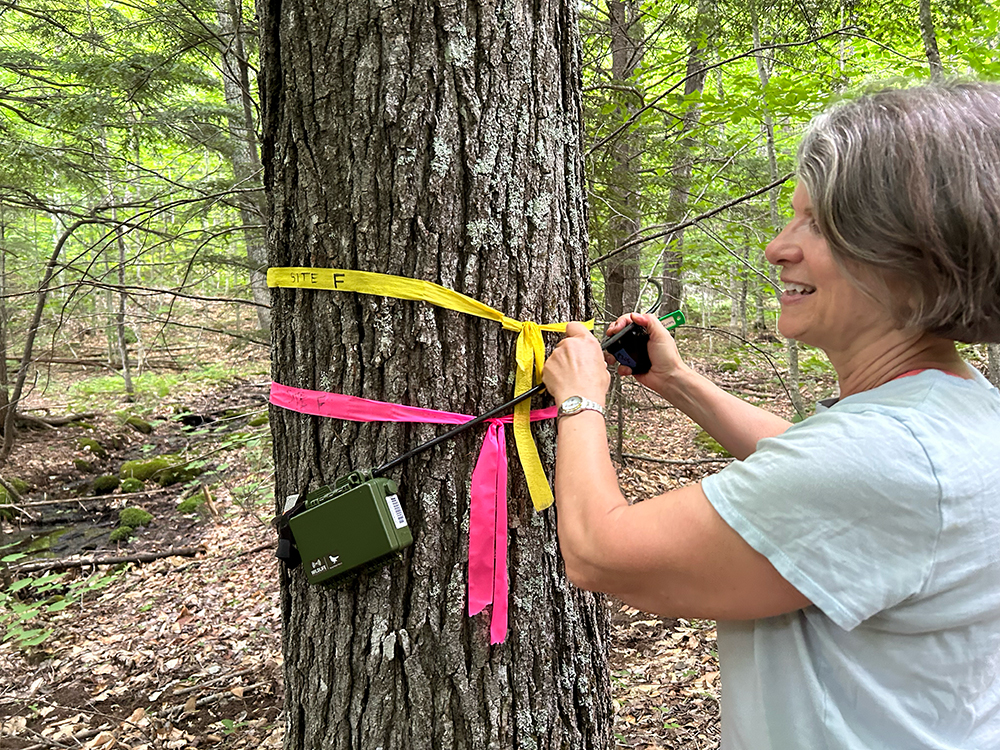
Carol Smith (pictured) and Ian Smith volunteer in the NEFF Bird Habitat Monitoring program in Western Maine on the Smith family forest near the White Mountains in West Bethel, Maine. Three generations of the Smiths have embraced NEFF’s long-term, landscape-scale approach to forest and wildlife habitat management. In 2023, after two years of working with their forester and NEFF ecological planners, the Smiths signed a 10-year forest and habitat management contract that offers financial assistance from the NRCS to manage their forest under NEFF’s guidelines.
Two local land trusts joined the study: nearby Mahoosuc Land Trust, who owns the 493-acre, hiker-friendly McCoy-Chapman forest, and Inland Woods + Trails, owner of the neighboring 978-acre Bethel Community Forest. As participants in NEFF’s Western Maine Program, all three landowners have 10-year agreements to complete forestry and fish-and-wildlife habitat management practices.
Maine Audubon also joined as a lead project partner. They trained the volunteers in bird habitat analysis, developed the songbird project protocol and pledged to analyze birdsong acoustic data over two winters.
Last spring, I joined landowners, biologists from Maine Audubon, and local volunteers to do on-site habitat assessments. The volunteers then set up and checked the acoustic recording units (ARUs) during the season to make sure they were working and retrieved the data cards for Maine Audubon to analyze. The ARUs automatically record birdsong on a pre-set schedule.
If all goes according to plan, the study will produce a list of the neotropical migratory birds that show up at each recording location during the early and late spring breeding frenzy.
The songbird project started in 2022 when the National Fish and Wildlife Foundation (NFWF) turned down NEFF’s proposal for continued funding for the Western Maine project. NFWF had supported previous work, but they wanted more assurance that the wildlife habitat-focused work based on NEFF’s modeling actually improved habitat on the ground. They wanted field data.
The Acadian Forest of Western Maine spans millions of acres that provide commercial wood products and is also one of the best remaining spots on the planet for neotropical migratory songbirds that fly up to nest in the temperate mixed wood forests of the north.
Neotropical migratory birds fly such long distances to reach the Acadian Forest for the rich protein feast it provides in the form of caterpillars. Caterpillars fuel the frenzied courting, breeding, nesting, and fledgling process that migratory forest songbirds go through each summer before winging back to Central America or the Andes in August or September.
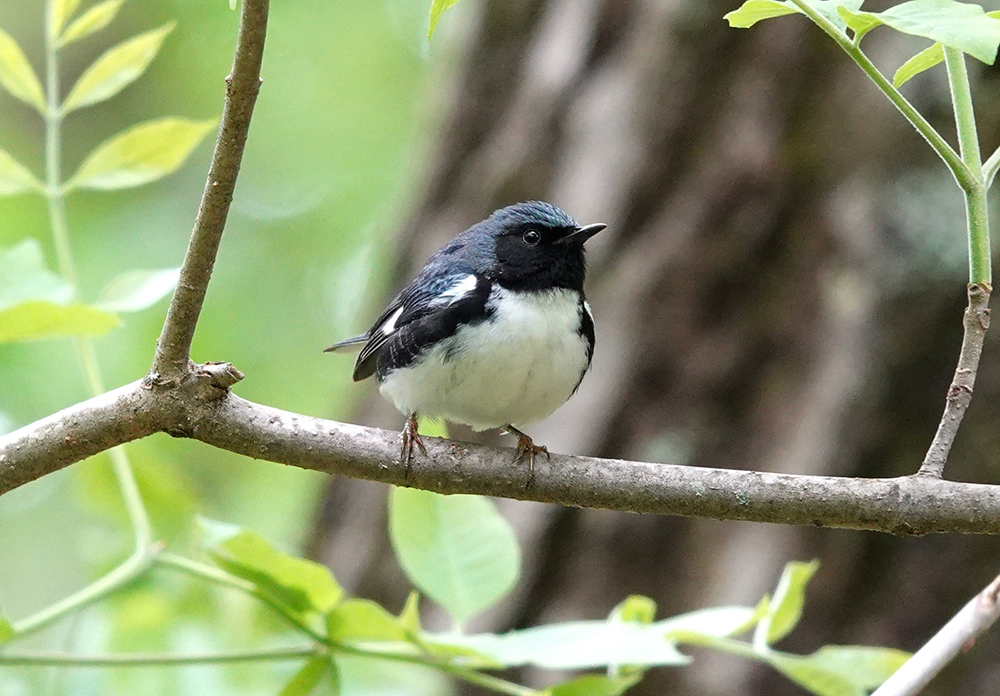
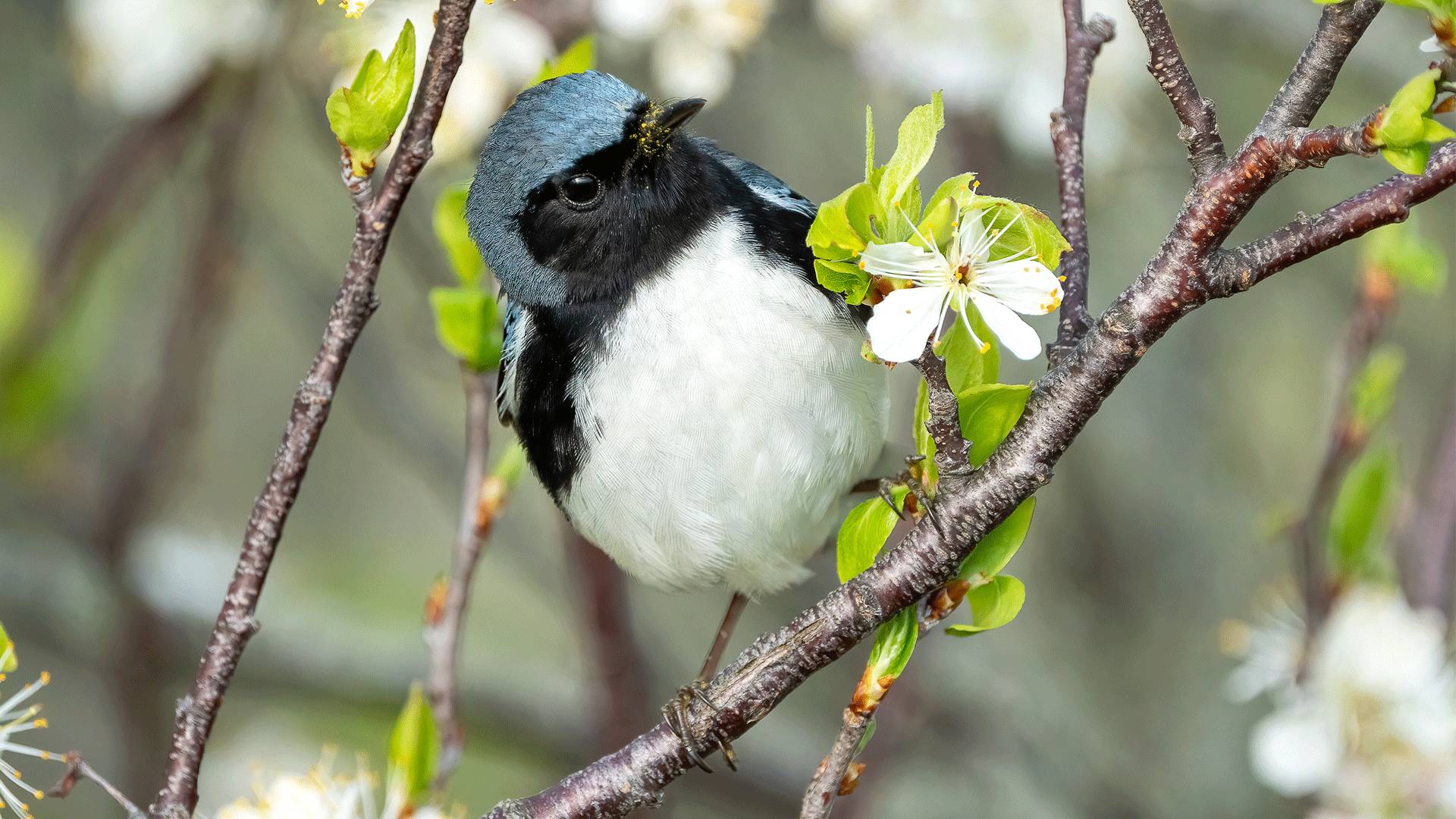
Black-throated Blue Warblers fly north in the spring to nest in the forest interior. They build cup nests close to the ground, often in thick shrubby hobblebush, beneath the dappled shade of larger trees where some, but not too much sun shines through to the understory. They do best in blocks of forest larger than 250 acres. Black-throated Blue Warblers’ habitat improvements are embedded in NEFFs forestry practice recommendations for the Western Maine project. | Erin Huggins/USFWS, Public Domain, fws.gov/media/black-throated-blue-warbler-0
Overall, extensive data shows migratory tropical songbird habitat is shrinking or broken up in the northern forest. Since NEFF’s goal in the Western Maine project is to work with family and other private forest landowners to enhance and restore the existing habitat for priority birds, as identified by Maine Audubon, and to enhance fish, mammal, and amphibian habitat for native wildlife in need of larger blocks of undeveloped forest, NEFF wants results, too. NEFF focused on changes in bird habitat because they are easier to measure over shorter time frames than changes in large mammal and fish habitat.
NFWF agreed to fund our proposal to set up a baseline bird habitat study.
Our study question was straightforward: Which birds were showing up before any trees were cut on properties enrolled in NEFF’s Western Maine program? We wouldn’t track the numbers of birds, only the occurrence of different species.
We might even see some results within our study window. Would some birds like the Black-throated Blue Warbler that require forests with dappled shade or small openings come back within a year of active NEFF Exemplary Forestry-focused work that provided gaps, or after thinning currently overcrowded stands? That had happened in Vermont. Would woodpeckers, wood ducks and flying squirrels find newly created standing dead trees that had intentionally been turned into snags to enhance habitat?
Future studies of bird habitats in the same locations can be measured against this baseline. Ten to 20 years from now, the research question will be: Who is showing up now? NEFF or partners are likely to seek follow-up funding for studies as the forest management results take hold. Meanwhile, stay tuned for intermediate results from our partner Maine Audubon this spring.