The Whole Forest: A Unified Path for New England’s Landscapes
May. 19, 2026
A guest blog from Yale School of the Environment students
Read More

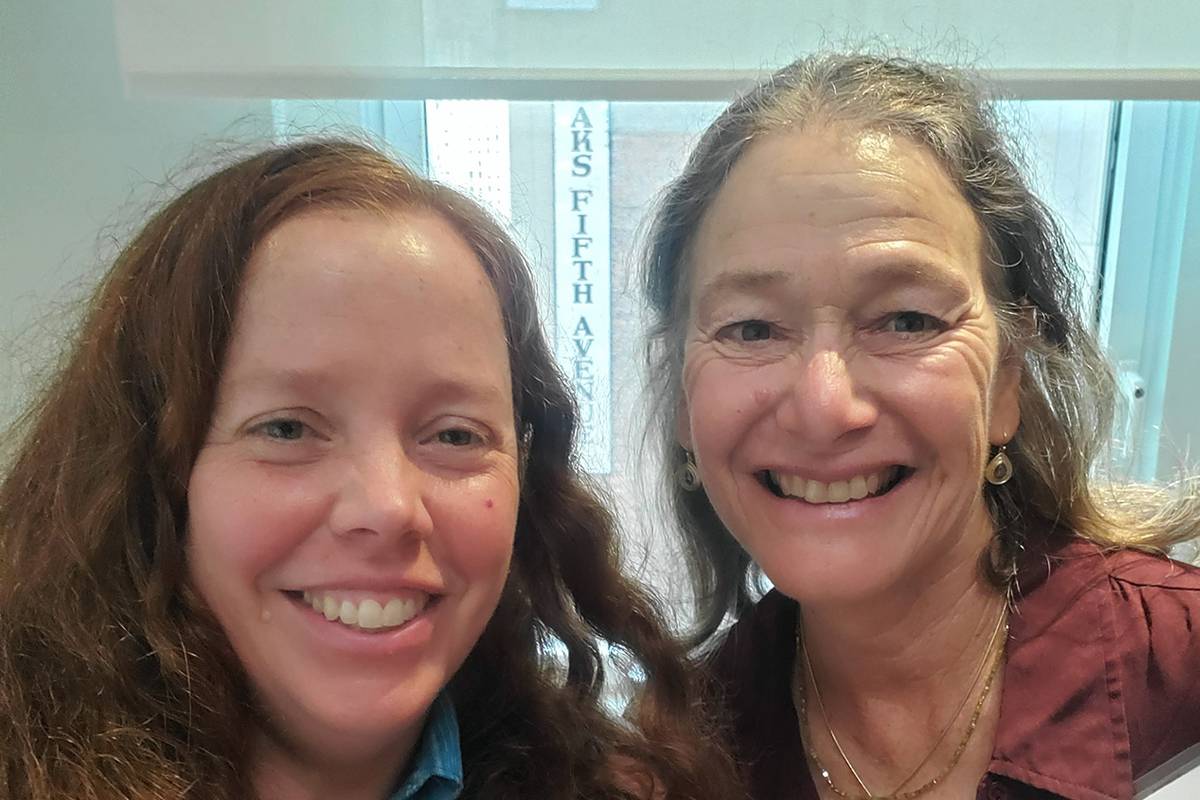
The NEFF team has returned from NYC Climate Week, ready to share their experiences and takeaways from an exciting and successful set of sessions with other experts in climate change mitigation.
Miss our introductory post? Read NEFF Heads to NYC Climate Week 2025.
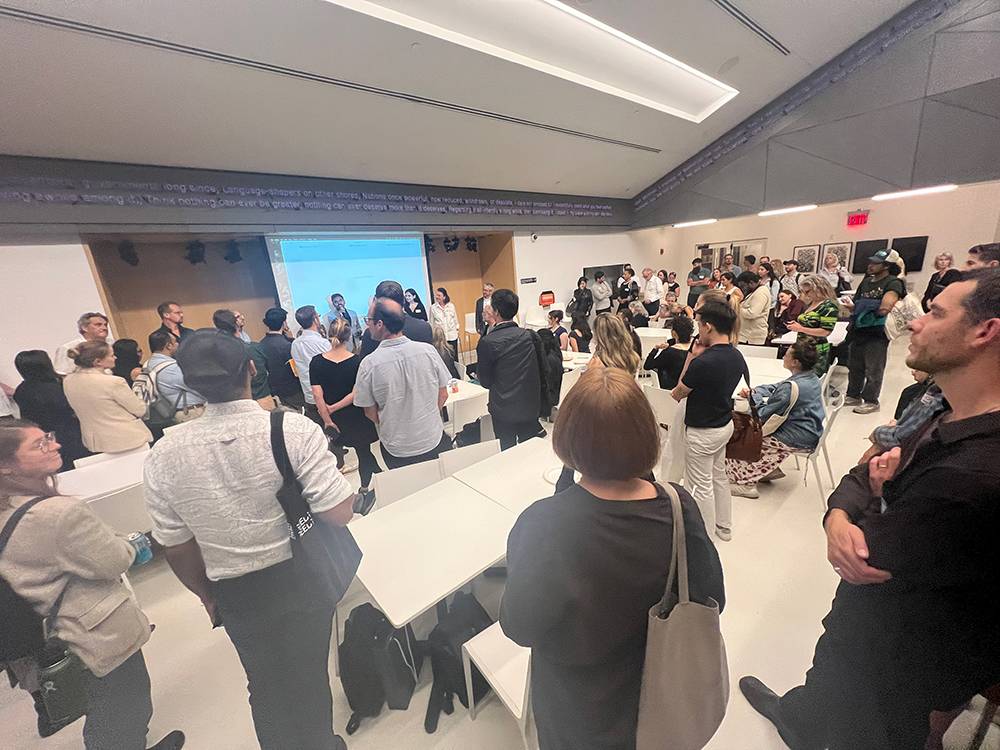
The global metropolis of New York City is a fitting place for a gathering of leaders looking to transform the built environment. And NEFF Bioeconomy Initiative Director Jennifer Shakun was invited to attend such an event last week — a Biobased Construction Roundtable & Reception, co-hosted by several leading organizations, to accelerate adoption of “regenerative, regional, biobased building materials” by facilitating discussions and new connections.
There is growing interest and momentum around biomaterials, which are replacing all kinds of standard building materials for insulation, drywall, structural elements, flooring, upholstery foam, and more. Wood products from mass timber to wood fiber insulation to bioplastics are in the mix. Opening remarks cited the influential UNEP (2023) report on this topic, which includes a shift to biomaterials as one of three overarching strategies to decarbonize the built environment:
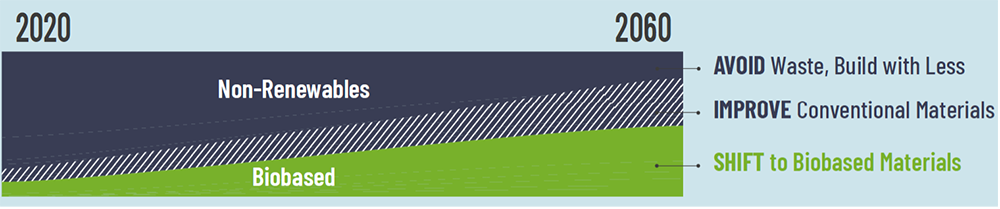
Source: UNEP Building Materials And The Climate: Constructing A New Future, Figure 2.10
But the central focus of the event was discussing opportunities to rapidly scale production and use of biomaterials, while recognizing how we scale matters. Whether it is wood, hemp, bamboo, kelp or any other material, sourcing decisions must consider where the raw material comes from and how it is produced. This is a song we have been singing at NEFF for many years, and it was heartening to see consistent alignment on this essential point.
The evening was both inspiring and energizing. And it reinforced the importance of NEFF’s work to bring forward science and strategies that balance land conservation, biodiversity protection, climate mitigation, and wood production — those insights are more important now than ever.
Learn about NEFF’s Bioeconomy Initiative.
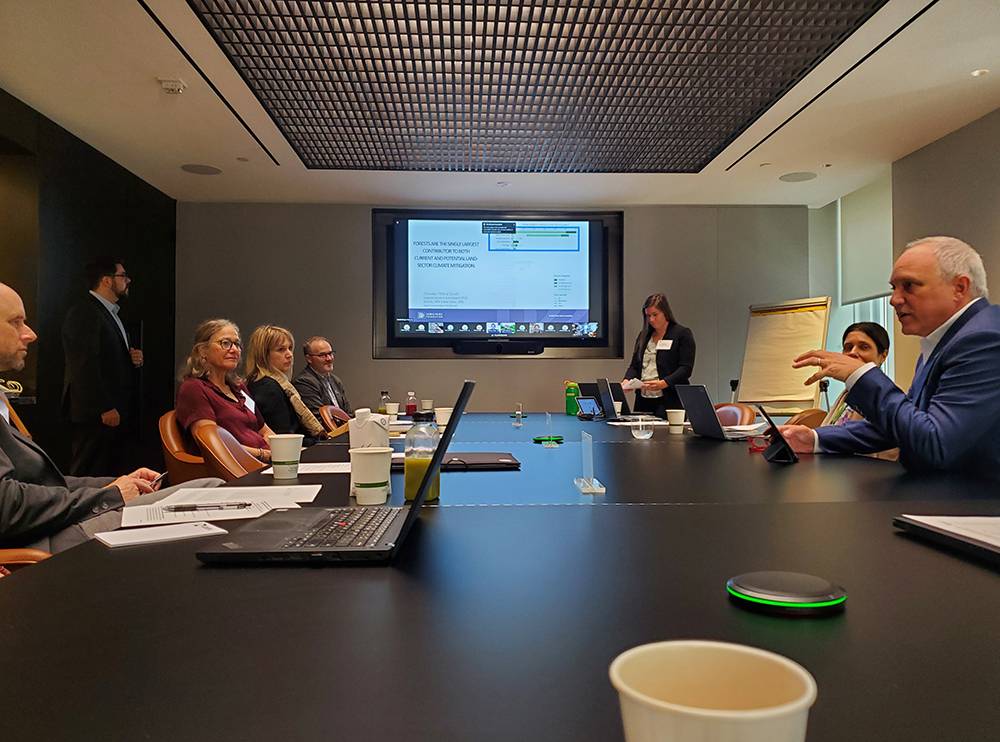
In an effort that closely aligns with NEFF’s work to model the potential benefits of climate-smart forestry (CSF) across New England, the Doris Duke Foundation has supported American Forests in modeling CSF in seven states. This week, they hosted an invite-only work session that brought together experts from around the country, including NEFF Deputy Director and Climate Fellow Andi Colnes and NEFF Forest Scientist Colleen Ryan, to identify needs and create a plan for building the modeling and analysis “pipeline” needed to scale up CSF in the U.S.
Experts in the room agreed with NEFF’s assessment that forests have enormous potential as a climate solution in the U.S. Unlike some other climate solutions, forests also bring an array of co-benefits like clean water, wildlife habitat, and sustainable, bio-based building materials. But this potential cannot be unlocked unless investors feel confident that the benefits from CSF, as well as the risks to forest carbon from climate change, have been quantified accurately.
NEFF brought our substantial experience in modeling our version of CSF, Exemplary Forestry, to help shape the discussion and identify the data gaps and challenges that need to be solved to address this concern. This meeting was the first step in an exciting effort to amplify the work that NEFF and others are already doing, and truly bring climate-smart forestry to scale in New England and across the country.
Writing by NEFF Deputy Director and Climate Fellow Andrea Colnes
Several exciting opportunities have come forward as a result of my time here at NYC Climate Week. They are intersecting and stemmed from excellent sessions convened by Yale’s Center for Planetary Solutions, American Forests, and the Doris Duke Foundation. At the heart of these opportunities is the need to create standardized ways to measure the impact of improved and climate-smart forest management on carbon outcomes. Lack of certainty makes investment in forest-based climate mitigation less investable by both the public and private sectors. Carbon markets are also limited by this uncertainty, as are commercial investors. This area of work intersects with NEFF’s ongoing work with commercial forestland owners and with our (hoped for) USDA Advancing Markets for Producers forestry incentive program, and provides an excellent opportunity for partnerships and collaboration. More on this in months to come, as these seeds take root and help grow NEFF’s work.
So that’s a wrap! As the hub of climate action has shifted to the private sector, NEFF continues to explore ways our forests can play a role in supporting a healthy climate and related bioeconomy for a sustainable future.