From Forest to Family Hearth
Dec. 01, 2025
NEFF donates timber to Maine woodbank, providing lifesaving heat for…
Read More


This spring, Andi Colnes, NEFF’s Deputy Director, again worked with students from the Yale School of the Environment’s Strategies for Land Conservation class, on a project of current interest. Davis Recht and Luke Schubert focused on an exploration of the public conversation around the wildlands/managed forestlands continuum. Their work explored the intersection of several core factors including the demand for ecologically sound wood products, the need for wild forests across the landscape, and the need to address ‘leakage’* where the impact of strategies recommended for New England are viewed in a broader landscape context. Luke and Davis conducted stakeholder interviews and related research as a basis for this thoughtful synthesis of the issues and questions involved in this complex subject.
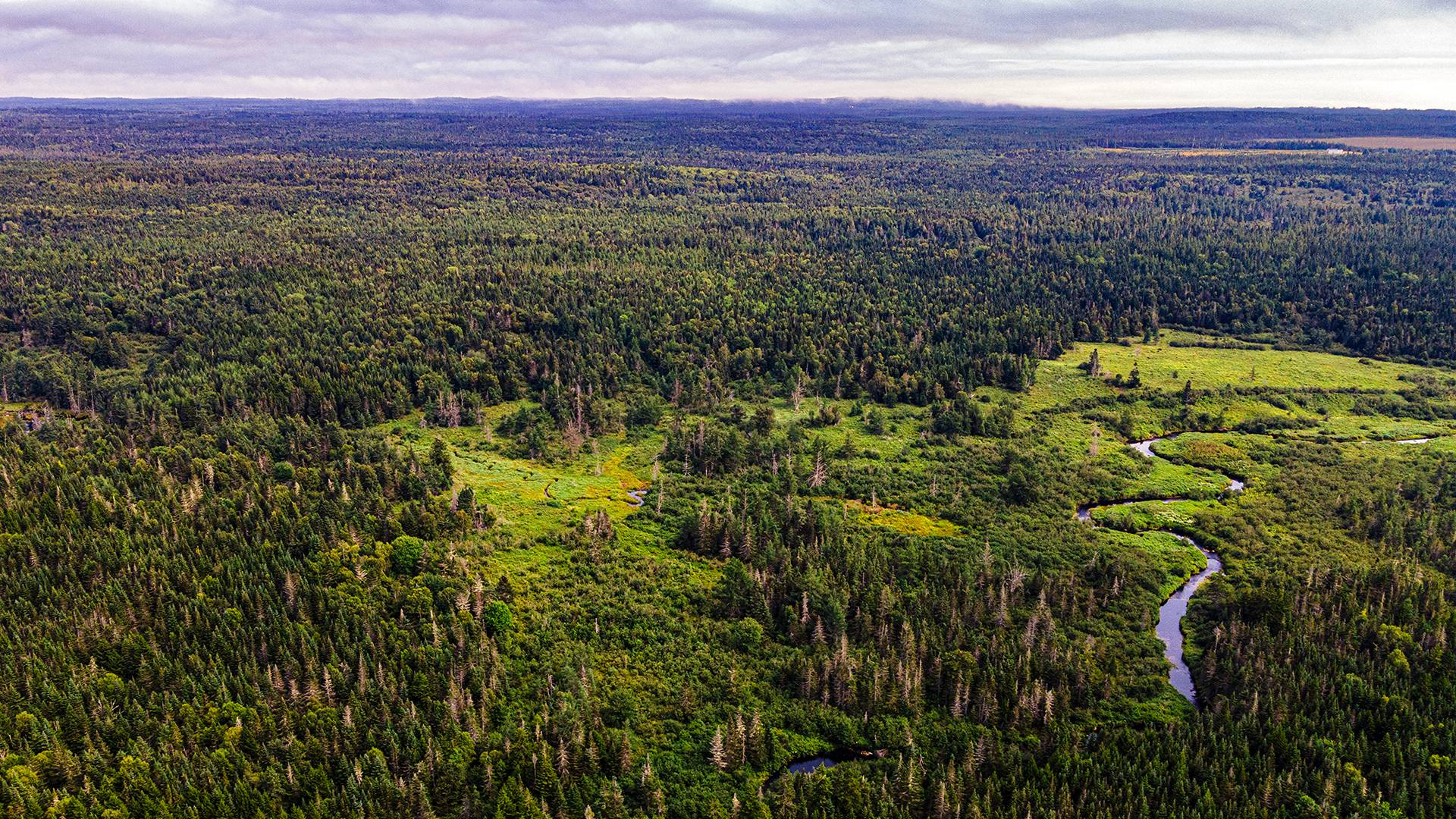
For decades, the future of New England’s forests has been framed as a polarized choice: wild forests versus working forests, preservation versus production. This rigid dichotomy, however, is failing the landscape we actually live in. New England’s forests inspire strong commitments; for some, they are places of refuge and ecological recovery, and for others, working landscapes tied to rural livelihoods and local materials.
Most people who care about these forests share the same broad goals – protecting biodiversity, addressing climate change, and ensuring future generations inherit a healthy landscape. The disagreement begins when we ask how to move past the false choice. Rather than one or the other, the conclusion is clear: New England needs both wildlands and working woodlands.
Some forests should be allowed to grow old and wild. Older, unmanaged forests provide ecological conditions that are difficult to recreate through management. They store large amounts of carbon, support complex habitat, and allow natural processes to unfold over time. These forests are essential, and New England needs more of them.
*At the same time, people continue to live in and depend on this landscape. We build homes, use furniture, heat buildings, repair barns, and rely on wood in countless ways. If that wood is not grown and harvested in New England, demand does not disappear. It often needs to come from somewhere else, potentially from places with weaker environmental protections, less transparent supply chains, or greater pressure to convert forests to other uses.
That is one of the most important but least understood parts of the debate. Reducing harvest locally does not automatically reduce the environmental footprint of wood consumption. In most cases, it simply moves that footprint out of sight.
Beyond meeting local demand, excellent forestry can also be a proactive tool for climate and ecological goals. Thoughtful management can accelerate the development of old-growth characteristics in younger stands, restore degraded areas, expand biodiversity, store more carbon and create specific habitats that benefit species requiring open or early successional forest conditions. Furthermore, when wood is harvested and used in long-lived products like buildings, the carbon is effectively stored for decades, while new trees in the working forest continue to sequester more.
So the better question in a world that includes people and the needs of the societies they live in is not whether forests should be harvested or left alone everywhere, but what kind of forest, where, for whom, and for what purpose?
A climate-aligned future for New England’s forests would treat the region as a connected mosaic. Some would be protected as wild reserves, where natural processes can shape the forest with minimal human intervention. Some would be carefully managed to produce high-quality wood while protecting soils, water, carbon, and wildlife habitat. Some already-altered or especially productive areas may be appropriate for more intensive wood production, helping reduce pressure on forests better suited for conservation.
This approach moves beyond compromise. It is a fundamental recognition that forests provide multiple public goods, and that no single management philosophy can deliver all of them everywhere.
The regional context also matters. In much of northern New England, forests remain closely tied to local communities and their rural economies as working landscapes. In southern New England, many people experience forests primarily as places for recreation, scenery, and protection from development. These different relationships shape how people hear the word “management.” For some, it means care, skill, and continuity. For others, it sounds like cutting trees with no regard for the health of the forest ecosystem.
That gap helps explain why public conversations can become polarized. A harvest is often most visible at its most disruptive moment: immediately after cutting. What is harder to see is the thoughtful planning behind good forestry, the habitat that may be created, the ecological regeneration intended to follow, or the alternative carbon-intensive and polluting materials that might be used if local wood is rejected altogether.
Certainly, not all forestry is good forestry. Poor management can harm soils, water, habitat, and public trust. The answer is to raise the bar: use a landscape scale approach, protect the forests that should remain wild, and practice excellent forestry where working forests are the right fit.
To close the public perception gap and truly raise the bar, excellent forestry must be accountable, science-based and verifiable. This means moving beyond generic promises and adopting measurable standards. Such standards can include robust third-party certification programs, or clear state-level best management practices that ensure forestry operations protect soils, water quality, and wildlife habitat. Transparency is critical, requiring foresters to share information about their long-term plans, harvest methods, and ecological monitoring. This accountability is the bedrock of rebuilding public trust and ensuring that working forests serve both private livelihoods and public goods.
A better public conversation starts with common ground. Across the region, people share core, non-negotiable values: ensuring forests remain forests, maximizing carbon storage on the land, promoting biodiversity and protecting wildlife, supporting rural livelihoods, and demanding that the materials we use come from places with strong standards and accountability.
These shared values define a clearer path forward. This path requires a four-part commitment: (1) Expand permanently protected wildlands. (2) Use ecological and climate-smart forest management across working forests. (3) Account for the full footprint of wood consumption, including impacts shifted beyond the region. (4) Tell a better story – one rooted not in opposition, but in an honest appraisal of tradeoffs and an ambition for collective outcomes.
The future of New England’s forests will not be secured by pitting one value against others in a false dichotomy. Instead, it’s better served by working together towards an integrated landscape that can hold many values at once.
The real question is not simply whether to harvest or not to harvest.
The real question is how to care for the whole forested landscape: the wild places we leave alone, the working forests we depend on, and the communities whose futures are tied to both.