Stewarding the Future Forest at Sortwell Memorial Forest
May. 22, 2026
A planned timber harvest at Sortwell Memorial Forest will help guide the next…
Read More


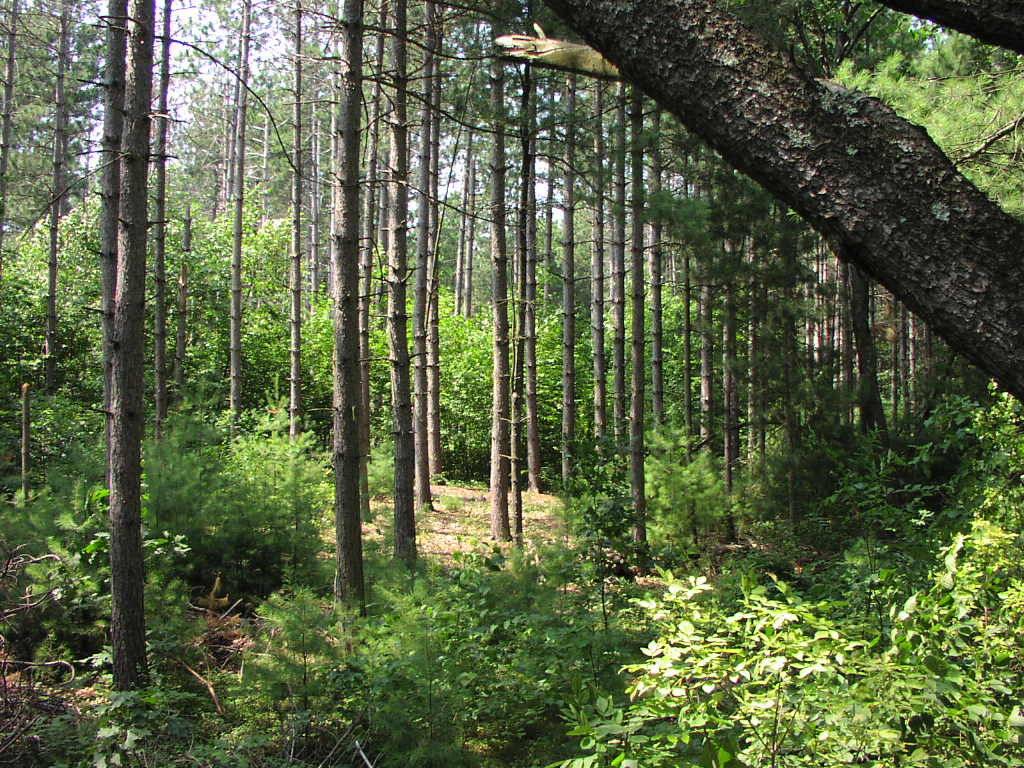
A new timber harvest is underway at Wharton Plantation, a working forest in Groton, Massachusetts, that reflects more than a century of intentional care. As with all management on NEFF lands, this harvest is guided by long-term stewardship that supports forest health, wildlife habitat, and resilience in a changing climate.
Wharton Plantation’s story begins in 1905, when William P. Wharton began assembling the lands that would eventually form this forest. An original incorporator of NEFF, Wharton was deeply interested in the art, practice, and science of forestry. Through his friendship with Harris A. Reynolds, NEFF’s founder, he embraced the idea of managing land not just for protection, but also for forest products.
That long-term approach persisted through major disturbances. The Hurricane of 1938 and the devastating fire of 1941 reshaped the forest and influenced management decisions for decades to come. In the years that followed, Wharton’s forester, Harrison S. Ripley, helped re-establish large portions of the forest, planting white and red pine — many along Old Dunstable Road — in the 1950s.
When Wharton donated the property to NEFF in 1968, he entrusted it to an organization shaped by the same respect for forests and long-term stewardship. More than fifty years later, Wharton Plantation continues to be guided by that enduring approach.
This harvest is a targeted salvage of red pine affected by red pine scale, an insect infestation expected to cause widespread mortality in these stands. Red pine scale is a small insect that feeds on a tree’s sap, weakening it over time and often leading to decline or death. Rather than allowing affected trees to deteriorate and lose value, the harvest recovers usable forest products now while maintaining forest structure and future management options.
Only red pine that meets telephone pole specifications will be harvested. Smaller red pine trees that do not meet pole specifications will be left in place. Many are expected to die over time from red pine scale, creating dead trees and downed wood — important habitat features for birds and other wildlife. No other species will be cut, except where limited clearing is needed along existing trails to access the red pine.
The work is limited to two areas totaling about 40 acres, where a relatively small number of trees will be removed per acre. Substantial white pine and hardwoods will remain standing, preserving canopy cover and forest complexity.
Wharton Plantation supports a rich mix of habitats, including upland forests, wooded wetlands, and open shrublands. Management here intentionally leaves standing dead trees, downed logs, and coarse woody debris — features essential for birds, amphibians, and other wildlife.
Care is also taken to protect wetlands, streams, soils, and cultural features like stone walls and cellar holes. Logging occurs only under suitable ground conditions, and best management practices are used to prevent erosion and safeguard water quality.
As climate conditions continue to shift, forests like Wharton face increasing stress from storms, pests, invasive species, and changing temperatures. Active management helps the forest adapt, favoring species better suited to future conditions while maintaining the complexity and character that make this place special.
The harvest, which is expected to continue through the winter, will be visible in certain areas for a time, and some trails may be temporarily affected.
Most activity will be concentrated near the parking area at the intersection of Old Dunstable Road and Rocky Hill Road. While trails in this area will remain open, visitors are asked to use caution, give working equipment plenty of space, and avoid active harvest operations while work is underway.