Highlights from the 2026 Canopy Conference
Mar. 24, 2026
Reflections on Canopy, a gathering of forestry and conservation experts in…
Read More


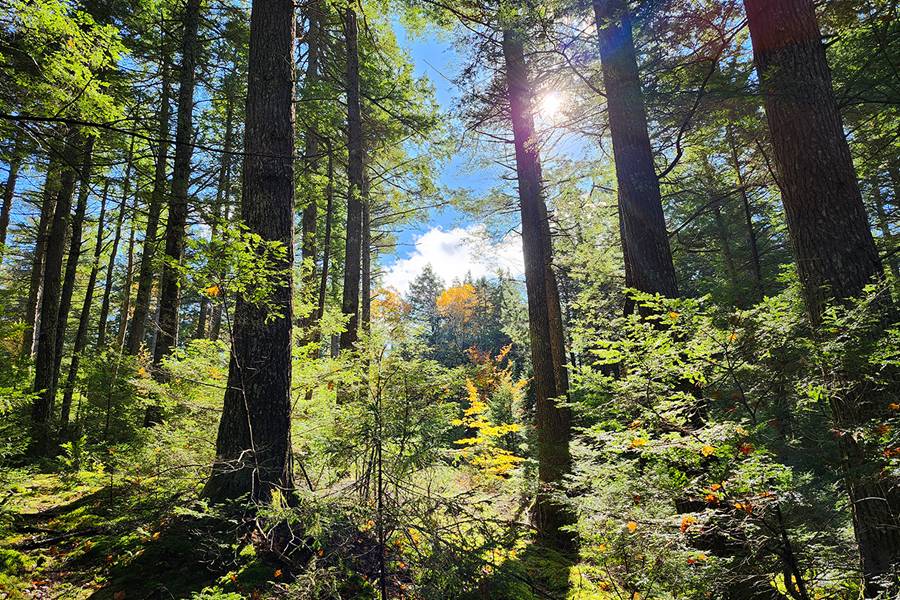
This summer, New England Forestry Foundation (NEFF) will begin a carefully planned timber harvest at Sortwell Memorial Forest in Wiscasset, Maine. The work is intended to support long-term forest health, regeneration, wildlife habitat, and climate resilience.
The approximately 97-acre harvest area includes mature mixed woods, streams, wetlands, and portions of the trail system regularly used by hikers and snowmobilers. While portions of the forest will look different during and after the harvest, the work is part of an ongoing effort to help ensure Sortwell remains healthy, resilient, and diverse for generations to come.
Sortwell Memorial Forest has a long history of active stewardship. The original parcels were donated to NEFF between 1955 and 1975 by Daniel R. Sortwell and his sister, Marion S. Warland. Daniel Sortwell had worked with NEFF prior to donating the property and conducted timber harvests on the land as early as the 1950s. Since acquiring the forest, NEFF has completed multiple timber harvests designed to care for and improve the woodland over time.
In late 2024, the forest expanded with an additional 34.97-acre donation from Dan Sortwell, grandson of the original donor, bringing the property to approximately 134 acres.
Today, Sortwell is one of more than 150 Community Forests cared for by NEFF across New England. Across the region, NEFF has conserved more than 1.2 million acres through ownership and conservation easements and supports forest management approaches that help forests remain healthy, resilient, and adaptable in a changing climate.
Carefully planned timber harvests play an important role in caring for forests over the long term. They help create healthier, more resilient forests while also producing renewable wood materials used in everyday life — from paper products and furniture to homes and buildings.
Sustainably sourced wood can also help reduce reliance on highly polluting materials such as concrete, steel, and plastic. Unlike many conventional building materials, wood stores carbon long after trees are harvested and can help support a lower-carbon future when forests are managed responsibly.
The upcoming harvest is designed to help create the conditions needed for the next generation of forest to thrive. Foresters will selectively remove some trees while retaining many of the healthiest and strongest trees for future growth, wildlife habitat, and seed production.
A major goal of the harvest is to encourage new white pine growth while also increasing species diversity and improving the forest’s resilience to climate change. In some areas, additional sunlight will be allowed to reach the forest floor, helping young trees establish and grow naturally over time.
The harvest will also retain many large, long-lived trees that continue to provide important wildlife habitat and contribute to the overall health and structure of the forest for decades to come.
Protecting water quality and wildlife habitat is a central part of the harvest plan. Wide buffers will remain along Ward Brook, wetlands, and streams to protect sensitive habitats, including mapped brook trout habitat. Foresters will also retain den trees, cavity trees, and standing snags where they do not pose a safety risk.
The property also contains a mapped Deer Wintering Area, and harvesting activities have been planned with those habitat considerations in mind.
Because Sortwell Memorial Forest is heavily used by the public, special care is also being taken to minimize impacts to recreation trails and the forest’s scenic character. Existing logging yards will be used to limit disturbance, and operators will avoid trails whenever possible. When trails must be crossed, crossings will be limited and carefully managed.
Visitors are welcome to continue enjoying the forest during the harvest, but should remain at least 300 feet from active logging equipment and observe all posted signage. Because active forestry operations are underway, visitors should use caution and be mindful of changing conditions in the forest. The main parking area will remain closed during active harvesting activities, which are expected to continue for approximately three months.
During and after the harvest, visitors may notice branches and woody debris left on the forest floor or along skid trails. While this may appear untidy at first, these materials play an important role in good forestry. Woody material helps protect soils from heavy equipment, returns nutrients to the ground as it decomposes, and creates natural cover that can help young seedlings survive browsing by deer.
After the harvest, portions of the forest will look different for a time. This is an expected phase in long-term forest stewardship. Openings in the canopy allow new growth to emerge and can increase habitat diversity for many wildlife species, particularly birds that benefit from a mix of forest conditions.
Over time, remaining trees respond with increased vigor, young forests begin to develop, and the visible signs of harvesting gradually fade as the forest regenerates.
Like all forests, Sortwell is constantly changing. Thoughtful forest management helps guide that change in ways that support wildlife, protect water quality, encourage healthy regeneration, and strengthen resilience in the face of a changing climate.
While timber harvests can create noticeable short-term changes in the landscape, they are an important part of ensuring the forest remains healthy, dynamic, and resilient for future generations.