The Whole Forest: A Unified Path for New England’s Landscapes
May. 19, 2026
A guest blog from Yale School of the Environment students
Read More


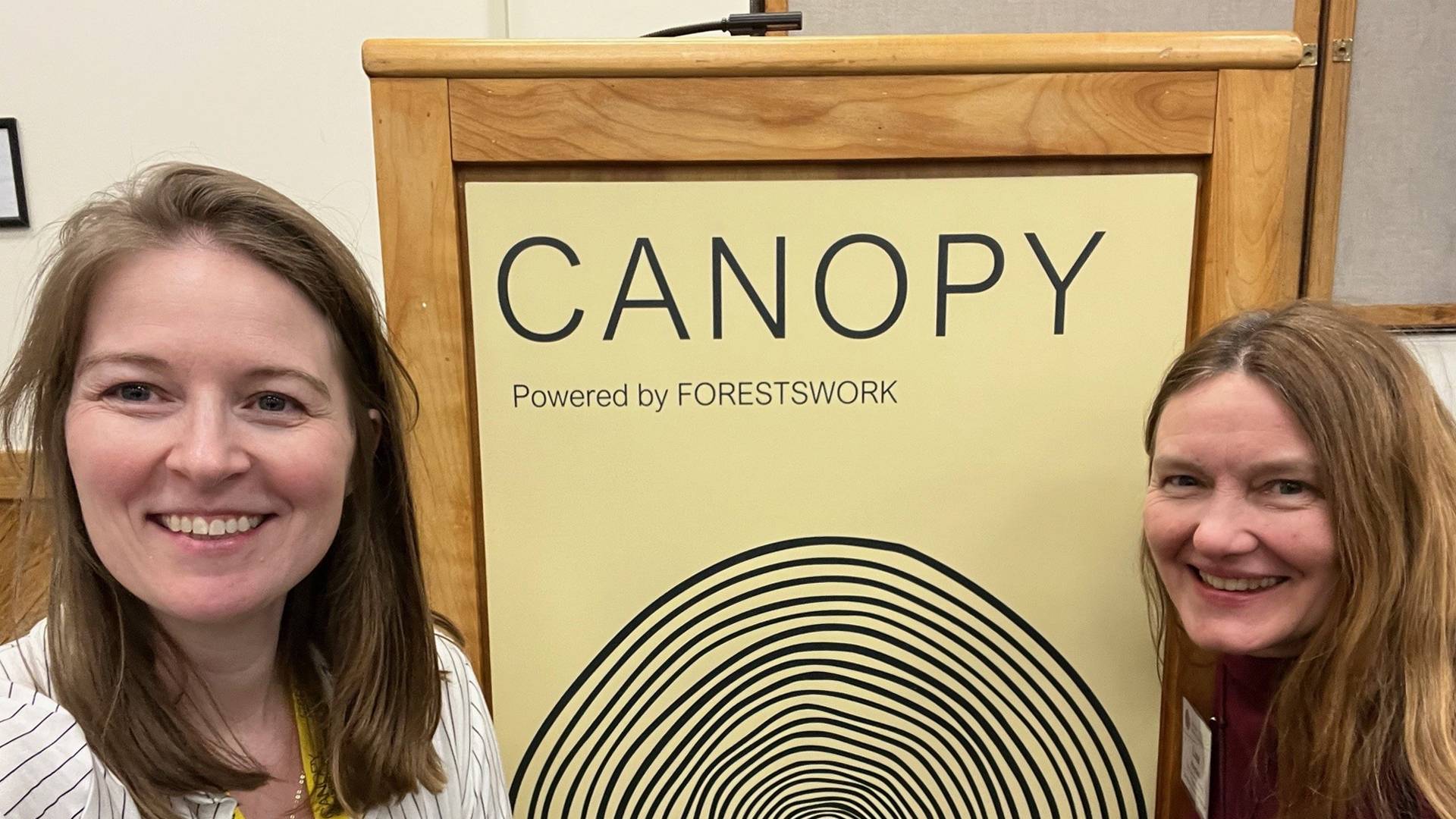
Earlier this month marked the third annual Canopy conference, put on by the Massachusetts Department of Conservation and Recreation, and hosted at UMass Amherst. This year, the conference sold out at roughly 350 attendees, which was a mark of the level of enthusiasm for a gathering like this for forestry and conservation stakeholders in Massachusetts. Canopy was born out of the Healy Administration’s Forests as Climate Solutions Initiative, and New England Forestry Foundation (NEFF) has participated from the very beginning — attending, exhibiting, presenting, and even serving on early planning committees. This year, the NEFF staff in attendance included myself and NEFF Director Of Outreach & Engagement Lisa Hayden, and the event proved to be the usual combination of informative sessions and energizing interactions with colleagues from around the state.
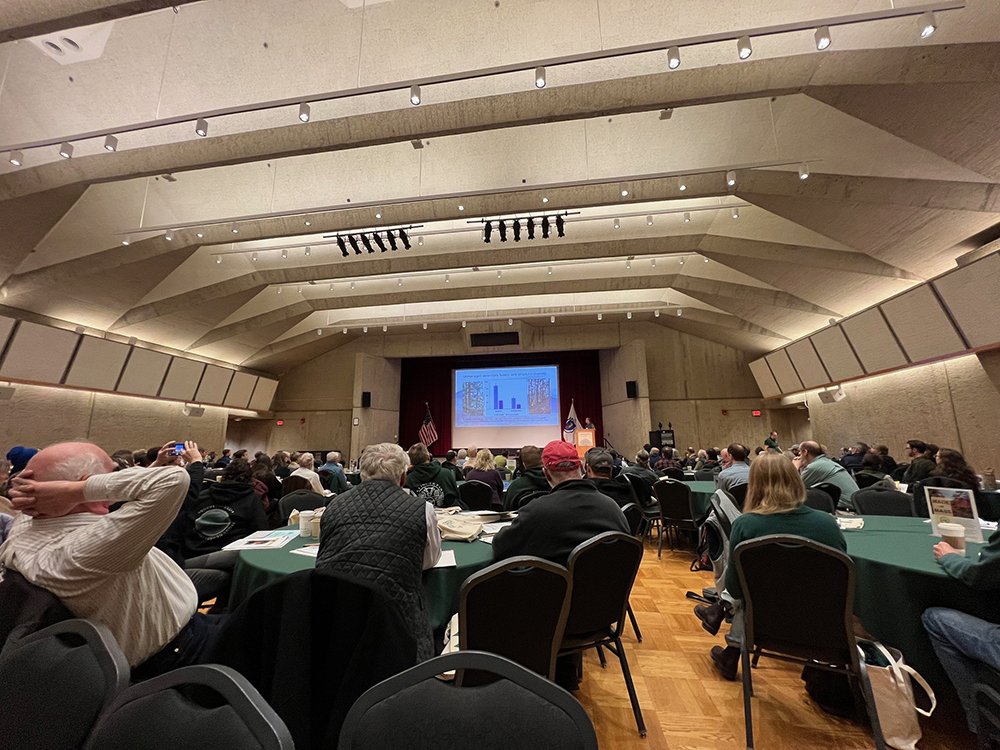
Audience at Dave King’s keynote presentation
There were several highlights for me. The first was the morning keynote by Dave King. He served as a Research Wildlife Biologist with the US Forest Service Northern Research Station for 26 years and currently continues his appointment as adjunct faculty at the University of Massachusetts. He spent his career studying bird habitat and conservation. His talk was a detailed and fascinating review of the insights that have come from his research over the decades about the impact of forest management activities on bird populations and their reproductive success. Ultimately, it showed that the effects of forest fragmentation from forestry operations are not the same as fragmentation from other land uses such as agriculture or development. For the various species he studied, such as oven bird or wood thrush, there was generally little difference in breeding success or abundance between intact forest and the edge areas created by forest harvesting, and in some cases the management activity resulted in greater forest structural diversity that had beneficial impacts for those species.
But what was perhaps most powerful about King’s talk was his acknowledgment that he had come originally from a West Coast context and a perspective that assumed these kinds of forest disturbances are inherently negative for wildlife. And, like a true scientist, he explored the question in detail with an open mind and followed the evidence, even though it contradicted his priors. I think it was particularly gratifying for the audience to hear from someone outside the forestry and logging sector about the strong evidence that shows forest management activities can not only be neutral or relatively low impact, but in some cases can even have a beneficial and positive impact on certain wildlife species. Of course, this is an aspect of the science that is well understood by NEFF and many of our partners, which is why the enhancement of wildlife habitat is such a central component of the Exemplary Forestry approach and one of the reasons our Western Maine Habitat Program (led by NEFF Western Maine Project Manager Christine Parrish) has been so impactful and successful on the ground.
The event included an interesting mix of sessions on topics ranging from forest health threats and resilience practices to careers in natural resources and working with Indigenous partners. For me, a particular highlight was the opportunity to be included in an invite-only session on collaborative problem-solving for the wood sector. Discussion topics included developing communication strategies for conveying the importance of forests and forest management for climate and habitat management, how we can support the use of local wood, and more. I was able to participate in the small group that explored what support for the forest industry could look like in Massachusetts. For me, it highlighted that these opportunities for in-person connection and conversation are still essential — we hear from different perspectives, make new connections, challenge each other, commiserate together, and figure out where we can cooperate and work together toward shared goals.
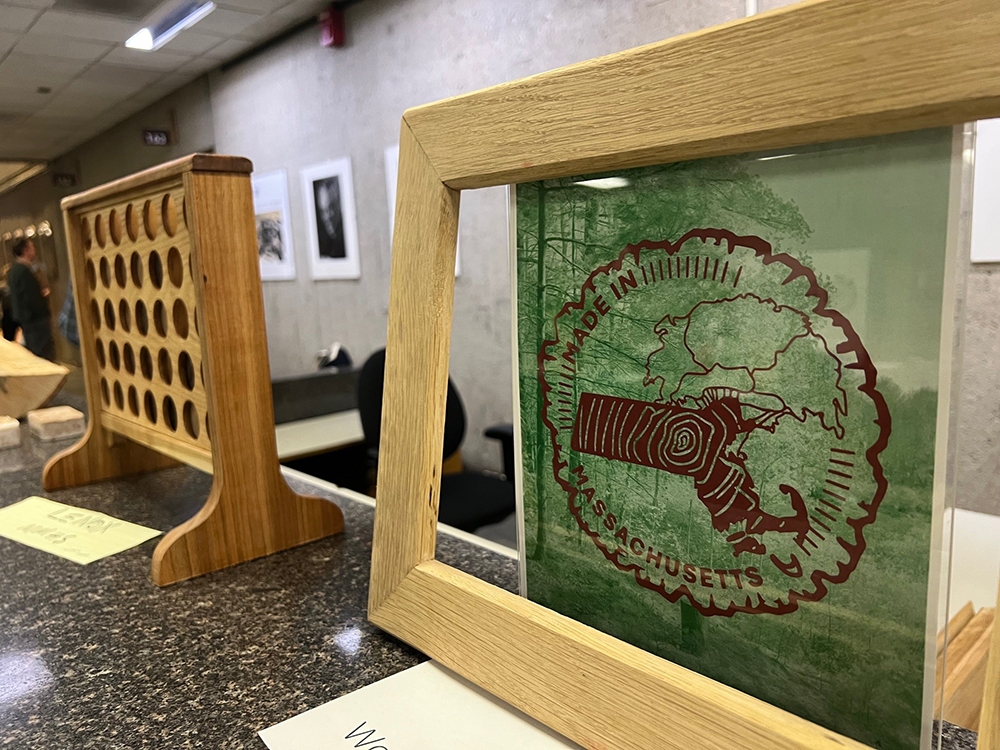
The final highlight was the new addition this year of Made in Massachusetts. The event featured more than a half-dozen vendors who make and sell various products derived from the forest. This included craftspeople who have a talent for bringing the natural beauty of wood into useful everyday objects, like cutting boards, storage containers, bowls, instruments, and even bicycles!
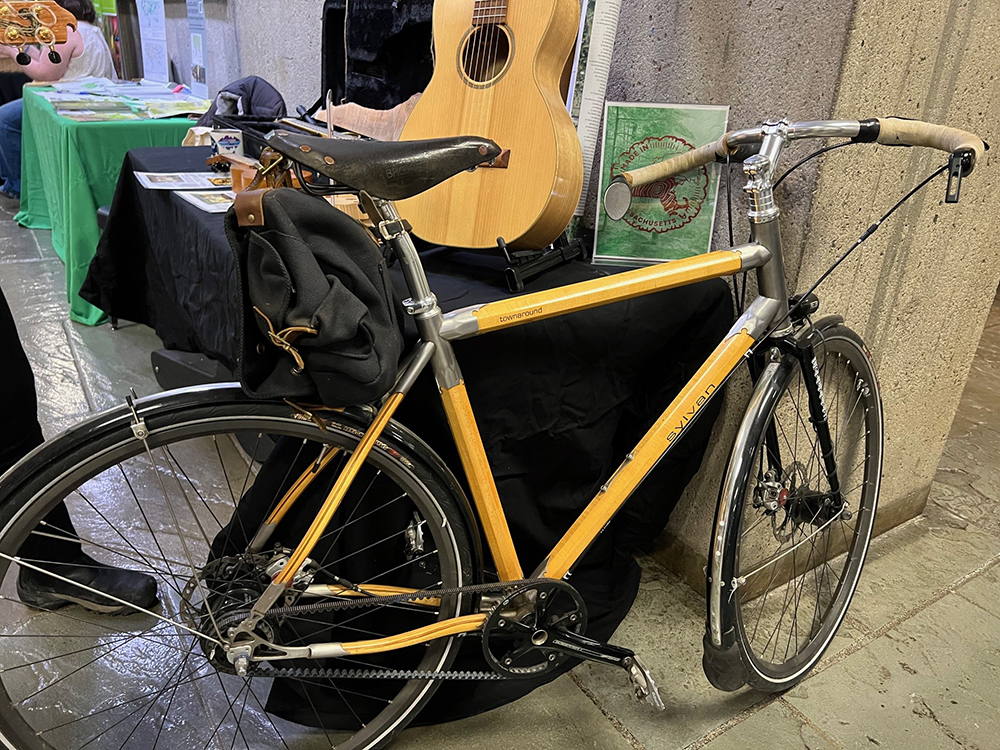
Events like these are a physical manifestation of community, with representation from all of the folks that make it possible to conserve our forests, manage them well, and produce beautiful natural materials. NEFF is a part of this community. We know the value of these partnerships and relationships in Massachusetts and with our state-based partners across New England. We all have different roles to play, and we can’t do this work alone!