Evening Song: The Woodland Thrushes of the Northern Forest
Jun. 17, 2026
Learn about the veery, hermit thrush, wood thrush, Swainson’s thrush, and…
Read More


Previous post: Evening Song: The Woodland Thrushes of the Northern Forest
Where the wood thrush shares locations with the veery, the wood thrush is typically on higher, drier ground whereas the veery is often in the damper woods near rivers and water.
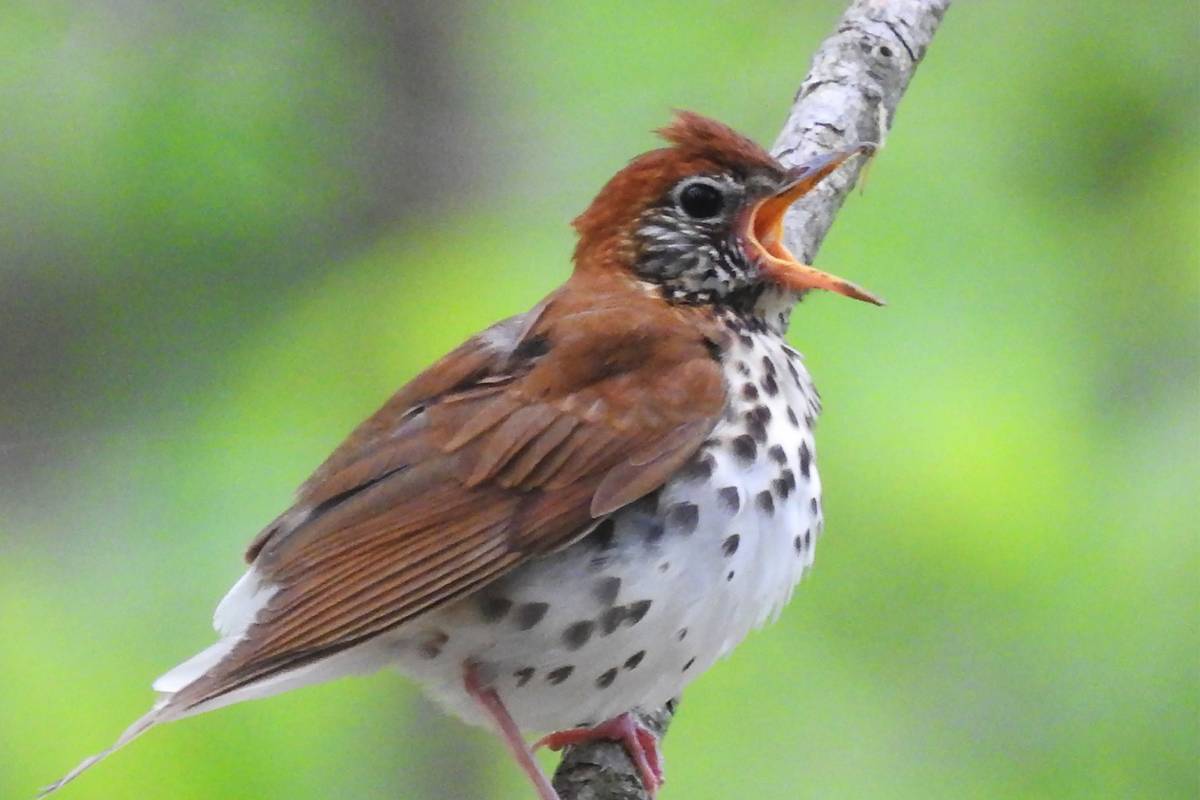
The wood thrush, which is actually in a different genus than the other similar-looking brown thrushes found nesting or passing through the northern forest, is the boldest looking of the brown thrush group that includes woodland birds about the size and shape of a robin with brown backs, white bellies, and spots on the chest and/or belly. The wood thrush has a rusty back and dark spots all the way down its chest and belly. Its rich song of flutes and trills earns the wood thrush the most favored status among those who compare thrush songs. It can sing 50 variations of its three-part song that starts with a low note, flutes through a middle phrase that makes the song recognizable, and varies most on the high-pitched trill at the end.
Wood thrush habitat (the basics all animals need in seemingly endless variations: food, space, cover, and water) includes a need for unbroken forest. Wood thrush populations are plummeting due, in part, to big blocks of forest being fragmented by development. It will nest in smaller plots of forest, but not very successfully. As hardwood and mixed hardwood forests become broken up into house lots, the wood thrush nests built close to yards are often victimized by cowbirds. Cowbirds chuck one of the thrush eggs out of the nest and lay one of their own for the wood thrushes to raise. Since cowbirds have bigger chicks, the cowbird chick tends to get more of the food brought by the thrush parents, who stuff food down the largest mouth. Generation by generation, the wood thrush declines.
The NEFF Exemplary Forestry guidelines for the Acadian Forest that are used to guide the Western Maine Habitat project were designed to address landscape-wide habitat loss or degradation and do not focus on habitat improvement for single species, or even for birds. However, the project recommends specific forest practices to the family and nonprofit landowner on specific properties and includes guidelines to address wood thrush habitat while, at the same time, fulfilling multiple habitat needs for other species.