Ninth Forest Congress Wrap-Up
Jul. 22, 2025
NEFF's Andi Colnes reflects on the team's week at the Ninth Forest Conference,…
Read More



Unlike most of my days as a remote work-from-home employee, today started with an early bleary-eyed bus ride to Washington DC to attend the Ninth Forestry Congress. Despite a full day’s travel, I managed to make it in time for the conference’s kick-off keynote speech.
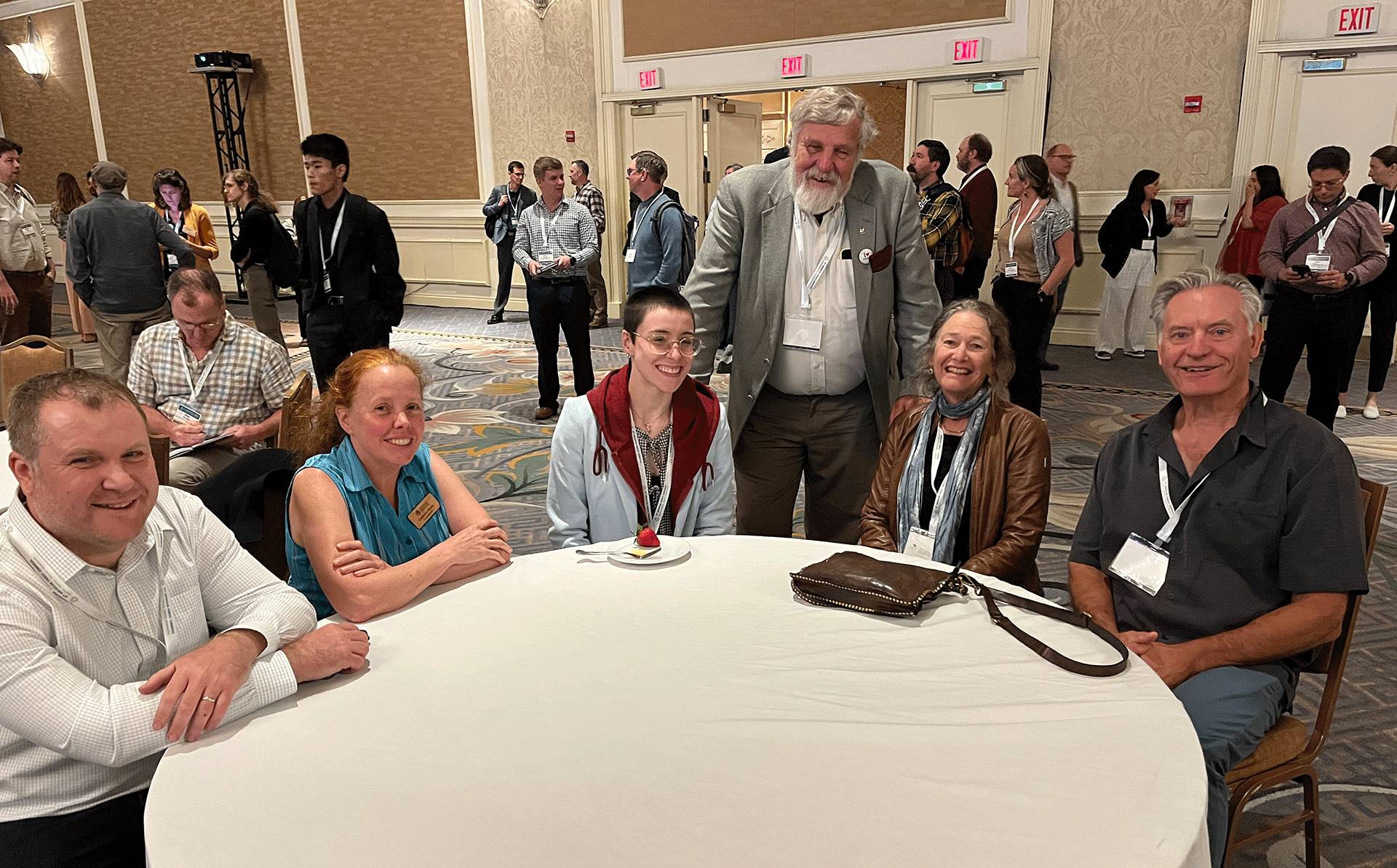
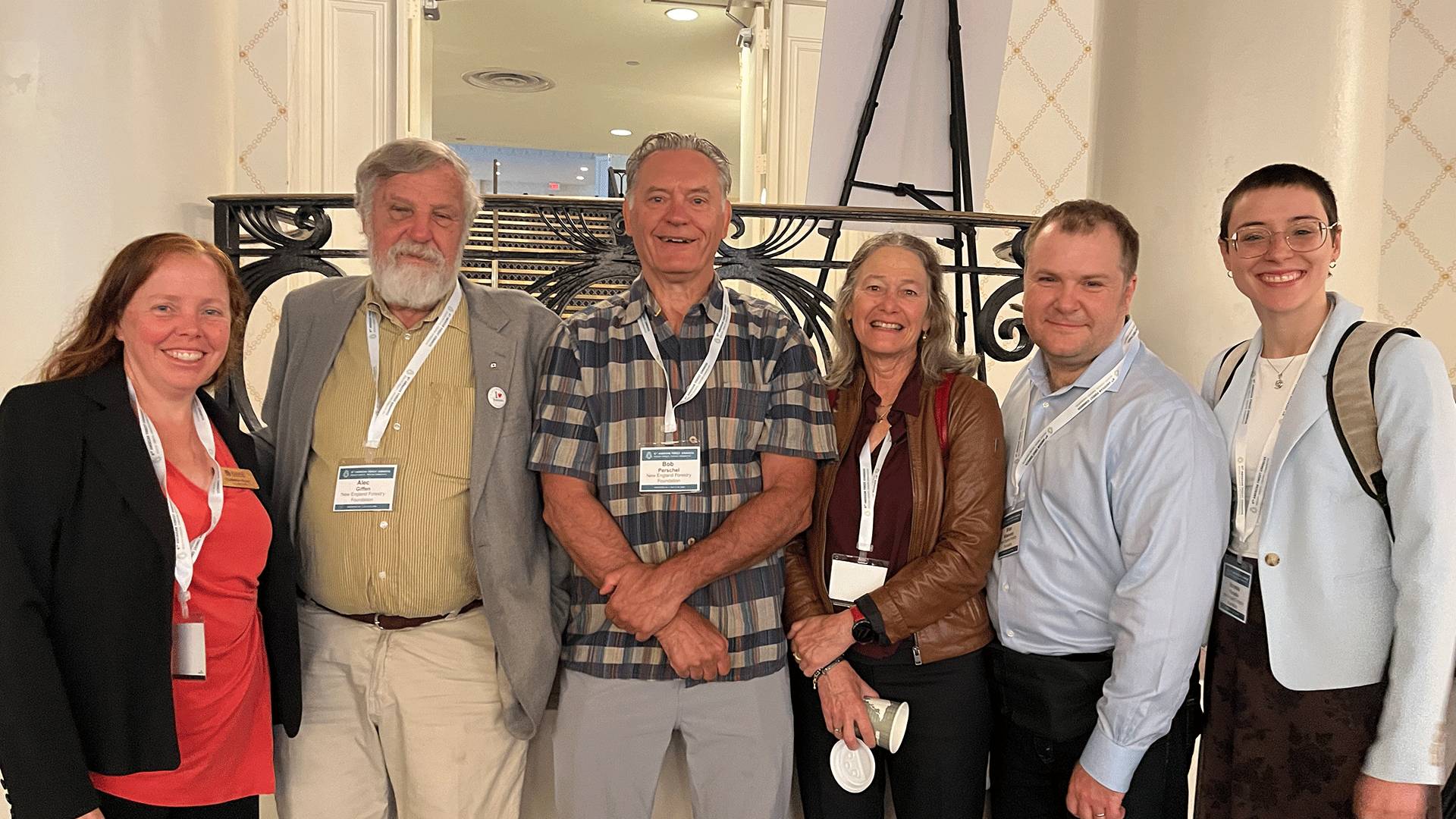
NEFF attends the Ninth Forest Congress. Left to right: NEFF Senior Forester Brian Milakovsky, NEFF Senior Advisor Robert Perschel, NEFF Wood Sourcing Specialist Vanessa Komada, NEFF Forest Scientist Colleen Ryan, NEFF Senior Forest Science and Policy Fellow Alec Giffen, and NEFF Deputy Director and Climate Fellow Andrea Colnes
Nalini Nadkarni is a professor at the University of Utah who studies forest canopy disturbance dynamics. Having studied environmental and anthropogenic disturbances for decades, one of her key points was that not all disturbances are bad. In fact, they often can facilitate unexpected and beneficial changes. Disturbance can be felt in many facets of our lives today, from climate change to shifts in communities or politics. Ultimately, moving into this week, Nalini encouraged us to see the challenges or “disturbances” we are facing in the forestry sector not only as a negative, but also as a means for growing as people and an industry.
This is a pivotal time for mitigating the effects of climate change on our ecosystems and communities, and an opportunity to grow our infrastructure in a more sustainable way in the U.S. That is why, as NEFF’s Wood Sourcing Specialist, I am excited to introduce a resolution at this week’s Forest Congress tied to the work of our Bioeconomy Initiative and sustainable wood:
“A resolution to develop comprehensive legislative recommendations to advance markets for sustainable forest products and spur public and private sector investment that facilitates faster commercialization of the most promising innovations and products that benefit forest stewardship and retention goals.”
This resolution can be broken down into three main concepts: 1) the need to shift our economy to bio-based materials, 2) the need to source and manage these bio-based materials sustainably, and 3) the need to align local market development with forest restoration and management goals.
A recent analysis by NEFF partner Jeff Spiritos of Spiritos Properties, found that there is currently a shortage of around 1.5 million affordable and available housing units in New England. On top of this, according to research by Architecture 2030, around 14 percent of total global CO2 emissions come from the manufacturing of structural building materials.
Between this huge need for affordable housing and the concern for carbon emissions from construction, wood-based materials offer a significant solution. Not only do wood products emit less carbon than other business-as-usual materials, but they store carbon as well. However, this connection has not been realized by local, state, and federal governments in the U.S. I am hoping that this resolution will foster networks and discussions to begin changing that.
Learn more in the NEFF blog post, “How Mass Timber Can Help the Housing Crisis”
In order to balance the demands of a growing wood product industry while maintaining the health of our forests, we need to source sustainably managed wood. To achieve this, there are existing certification systems such as FSC and SFI that verify ecologically sound forest management in the U.S. for wood products, and other guidelines like NEFF’s Exemplary Forestry standards that push for more wholistic landscape and climate-forward approaches.
However, to grow the adoption of and demand for these programs, there needs to be greater consumer education on the importance of good forest management, plus government policies and incentives that encourage or require their adoption. Ultimately, this piece of the resolution aims to educate and gather consensus during the Forest Congress on this issue.
Closely aligning the development of wood markets with specific regions’ forest restoration and management needs will deliver the biggest win for forests and people, both economically and ecologically. For example, expanding markets for low-grade/lower-quality wood on a regional basis can help make timber-stand improvement practices more financially feasible and provide more low-carbon forest products for consumers. The goal of this component of the resolution is to foster the development of an economic initiative that brings new and upgraded mill and manufacturing facilities to forested regions that currently lack sufficient or diverse manufacturing infrastructure.
Stay tuned throughout this week to hear more about the resolutions NEFF is putting forward and to hear about the team’s experiences and takeaways. Until next time.
-Vanessa