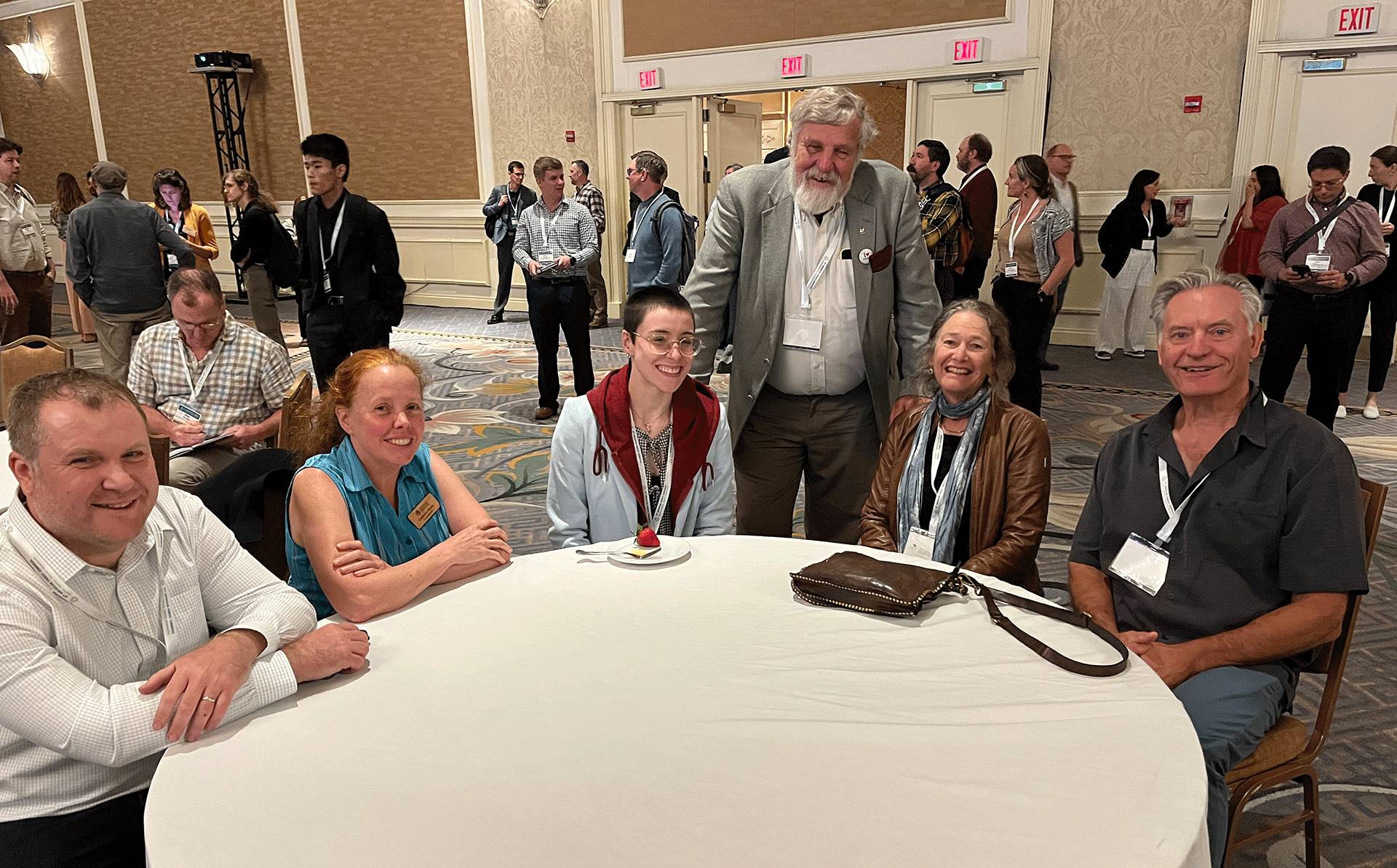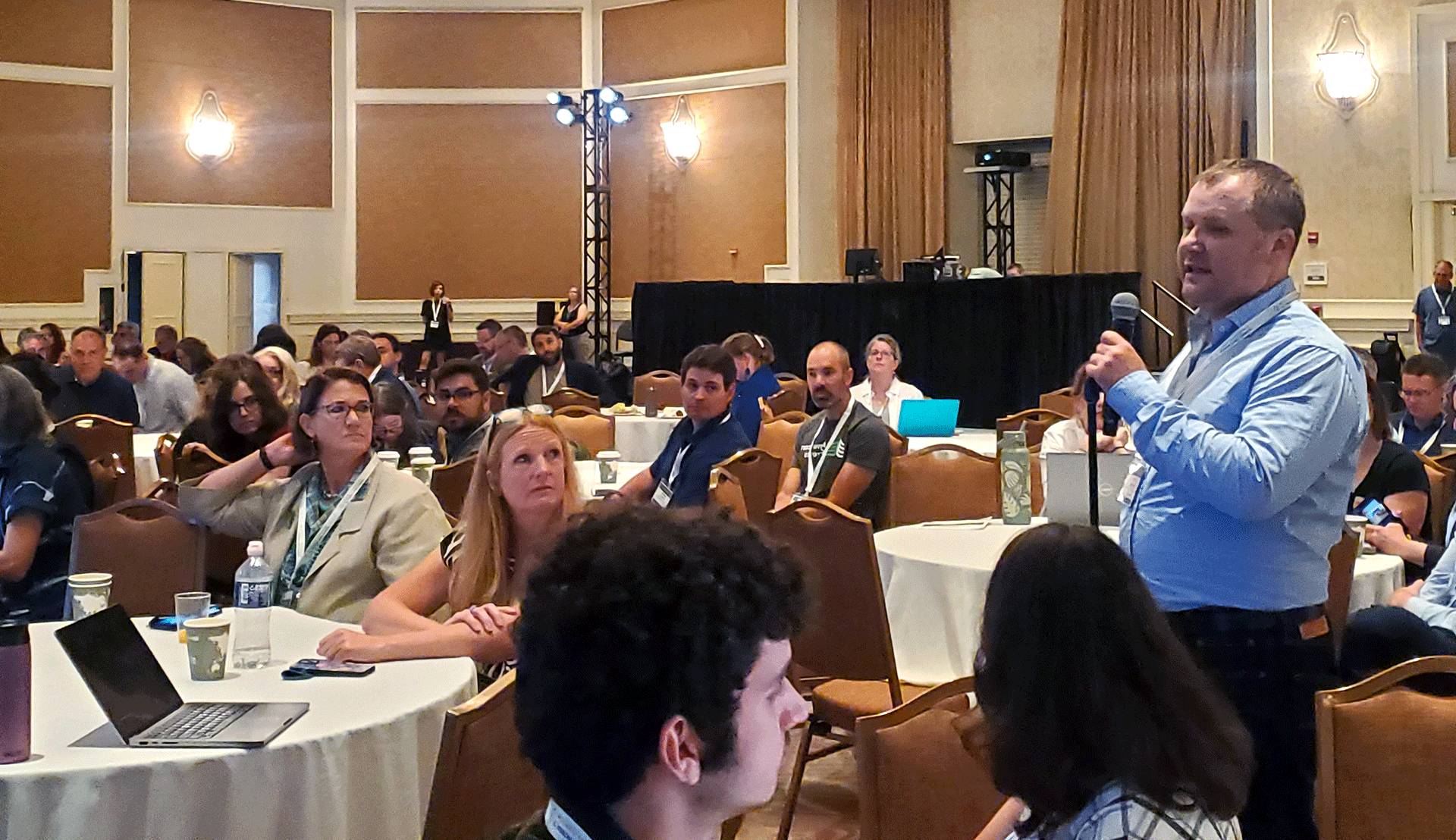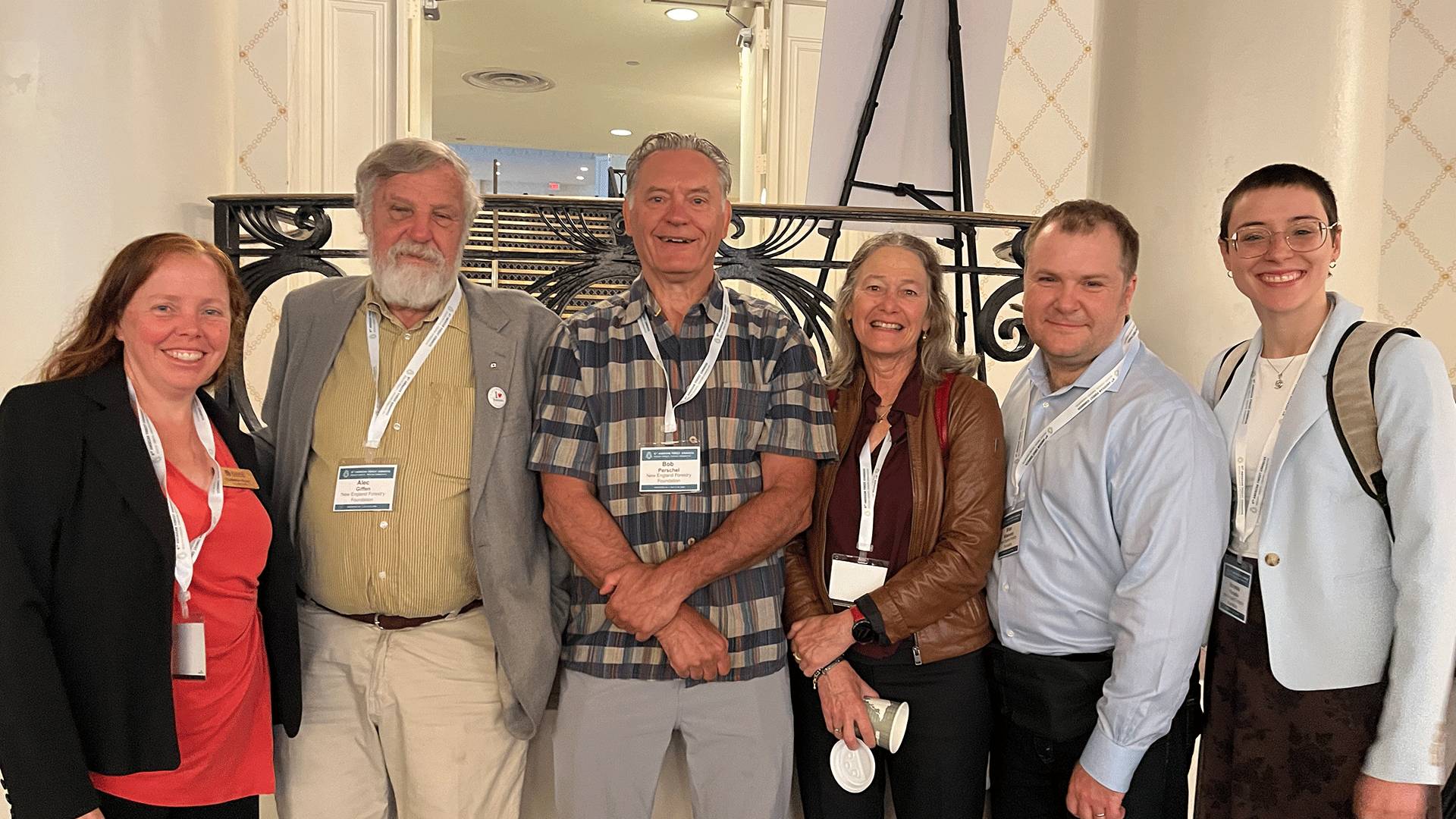
Ninth Forest Congress Wrap-Up
Jul. 22, 2025
NEFF's Andi Colnes reflects on the team's week at the Ninth Forest Conference,…
Read More



A major topic of discussion at the Ninth Forest Congress is the forest fire crisis in the western United States, particularly on public lands. It is inspiring to see the energy, focus and bipartisan action on this issue, but as an organization representing a region with few federal lands and even fewer forest fires, NEFF is trying to bring similar energy and attention to the forest health and resilience crisis of our eastern forests: the “silent fire” of bio-invasion by exotic pests and pathogens.
By one recent estimate, 41 percent of the trees in eastern forests face threat of death from exotic pests and pathogens, including the hemlock woolly adelgid; beech leaf disease; the emerald ash borer; red pine scale; and the browntail, spongy and winter moths that defoliate oak species. It is no exaggeration to say that we are losing billions of dollars of timber value to these pests every year, and incalculable value in ecosystem services, wildlife habitat, and recreational opportunities.
Given the massive scale of this challenge, it is remarkable how few resources we devote to it, with the US Forest Service responsible for a lot of the funding that is available — and the good work being done.
The US Forest Service has a Forest Health program with brilliant pathologists and entomologists, including a few dozen experts in Durham, New Hampshire, and this program also helps fund similar teams in state governments around the region. For example, half of the state-level experts in Maine and Massachusetts are funded by the US Forest Service, and in some smaller states it is closer to 100 percent!
The work of these experts is remarkable. For example, a Maine Forest Service entomologist uses small federal grants to breed and release a fly that controls the populations of the introduced winter moth, which devastates oak forests in coastal Maine and Massachusetts. But expert efforts like this are often too little, too late — due to a lack of funding.
At the Forest Congress, I spoke with Faith Campbell of the Center for Invasive Species Prevention, who has been working for decades to bring more resources to the fight against exotic pests and pathogens, and she says that these efforts usually come very late in a bio-invasion, when the threat is already very dire. The best time to address exotic pests and pathogens is very early in the infestation, but at this stage there usually is not a sense of urgency that stimulates funding.
Those of us who are alarmed by these bio-invasions know funding for the US Forest Service programs (at the State, Private & Tribal Forestry department) that address forest health and research is essential. The community of federal experts and related state-level Forest Health departments are irreplaceable resources that the nation’s forests cannot afford to lose.
However, these programs and entire forestry departments are very much at risk of devastating cuts in funding; for example, they are currently under debate in the context of the Congressional budget. And beyond the need to keep existing levels of funding in place, at NEFF we believe that protecting the nation’s forests from the rising tide of pests and pathogens will require significantly more resources if we are to address emerging issues at scale.
As such, we have submitted a resolution at the Ninth Forest Congress to strengthen coordination between states and with the federal government to address exotic pests and pathogens, and to collectively pursue significantly more resources for this crisis. We hope we can work with the remarkable collection of stakeholders here to push this forward!
Here’s NEFF’s resolution:
A resolution to address the urgent threat posed by exotic pests and pathogens impacting the long-term health and productivity of America’s eastern forests, convene a multi-state working group with participation of state forestry and conservation officials, state legislators, researchers, landowners and other interested stakeholders to define and pursue needed resources for an immediate and landscape-scale regional approach to Integrated Pest Management.