A Forester, an Entomologist, and 500 Beetles Walk Into the Woods
Jan. 28, 2026
To control the invasive hemlock woolly adelgid, NEFF released 550 biocontrol…
Read More


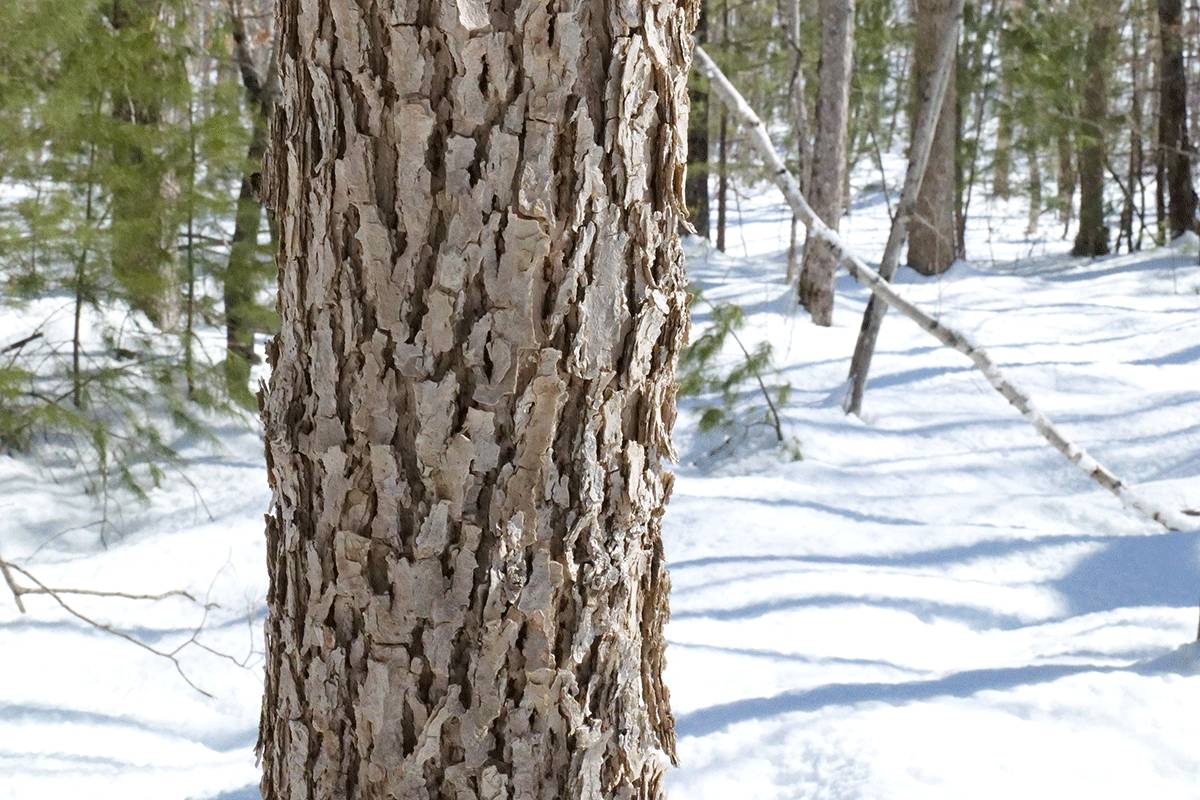
NEFF’s “Meet the…” tree species column provides life history, identification tips, fun facts, information about invasive species, what people make with the tree’s wood, and more. This installment profiles the Brown Ash (Fraxinus nigra)—the star of a past newsletter’s lead article, “Basket Trees of the Dawnland”—and still provides that fascinating information, while also giving readers the opportunity to turn to the online versison of “Basket Trees of the Dawnland” at a few points so they can better understand the Brown Ash’s cultural context and see how hard people are already working to protect the ash.
The Brown Ash, also commonly called Black Ash, grows on sites with rich moist ground along the banks of streams—preferring sluggish, slow-moving streams—and in forested wetlands. The species provides significant cultural, wildlife-related, and ecological value, and its stands are important to hydrology, as they play a role in water retention and release in riparian areas that regulate water levels and water quality. Generally, Brown Ash does not bring a lot of economic value from a timber-marketing perspective.
F. nigra ranges from the Gulf of St. Lawrence west to southeastern Manitoba; south to Iowa; east to southern Indiana, Ohio and West Virginia; and north from northern Virginia to Delaware and New Jersey. The species grows in all New England states.
Brown Ash can grow to a height of 50-60 feet and a diameter of 10-20 inches, and its bark is smooth gray on young trees, and shallowly fissured and becoming scaly on older trees.

The Brown Ash can tolerate standing water for many weeks. It can be found in stands of purely other Brown Ash trees or growing individually mixed with species such as balsam-fir, Eastern White-cedar, and Speckled Alder. Brown Ash are shade intolerant and prefer moist growing conditions.
Many aspects of Brown Ash management are unknown because it has never been a commercially important species, even though its wood is well suited to a variety of uses. Brown Ash wood can be permanently bent, and historically was favored for making snowshoe frames, barrel hoops, canoe ribs, and woven baskets.
Start to learn about the role Brown Ash baskets have played in Maine-based Wabanaki cultures and scientific endeavors by reading NEFF’s “Basket Trees of the Dawnland” blog post at newenglandforestry.org/dawnland-basket-trees, which highlights the research, work and advice of some of NEFF’s Tribal Nations partners from our Climate-Smart Commodities award, and also refers readers to additional resources.
The Emerald Ash Borer (EAB) is an invasive insect believed to have arrived accidentally in cargo imported from Asia. It was first found in the United States in Michigan in 2002, however the USDA estimates that the Emerald Ash Borer had been here since the 1990s. The female Emerald Ash Borer beetle lays eggs all over the bark of healthy ash trees. Once hatched, the larvae tunnel though the bark into the trees. The larvae feed on the cambial tissue, disrupting the trees’ vascular system, causing the infested tree to die within 3-4 years. Learn how the Ash Protection Collaboration Across Wabanakik (APCAW) is fighting back against the EAB: newenglandforestry.org/dawnland-basket-trees
The ongoing threats of climate change and extreme weather threaten the survival of F. nigra. As long periods of drought and warmer winters become more common throughout New England, the Brown Ash suffers. That is because Brown Ash favors moist ground. When Brown Ash die, there may be no other tree to take its place, resulting in a permanent loss of forest and all the ecosystem benefits like carbon sequestration that these trees provided.
Brown Ash is also called Black Ash and Swamp Ash, and in some localities the Basket Ash or Hoop Ash. Good seed crops occur at irregular intervals of up to seven years. Germination does not take place until the second season after seedfall.
Farrar, J. L. (1995). Trees of the Northern United States and Canada. Wiley-Blackwell.
SUNY-ESF- Ranger School Faculty, (2009). Dendro-Eco Field Manual: A Guide to Plant Identification at The Ranger School.
Weed, C.M. (1908). Our Trees: How to Know Them. 3rd Edition. J.B. Lippincott Company.
Wright, J.W. and Rauscher, H.M. Fraxinus nigra Marsh. Black Ash (accessed 2024).