NEFF Attends the Forest Congress: Passing Our Resolutions, and Day 4
Jul. 18, 2025
NEFF has had all of our proposed resolutions passed by the full Forest Congress!
Read More


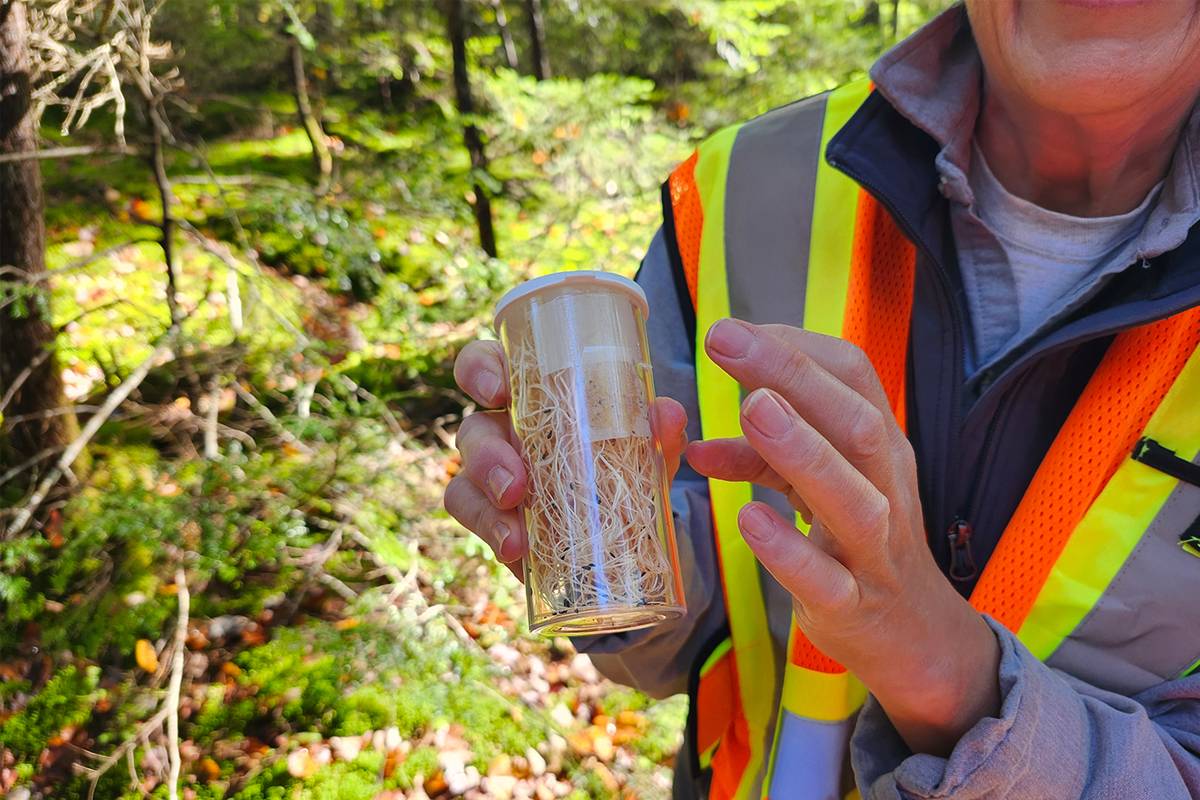
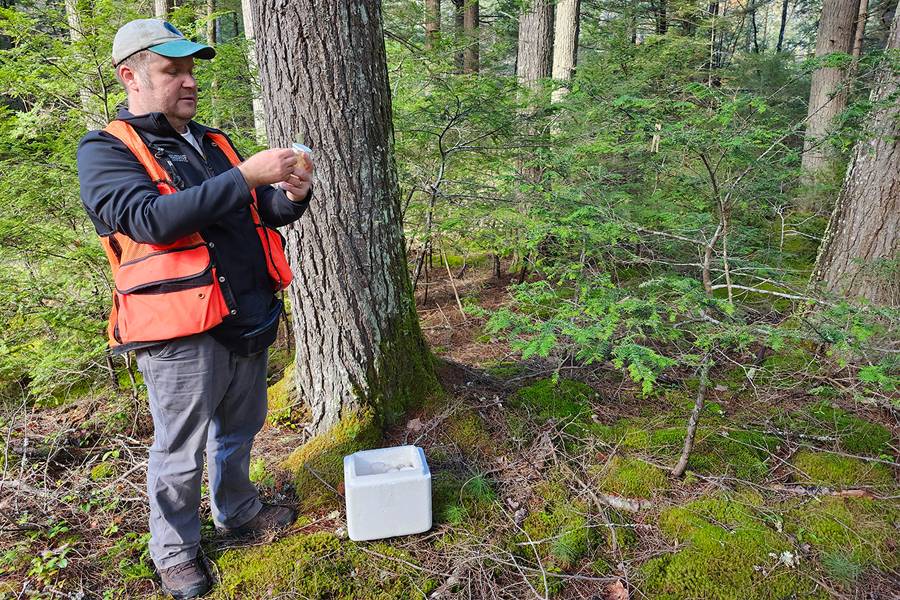
New England Forestry Foundation (NEFF) is not standing idly by while exotic pests and pathogens ravage our forests, and this October, we finally had the beginnings of a fair fight on our hands at NEFF’s Sortwell Memorial Forest thanks to… some tiny beetles. Just unassuming looking little guys, who were, of all things, mailed to us in this box.
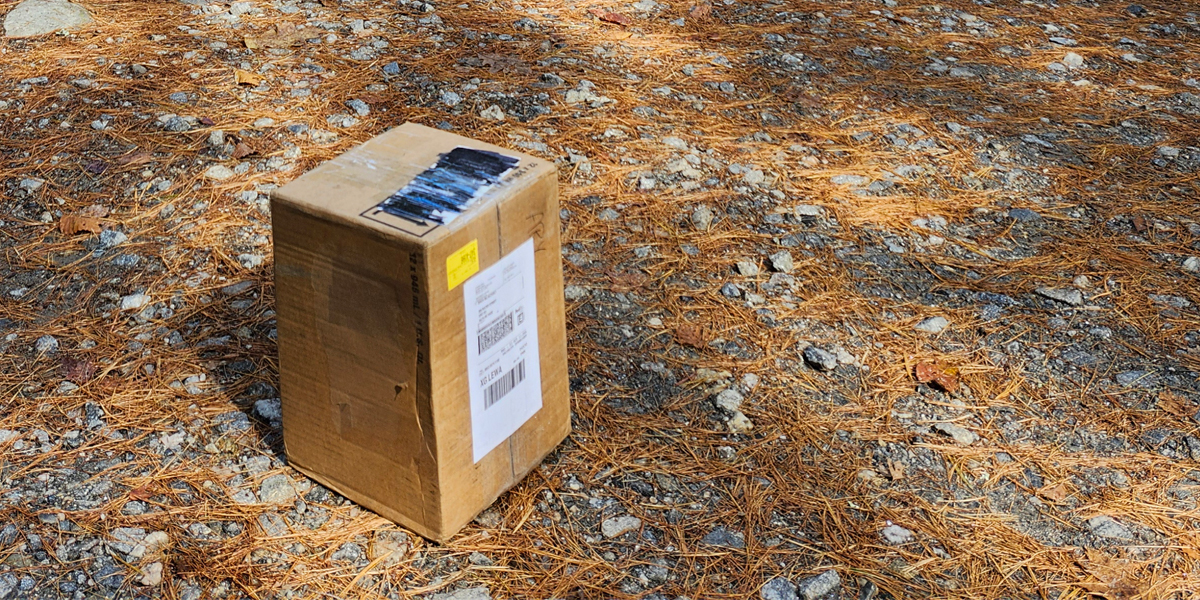
Brian Milakovsky
But we’re getting ahead of ourselves — let’s set the stage.
In fall 2025, NEFF launched an “Integrated Pest Management” (IPM) effort against the hemlock woolly adelgid, emerald ash borer, and beech leaf disease, which are killing the native tree species these threats are named for across our 150 Community Forests. NEFF is following the lead of our region’s amazing forest health experts at the U.S. Forest Service and relevant state agencies.
All three of these exotic pests were brought accidentally to North America, probably on imported nursery stock or in untreated wood pallets. They are able to do so much damage because our eastern hemlock; white, green, and black ash; and American beech trees never respectively developed resistance to the adelgid (a tiny insect), borer (a beetle), and beech leaf nematode. Without intervention, these pests could wipe out mature trees of these species in New England and potentially even threaten them with extinction.
According to the USDA, IPM is “a science-based strategy for controlling pests by combining biological, cultural, physical, and chemical methods to minimize risks to people and the environment, focusing on prevention, monitoring, and using the least hazardous options first.” To take the example of the hemlock woolly adelgid, IPM comprises a combination of thinning in hemlock stands to promote large, healthy crowns; targeted application of pesticide to a small number of trees; and release of approved “biocontrol” beetles that help control the adelgid population by eating them.
The work of these beetles is straightforward – to devour as many adelgids as possible before the latter can suck the life out of our hemlock trees.
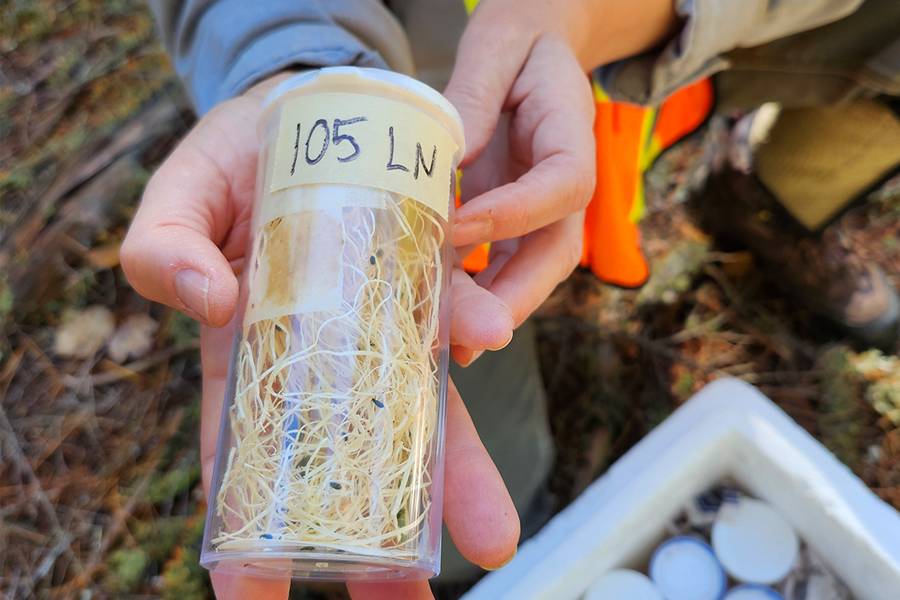
In October 2025, NEFF received 550 Laricobius nigrinus beetles that had been raised in a laboratory at Virginia Tech. NEFF received them through a U.S. Forest Service program that shares biocontrol insects with land trusts and public land managers.
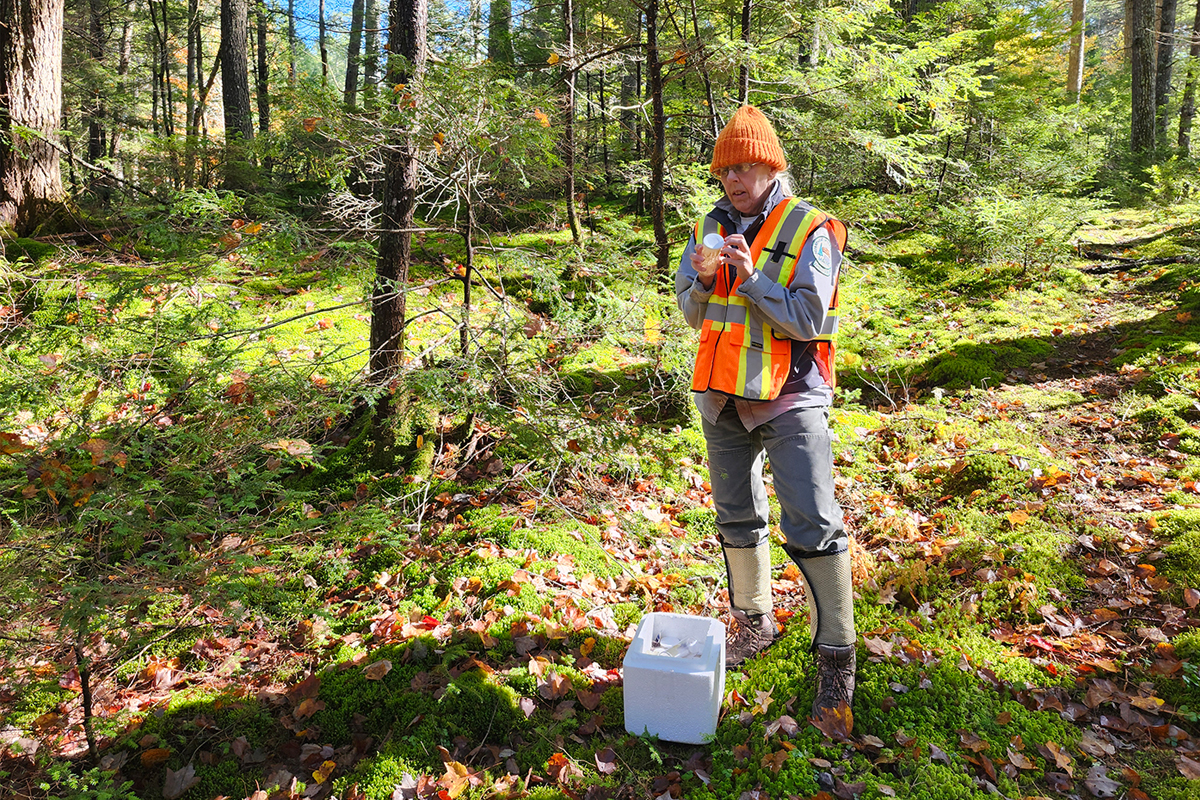
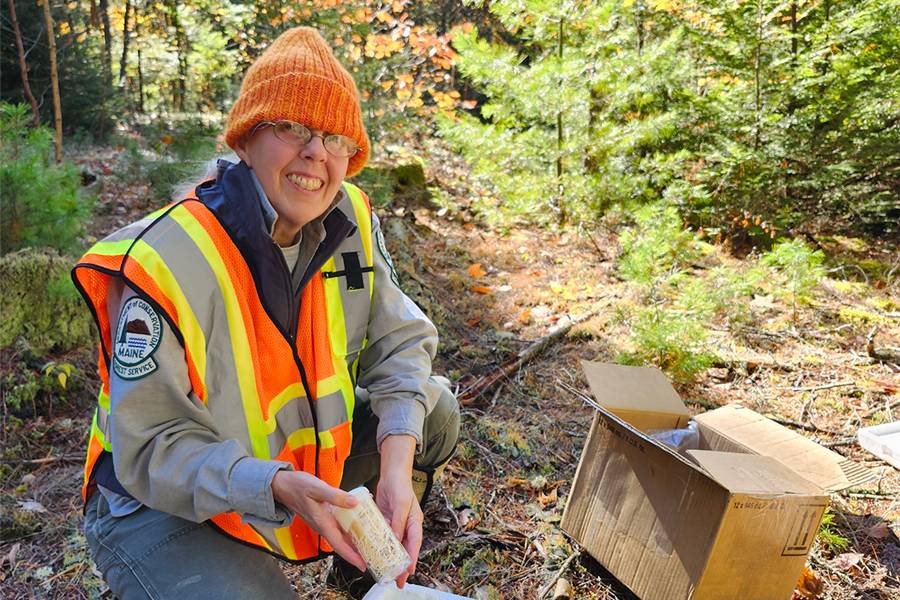
Maine Forest Service Entomologist Colleen Teerling, photo by Brian Milakovsky
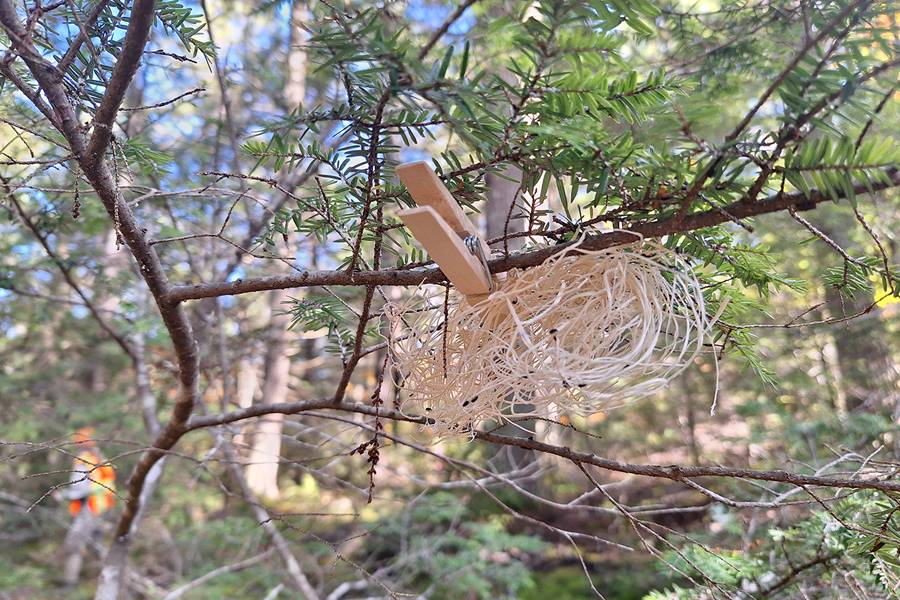
On a beautiful fall day, NEFF Senior Forester Brian Milakovsky and Maine Forest Service Entomologist Colleen Teerling traveled to NEFF’s Sortwell Memorial Forest in Wiscasset, Maine — again, after USPS delivered the beetles (very safely and securely) to Brian in a box — and removed the beetles and their “nest” of wood excelsior from the 10 transport vials. Brian and Colleen then attached them to low-hanging hemlock branches with clothespins.
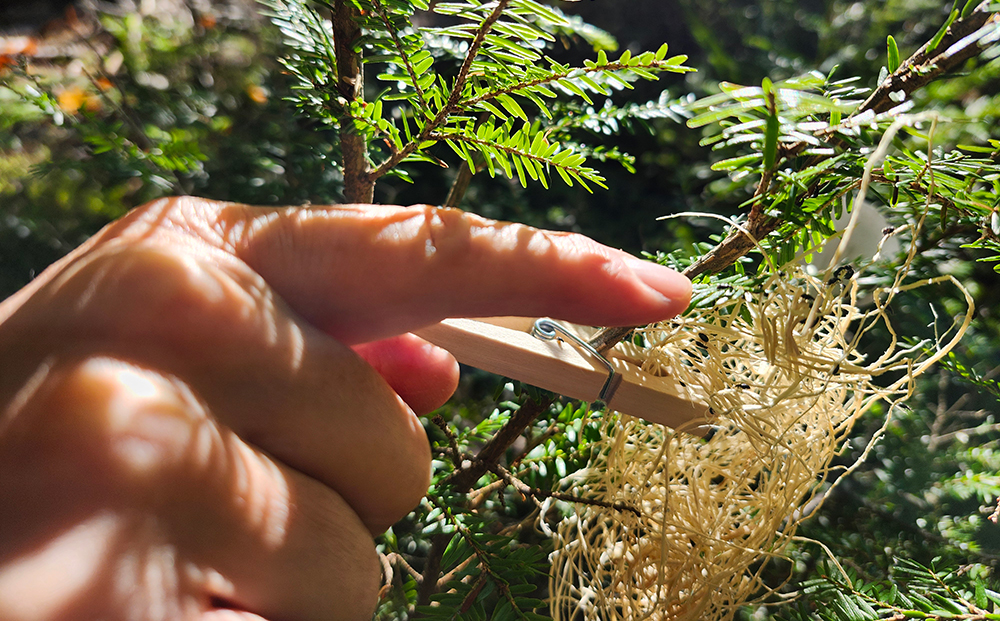
Maine Forest Service Entomologist Colleen Teerling clips wood excelsior containing beetles to a hemlock, photo by Brian Milakovsky
In the sunny weather, the beetles were already in motion, and likely flew upwards into the hemlock crowns to begin feeding on the adelgids that have infected this forest.
“In can be hard to feel hopeful when dealing with exotic forest pests and pathogens, because so many of them are well equipped to damage or outright destroy our forests — and with them all the carbon they store,” Brian said. “But releasing those beetles? That was both a genuinely good day where I knew we were making a real difference for Sortwell Memorial Forest, and a reminder that so many brilliant people are working on solutions.”
NEFF will also apply insecticide to the lower trunks of 50 mature hemlocks at Sortwell Memorial Forest, in a portion of the hemlock forest not far from the biocontrol release. These sprayed trees will be free of adelgid for several years and will grow thick foliage again, which will attract the adelgid once the insecticide wears off. But by this time the biocontrol beetles should have built up their population and should start reducing adelgid populations to the point that mature hemlock trees can survive their encounter with the exotic pest.
NEFF is assessing which of its other Community Forests across New England are appropriate for IMP against the hemlock woolly adelgid and other pests. For example, NEFF’s Harris Reynolds Forest in Bethlehem, New Hampshire, has a grove of mature black ash, a species of great cultural significance to the region’s Wabanaki peoples, that is in the early stages of emerald ash borer infestation. NEFF will work with state officials to inject these trees with insecticide to hold off the borer while populations of biocontrol wasps introduced to control the borer’s spread gradually build up. NEFF will also be reaching out to land trusts, state forests, and municipal forests across New England that border our Community Forests to discuss IPM partnerships in the landscapes we share.
This important NEFF work is made possible by $70,000 in grant funding we received from three foundations in 2025 to develop an IPM strategy and implement its early stages. Through this experience, we should determine how to continue funding such efforts through a combination of external grants, cooperation with government agencies, and use of our own timber sale revenues.
NEFF’s goal is to help preserve the habitat and timber value, cultural significance, and inexpressible beauty of hemlock, ash, and beech as they face unprecedented threats — and that’s no small goal. It’s going to take everything from creativity to unprecedented collaboration to pull it off. And it’s also going to take moments of hope like releasing 550 beetles at our Sortwell Memorial Forest on a sunny day.