The Whole Forest: A Unified Path for New England’s Landscapes
May. 19, 2026
A guest blog from Yale School of the Environment students
Read More


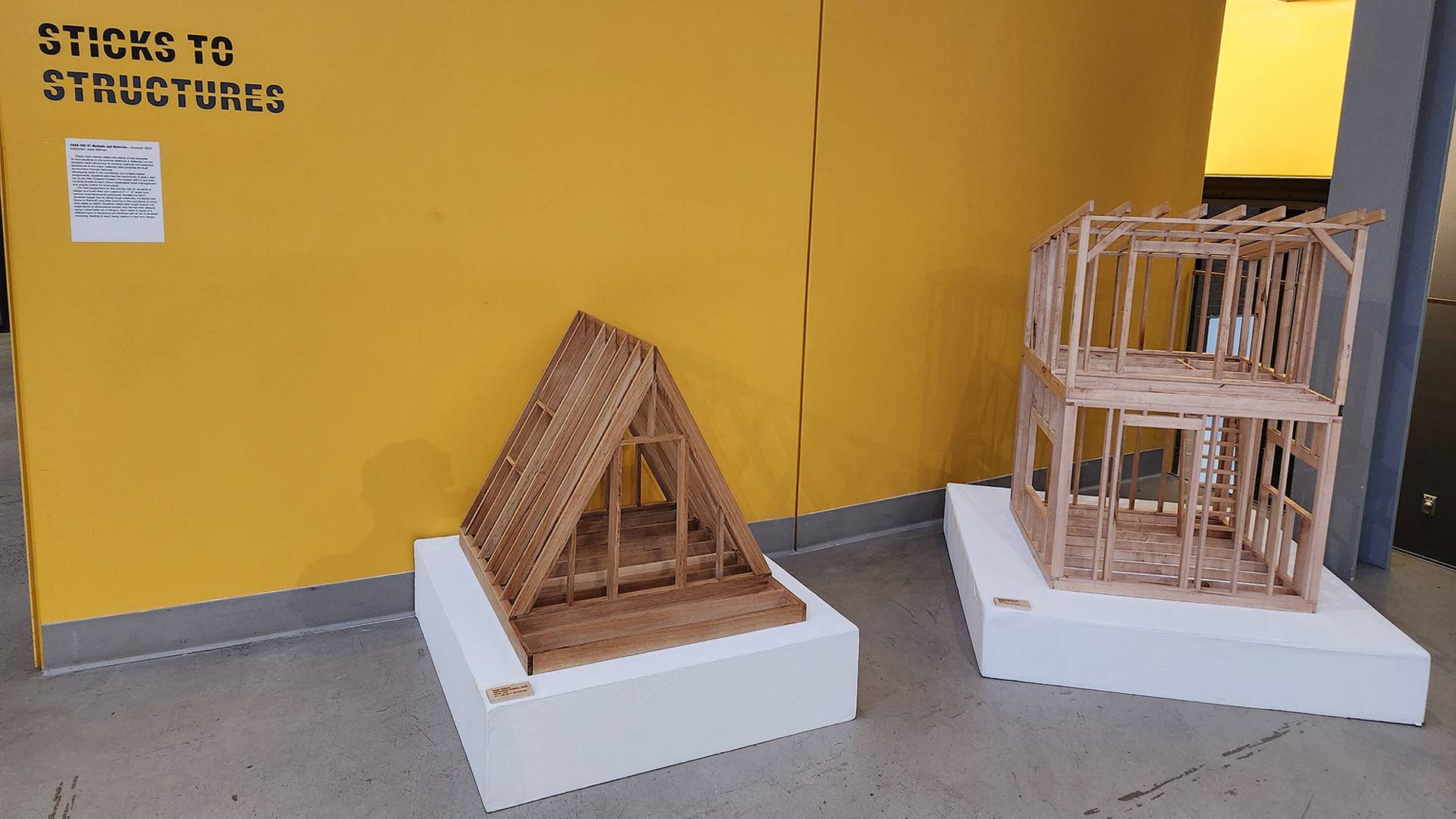
Course: EDAD-502-01 Methods and Materials | Summer 2025
Instructor: Jussi Silliman
Over the past few years, the Bioeconomy Initiative’s mission to grow collaboration opportunities with the architecture, engineering, and construction (AEC) industry has resulted in an ongoing partnership with the students and staff at The Massachusetts College of Art and Design (MassArt) in Boston. Most recently, NEFF donated around 30 lumber boards of various sizes and species — including cherry, red maple, walnut, hickory, and white oak — to the MassArt team, which were used by students enrolled in their summer Methods & Materials course.
In this course, students are introduced to working methods and assembly techniques used with major building materials such as metal, glass, and earthen, with a primary focus on working with wood. Not only do students gain familiarity with wood in the woodshop, but this semester, students were also offered the opportunity to tour NEFF’s Prouty Woods Community Forest with our team. Centering discussion around the benefits of sustainable management and wood sourcing, we visited previous and recent harvest sites, and talked about NEFF’s Exemplary Forestry management goals, strategies, successes, and next steps. Students also had the opportunity to look at two CLT (cross laminated timber) huts constructed on the Prouty property in 2016 by Harvard masters’ students looking to pilot and study small-scale and multi-species mass timber construction using New England tree species.
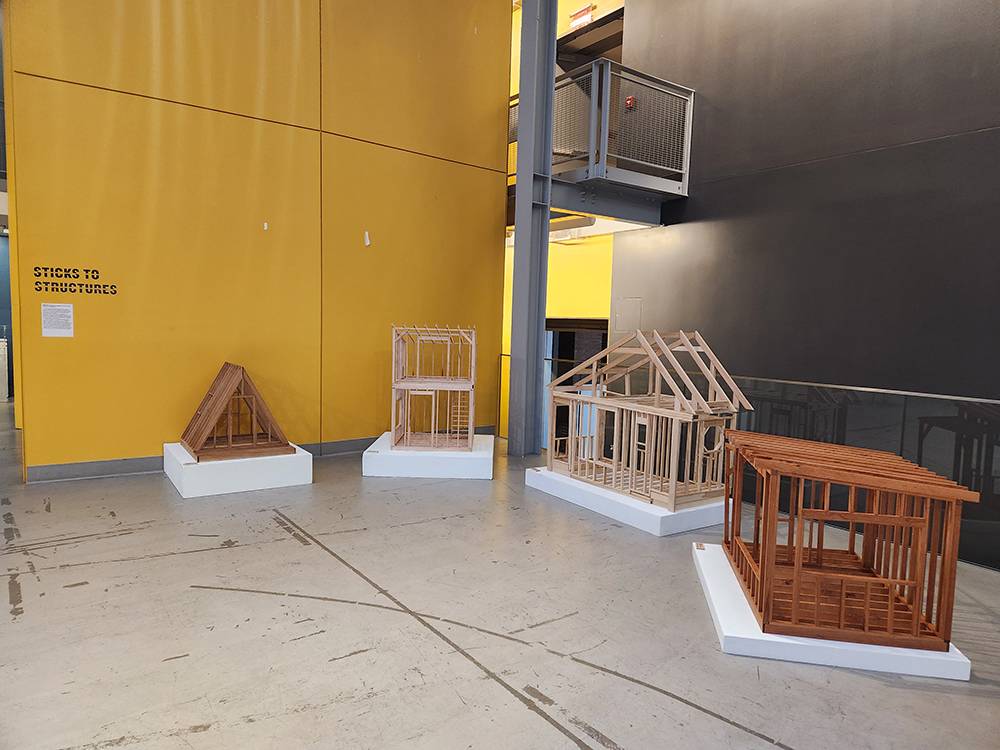
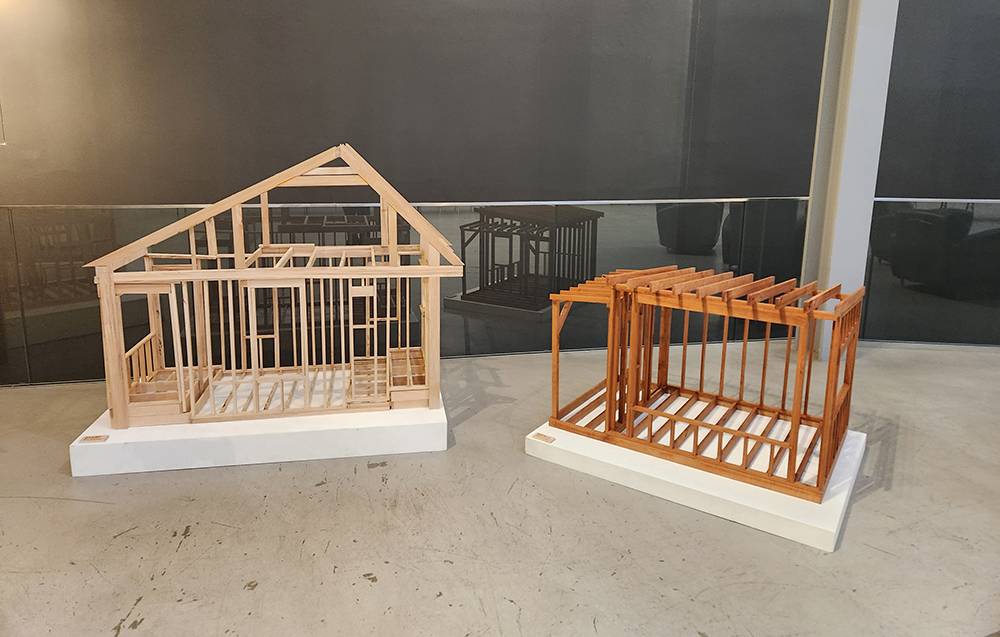
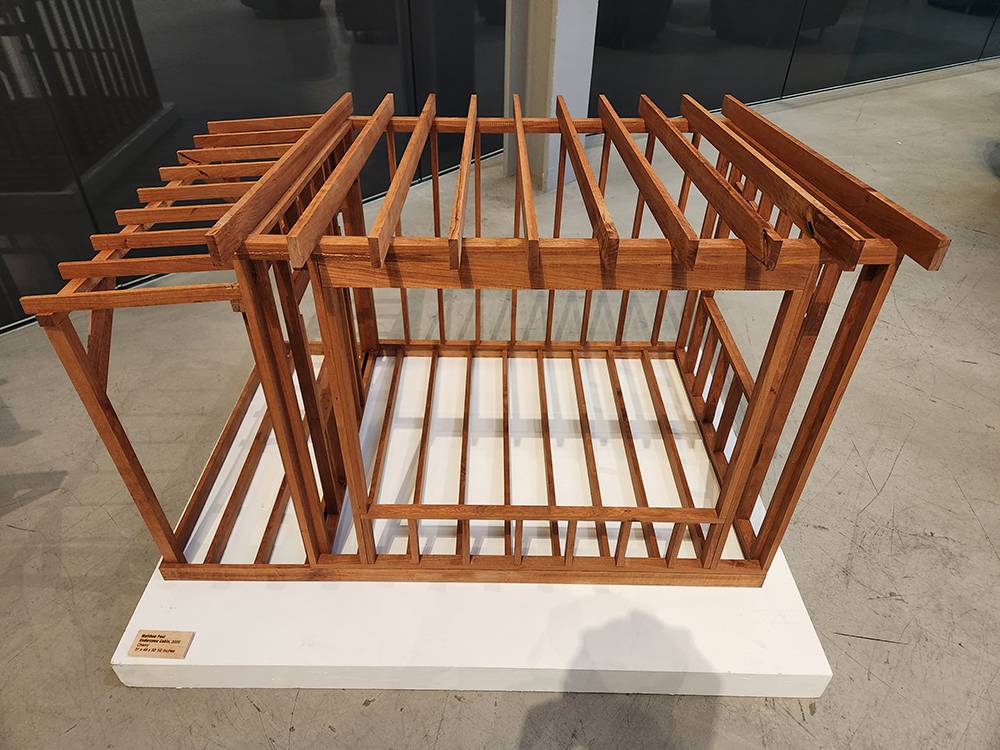
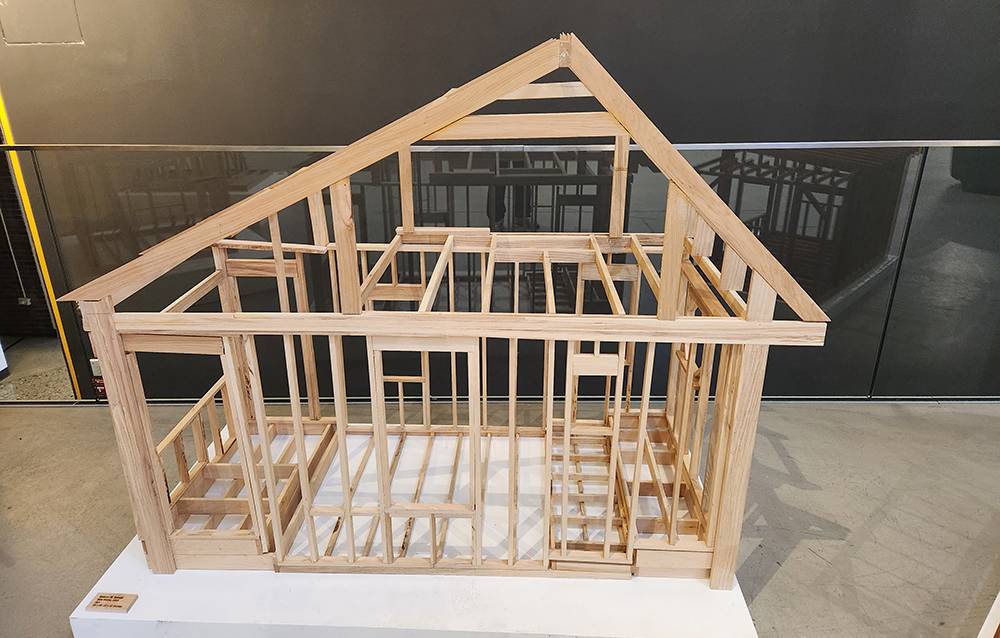
The final assignment for this course was for students to design and build their own miniature cabin to practice stick-framing design and construction. Although the size of each cabin was only on a furniture-size scale, they still had the ability to work with the same materials and tools that would be utilized in a real-life context. Students created their own frame designs, modeled them using a visual programming tool called Rhino3D, and brought them to life in the woodshop using wood that NEFF donated. Boards were milled into smaller dimensional lumber “sticks” and assembled using a brad-nail gun. Ultimately, each cabin was made of a different type of hardwood and finished with an oil of students’ choosing, leading to a distinct look and design for each cabin.
Around 40 percent of global emissions come from the production of materials used in the built environment. Wood provides a unique opportunity to not only sequester carbon in the forest but emit less carbon into the atmosphere during production of other business-as-usual building materials such as concrete or steel. By connecting these ideas to sustainable management, our hope is that students soon to enter the architectural sector will have more interest in and advocate for diverse uses of this material in the built environment. We look forward to future projects and opportunities with MassArt and are proud of what their students have accomplished.