The Whole Forest: A Unified Path for New England’s Landscapes
May. 19, 2026
A guest blog from Yale School of the Environment students
Read More


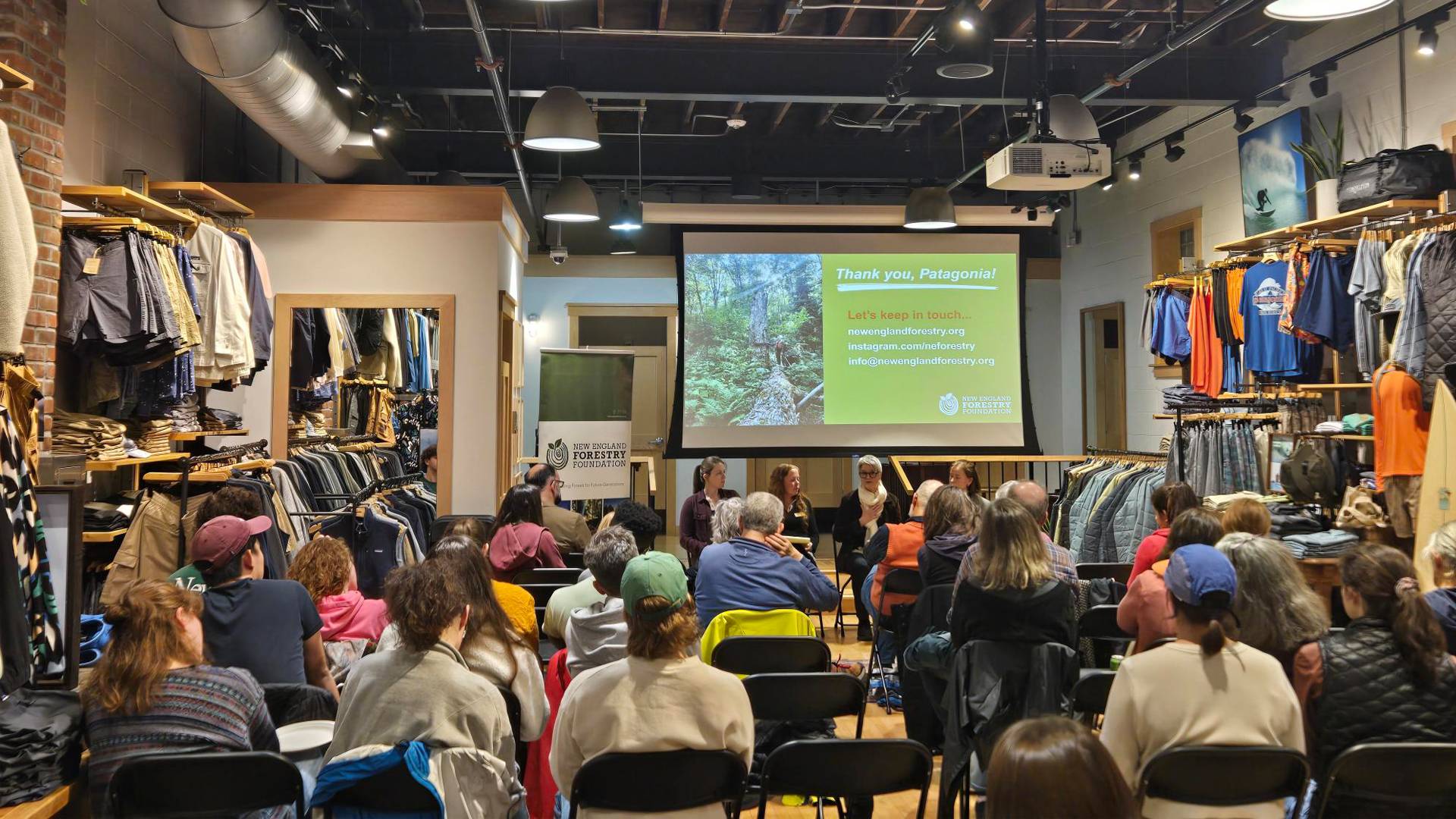
On Thursday evening, New England Forestry Foundation (NEFF) hosted a screening of “Women of Carbon” at Patagonia Cambridge, followed by a panel discussion exploring forests, climate, and the future of sustainable building materials.
Increasingly, people are asking where our materials come from, how they’re made, and what role forests can play in addressing climate change. The evening’s discussion reflected a growing interest in practical, hopeful climate solutions and the role forests can play in shaping a more sustainable future. We’re deeply grateful to Patagonia Cambridge for generously hosting the event and helping create space for a meaningful community conversation around these issues.
“It was so encouraging to see so many women helping lead conversations around forests, climate, and the future of building,” said NEFF Executive Director Ryan Owens. “The film reinforced that solving climate change is going to take people from many different backgrounds and disciplines working together. At NEFF, we see forests as an important part of that future. How we grow, steward, and use wood matters. Sustainably sourced wood products can play a meaningful role in storing carbon and reducing the environmental impact of the built environment.”
Throughout the evening, panelists explored the connection between forests, materials, and the built environment, emphasizing that sustainable construction begins long before a building goes up. One idea that especially resonated was this: “There are only two ways to get the materials we need — grow it or mine it.”
As communities work to reduce emissions and respond to climate change, the discussion highlighted the important role renewable, biobased materials like wood can play in the future of building, provided forests are managed responsibly and sustainably. The panel also emphasized that no single sector can tackle these challenges alone. Landowners, foresters, manufacturers, architects, builders, and consumers all have a role to play in shaping a lower-carbon future.
Another major theme of the evening was addressing common misconceptions about forests and climate, particularly the belief that harvesting trees is always harmful to the environment. In reality, thoughtful, science-based forest management can help maintain carbon storage while also improving forest resilience and supporting wildlife habitat, recreation, biodiversity, and clean water.
NEFF’s Exemplary Forestry approach was highlighted as one model for balancing these values through a landscape-scale strategy that combines ecological reserves with carefully managed forests to support climate resilience, biodiversity, and sustainable wood production.
At a time when climate conversations can often feel overwhelming, it was genuinely encouraging to see so many people come together for a thoughtful and nuanced discussion rooted in stewardship, innovation, and long-term thinking. The evening served as a hopeful reminder that more people are ready to engage in deeper conversations about forests, materials, and the role they can play in building a more sustainable future.