Stewarding the Future Forest at Sortwell Memorial Forest
May. 22, 2026
A planned timber harvest at Sortwell Memorial Forest will help guide the next…
Read More


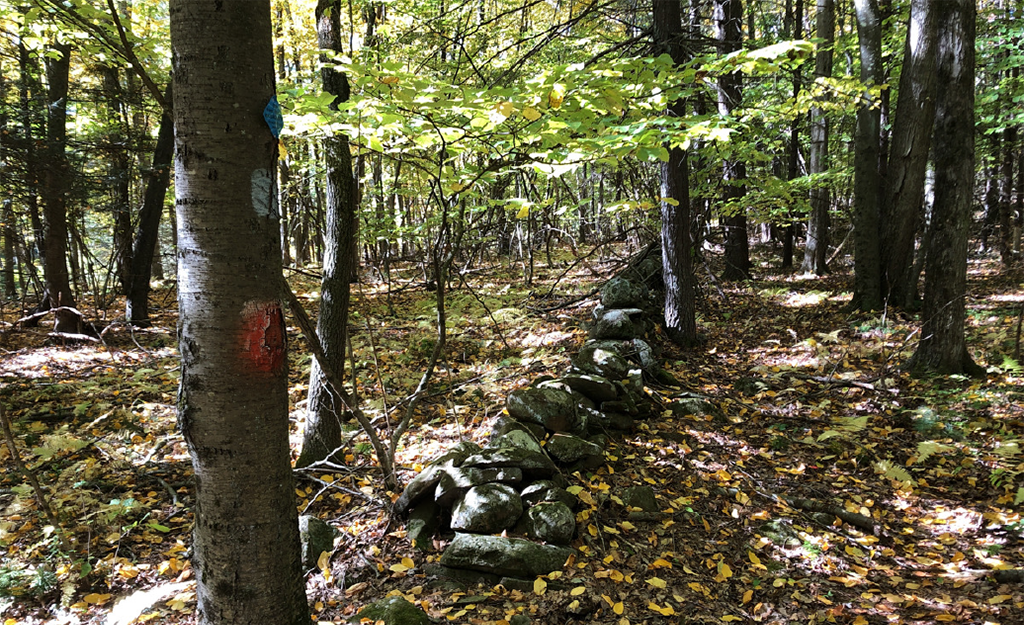
This past summer, NEFF began a new, sustainable timber harvest at Pine Nook Forest in Deerfield, Massachusetts, a forest shaped by more than 60 years of careful, thoughtful stewardship. The work builds on a previous harvest completed in 2014 and is designed to help the next generation of trees grow, create pockets of young forest, and strengthen the long-term health and resilience of this 76-acre Community Forest.
Located on the east slope of the Pocumtuck Range and just a half-mile west of the Connecticut River, Pine Nook is a forest with a deep story: a place of former pastures, stone walls, historic cellar holes, vernal pools, notable tree specimens, and a lineage of care that NEFF is honored to continue.
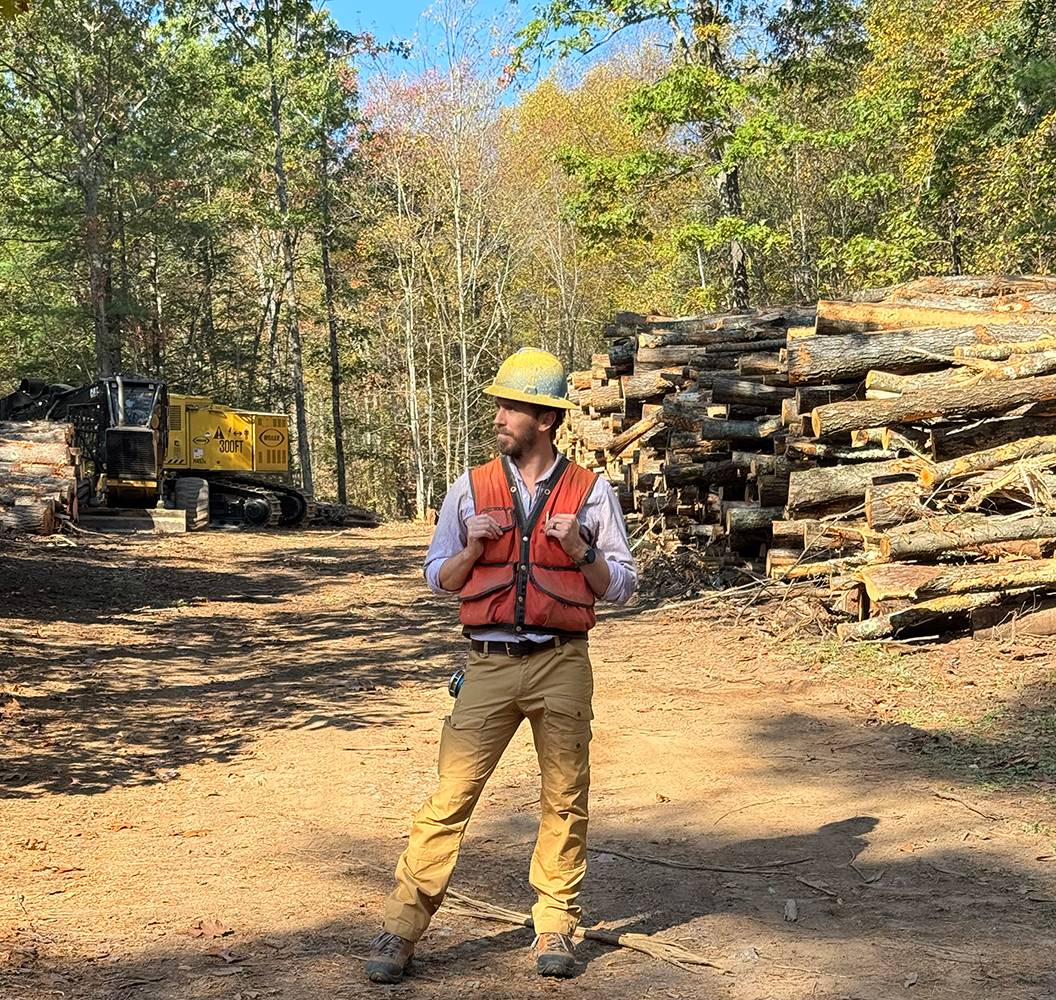
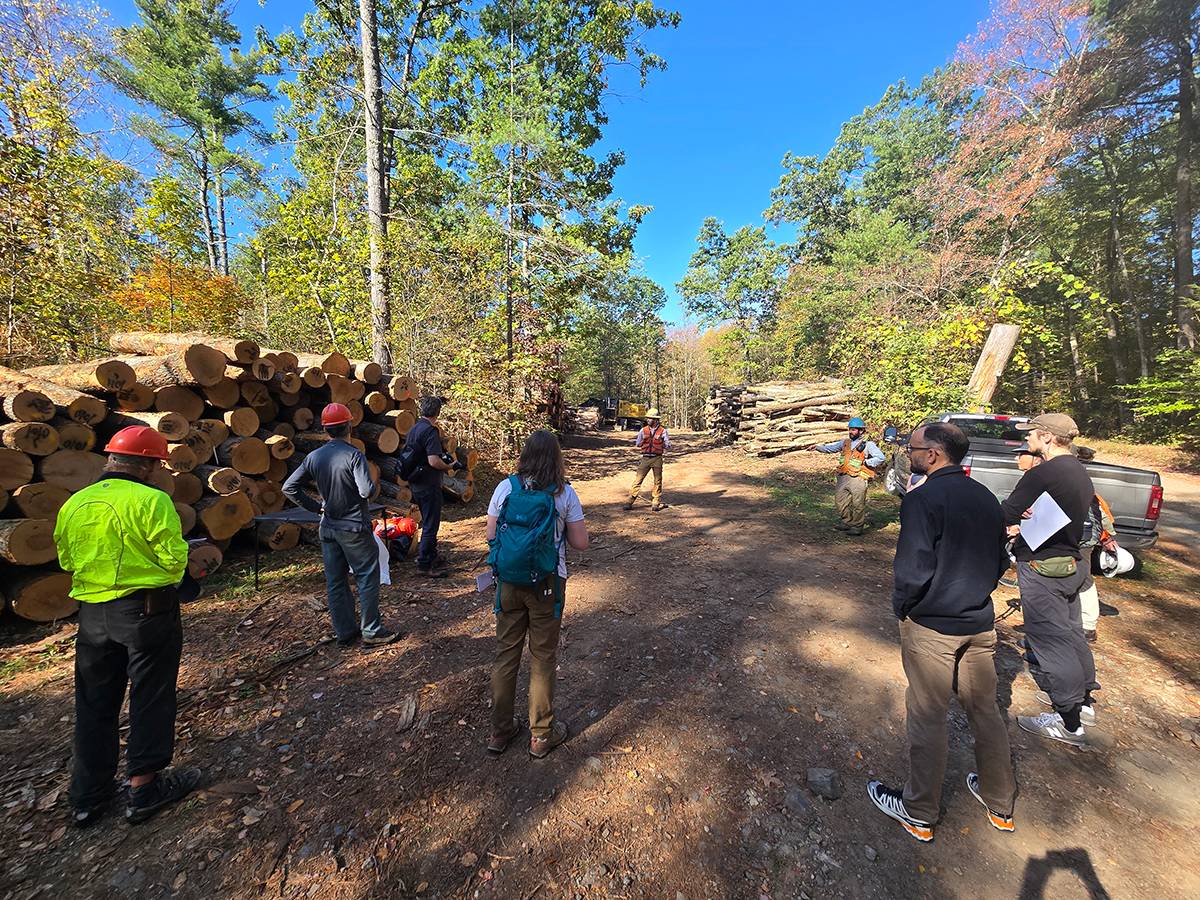
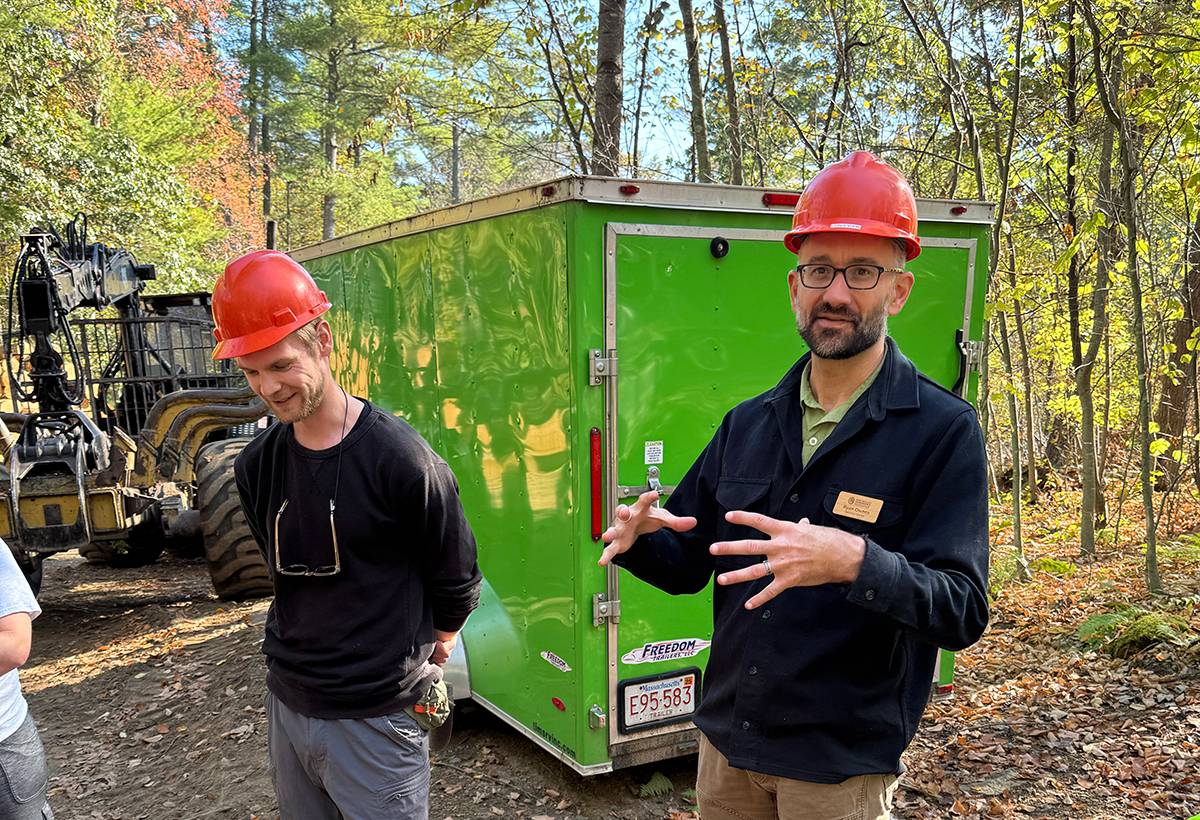
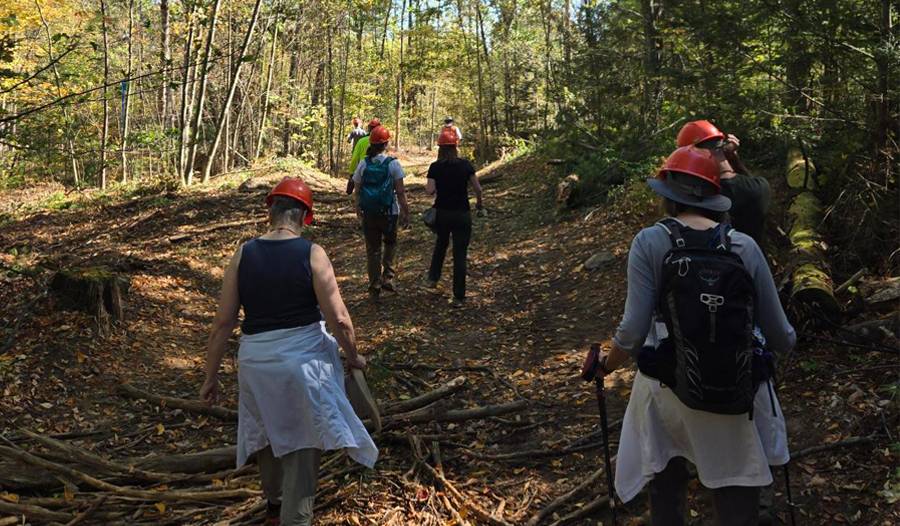
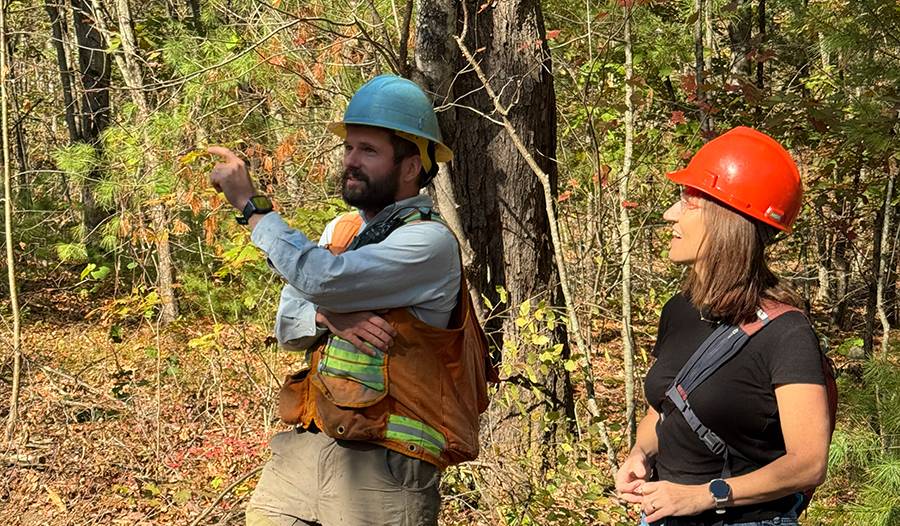
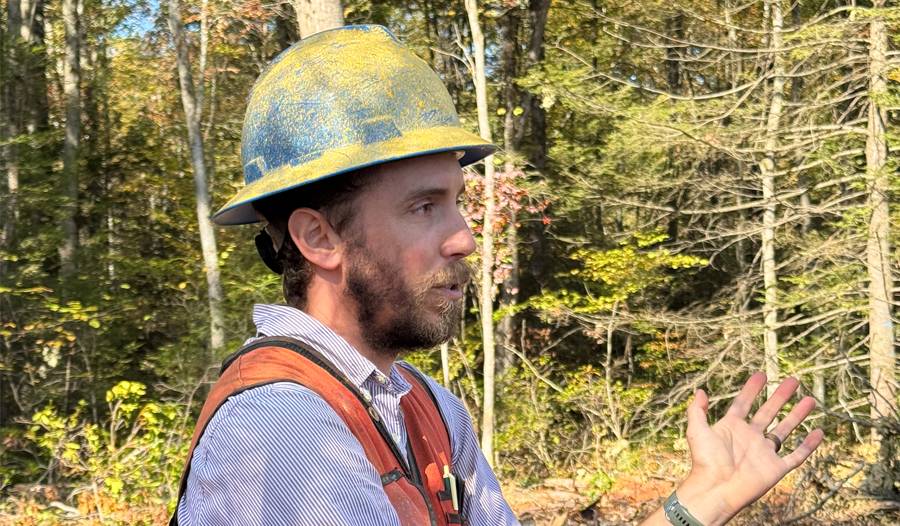
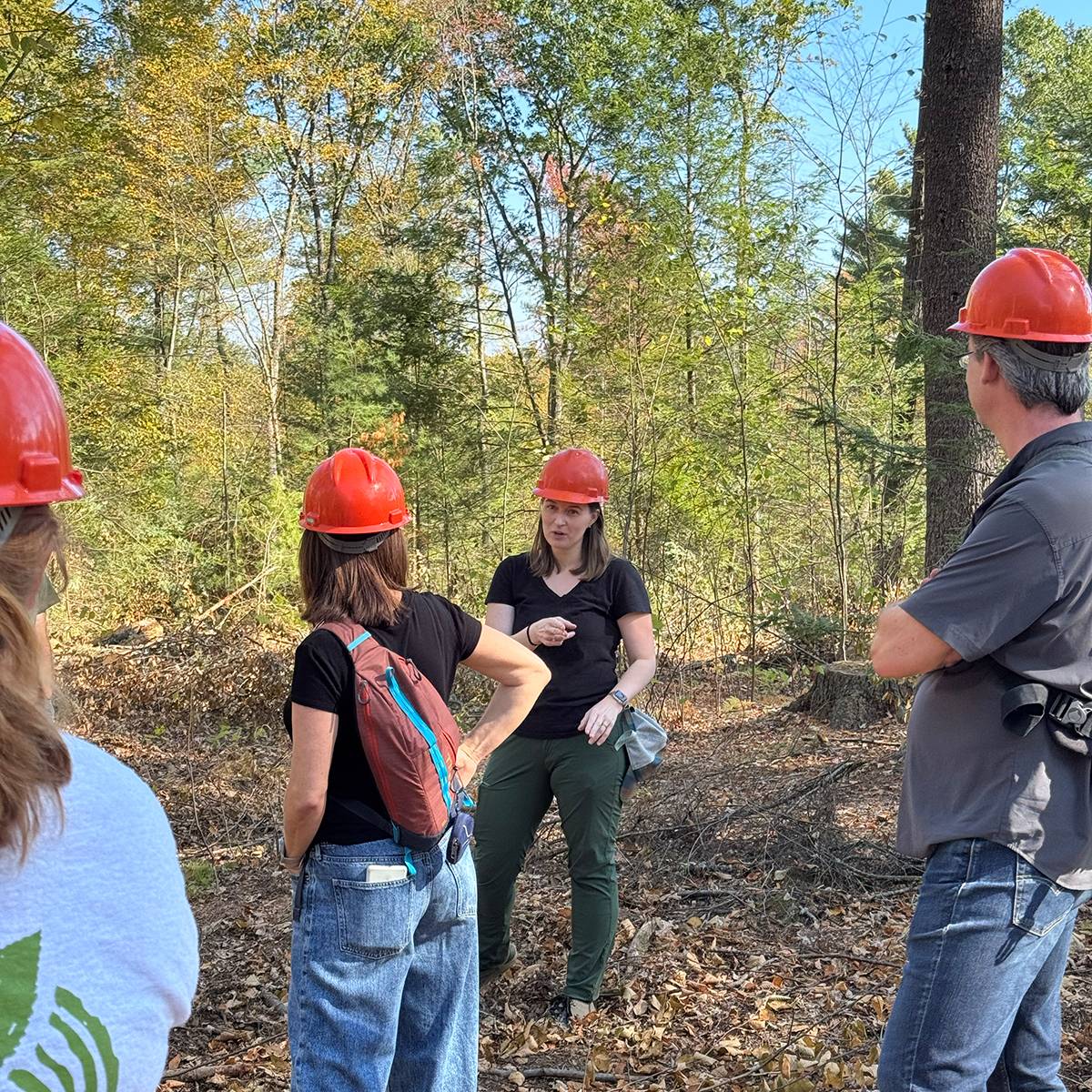
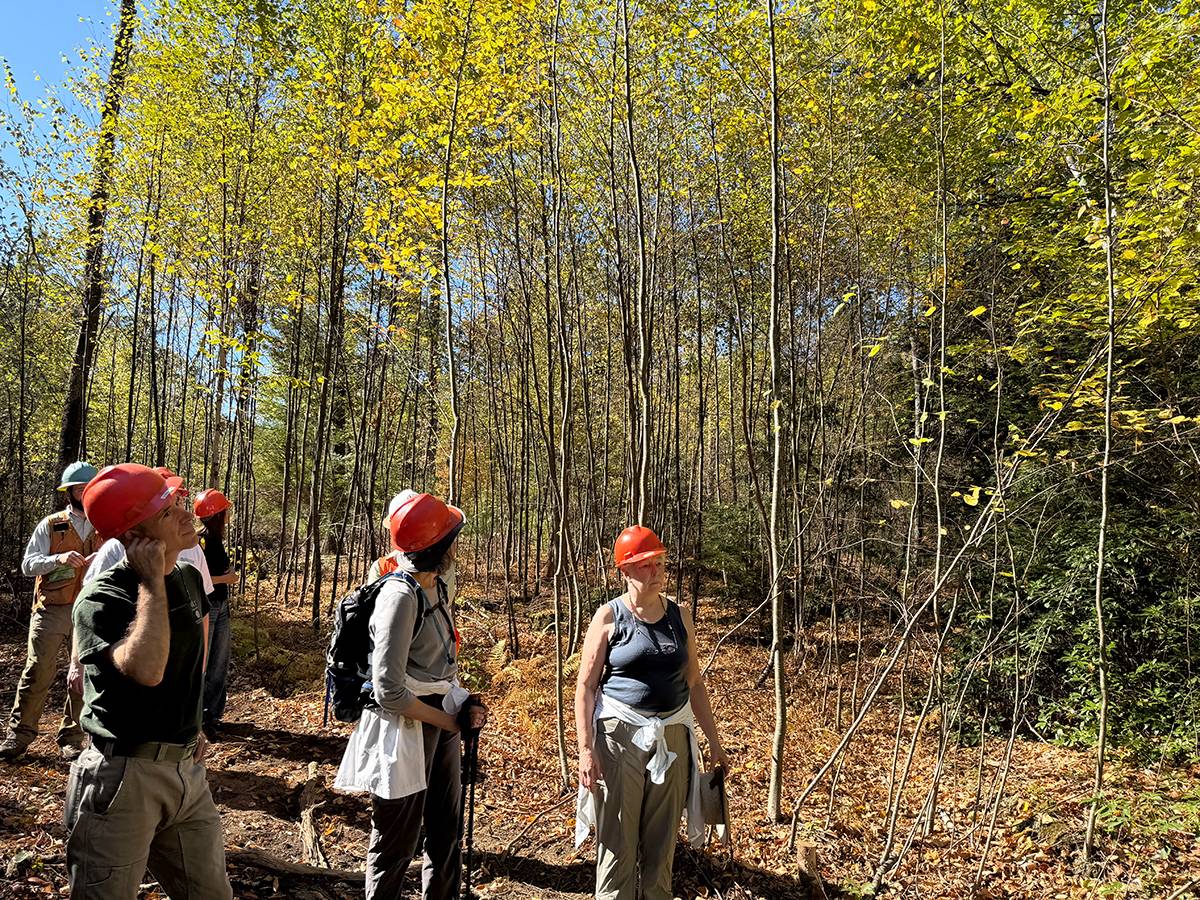
To share this work with the community, NEFF hosted a woods walk at Pine Nook Forest on Monday, October 6, 2025. Two consulting foresters, Alex Barrett and Hayden Stebbins, led the group through the woods, showing how careful management can strengthen forest health, support wildlife, and advance climate goals. The walk offered a chance to ask questions and see Exemplary Forestry in action. Keep an eye on our events page for future woods walks, and visit the bottom of this page to learn more about the Pine Nook walk and see photos from the event.

Foresters Hayden Stebbins (left) and Alex Barrett, photo by Tinsley Hunsdorfer
Pine Nook was acquired by NEFF through a bargain sale in 2002 from longtime owner and forester Frederic Giebel, who had purchased the land in 1957. For decades, he and his son Brian tended the property — pruning white pine crop trees, hunting, cutting trails, and gradually guiding the forest from post-agricultural openness into a thriving multi-aged woodland.
Giebel, a co-founder of the Massachusetts Forestry Association, helped set the stage for the high-quality timber and complex habitat Pine Nook supports today. Evidence of earlier eras remains visible: two cellar holes along Pine Nook Road point to colonial settlement, while a stone-lined well and the remains of Virginia rail fences reflect the land’s agricultural past.
The forest’s terrain, while largely flat to gently sloped, is broken by a dramatic cliff band, a talus slope, an intermittent brook, and several vernal pools. These natural features, along with seeps that feed the brook, bring biodiversity to the forest and support wildlife ranging from songbirds in the canopy to American woodcock feeding in the moist soils below.
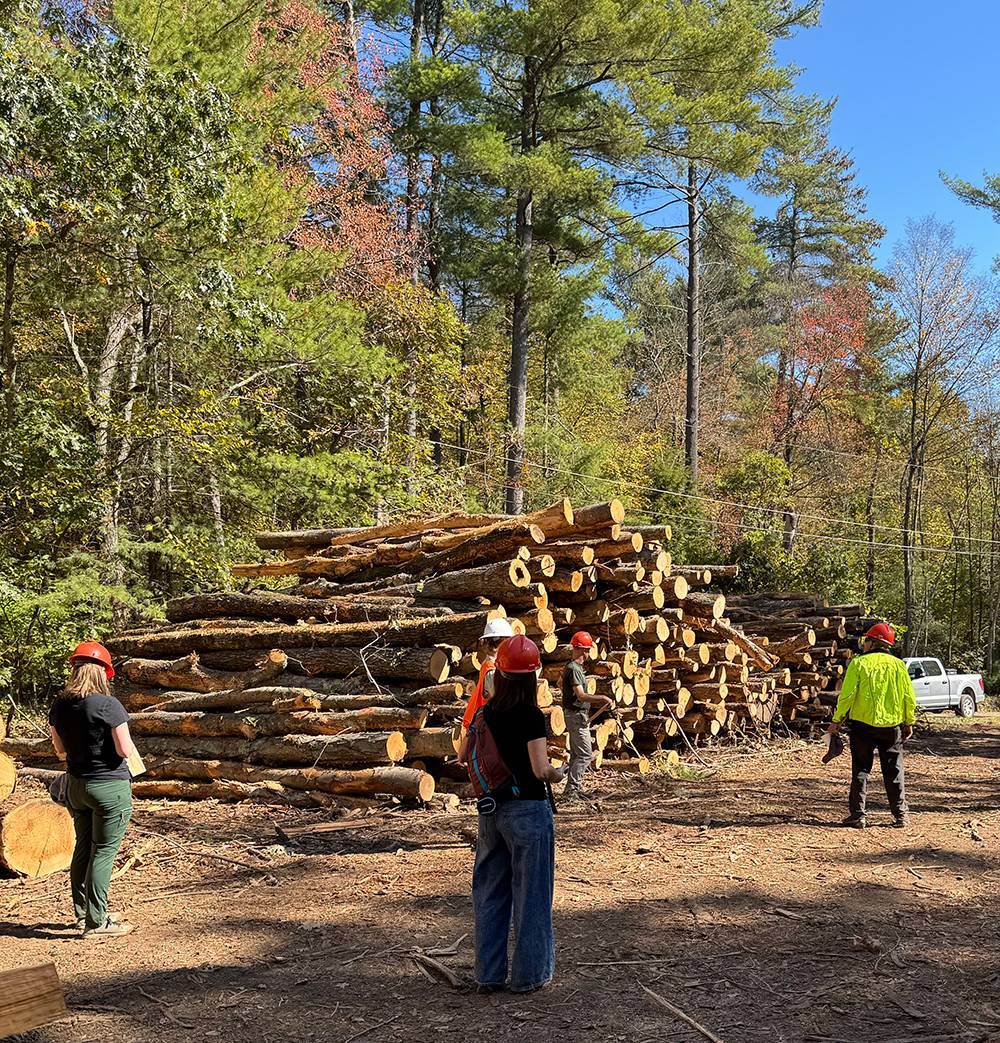
The 2025 harvest follows NEFF’s Exemplary Forestry standards and takes place across about 55 acres, using existing access points to minimize disturbance. While the work looks different in different parts of the forest, the overall goals are simple: help young trees grow, improve forest structure, and prepare Pine Nook for a healthy future.
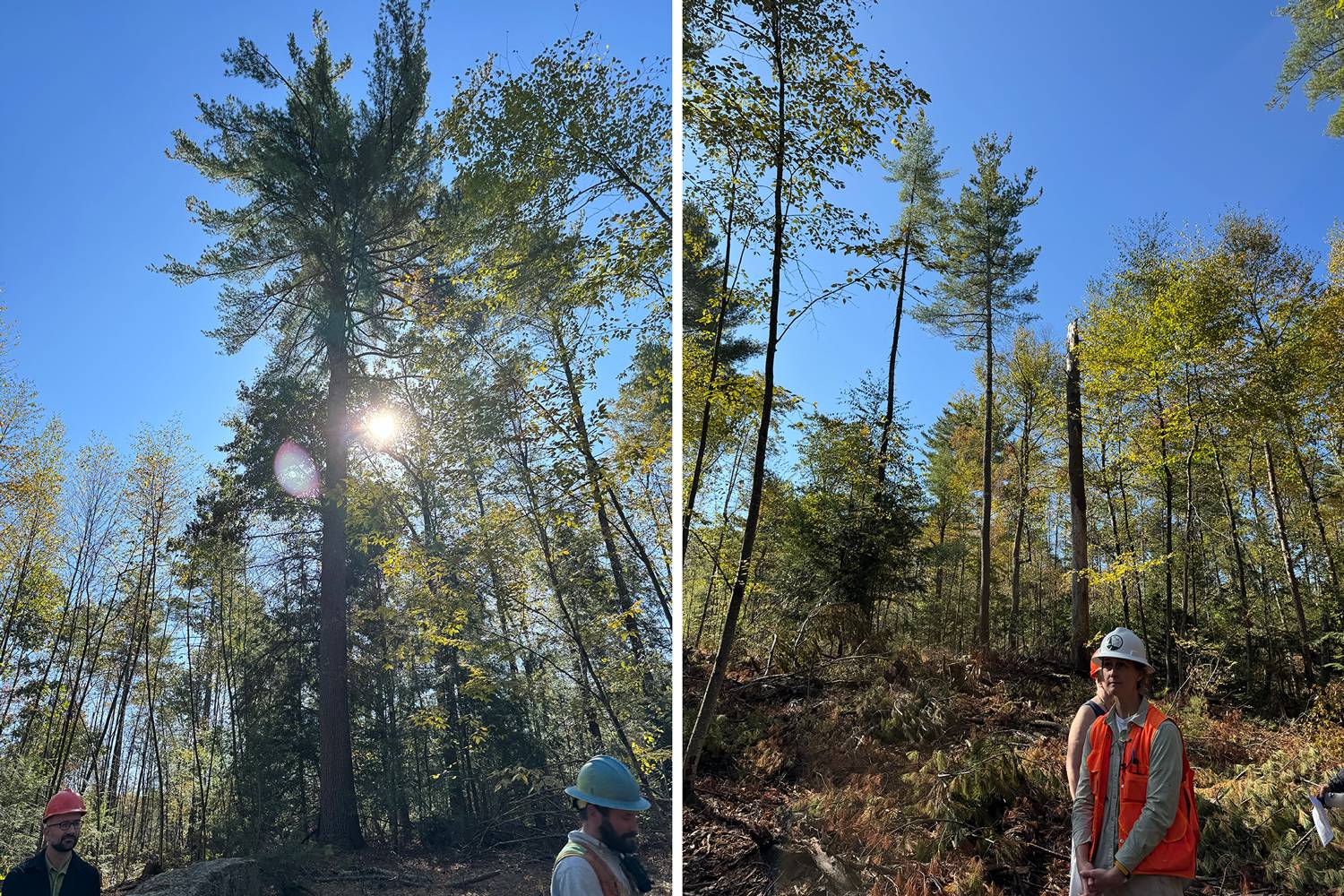
In areas harvested previously, crews are removing some older trees to give established young growth the light and space it needs to thrive. Scattered large trees are being left behind to provide both wildlife habitat and seed sources. In other areas, crews are thinning crowded hardwood stands to favor the healthiest trees and encourage new regeneration.
Overall, the amount of wood being harvested is intentionally modest — well below what’s typical for many timber harvests — reflecting the careful, long-term focus of the project.
Pine Nook is full of natural and cultural features that give the property its personality and ecological value. The harvest is structured to avoid or protect:
This mix of structural elements creates habitat for a range of species, especially forest birds that rely on varied canopy layers and regenerating patches. Songbirds find nesting and foraging opportunities across the property’s different age classes, and woodcock benefit from the moist soils and early-successional habitat maintained through periodic harvesting.
The property contains patches of Japanese barberry and other invasive plants. These areas will be avoided during the harvest to limit spread, and afterwards NEFF expects to return to conduct targeted invasive control, ensuring new regeneration receives the sunlight and space it needs to thrive.
All logging equipment entering the site must be clean and free of soil or plant material to prevent introducing new invasives — an important practice in Exemplary Forestry.
Pine Nook Forest has never been static. From open pasture to maturing timber to today’s multi-aged woodland, its history reflects steady, intentional stewardship. The 2025 harvest continues this legacy, preparing the forest for its next phase of healthy growth, improving wildlife habitat, and sustaining the regeneration that will become Pine Nook’s future overstory.