The Whole Forest: A Unified Path for New England’s Landscapes
May. 19, 2026
A guest blog from Yale School of the Environment students
Read More


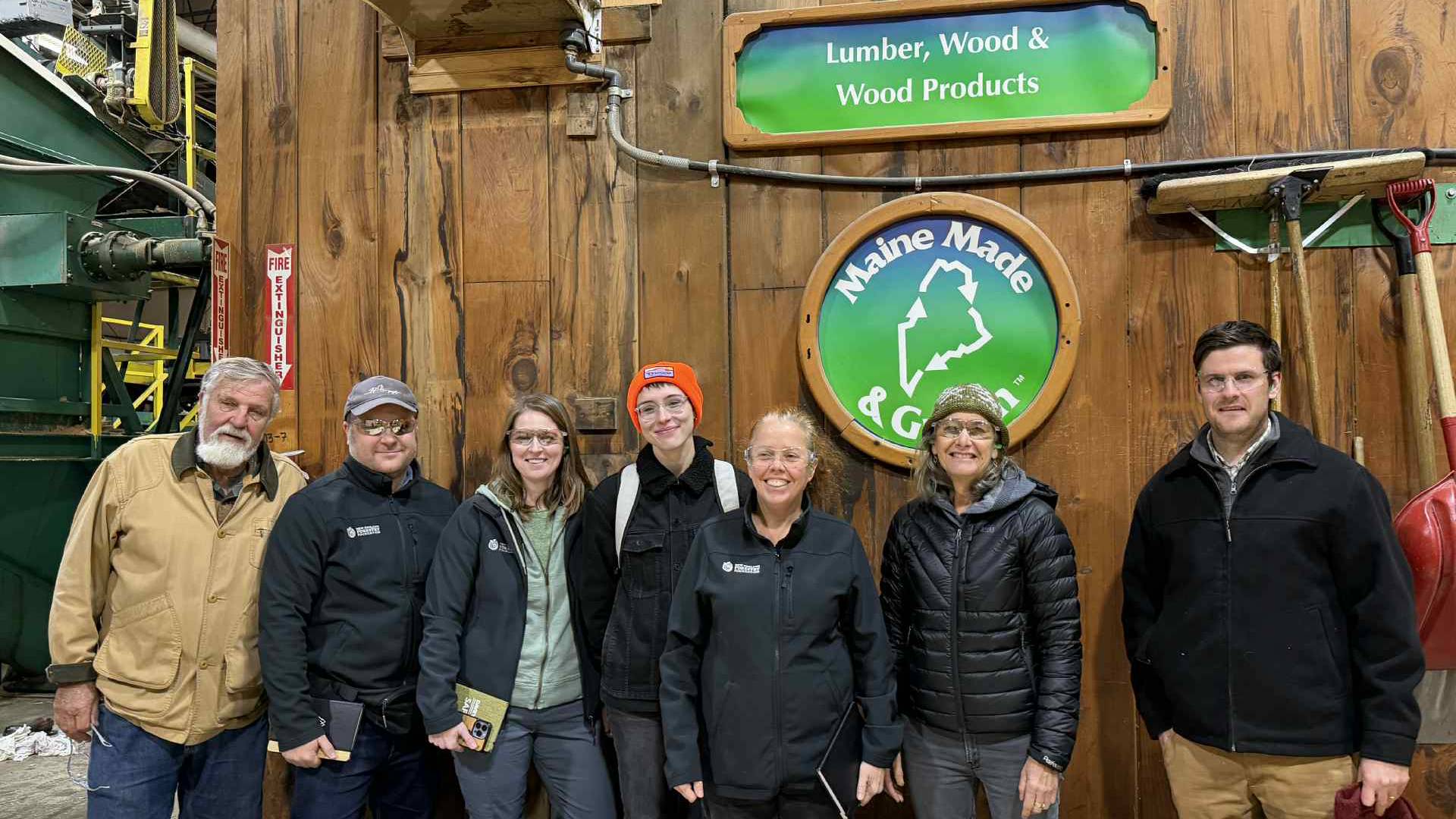
The New England Forestry Foundation (NEFF) Bioeconomy and Forest Management teams have been gaining a better understanding of the region’s wood supply chain. Although New England produces a lot of wood, we also import a significant amount too – sometimes from global sources with weaker environmental standards.
One of our goals is to increase buyers’ interest in New England wood products in place of imported wood. In November, we had the opportunity to visit two companies in Maine to gain a greater understanding of the regional challenges and opportunities of wood sourcing (aka tracking where wood comes from and how it was grown): Robbins Lumber, a sawmill in Searsmont, and NotchSB, a prefabricated cross-laminated timber (CLT) home-builder in Belfast, would be our case studies this time.
For our newer readers, CLT is a type of engineered wood product that glues several layers of solid lumber boards together by stacking them crosswise (90 degrees) to create a strong and more durable panel for structural building applications.

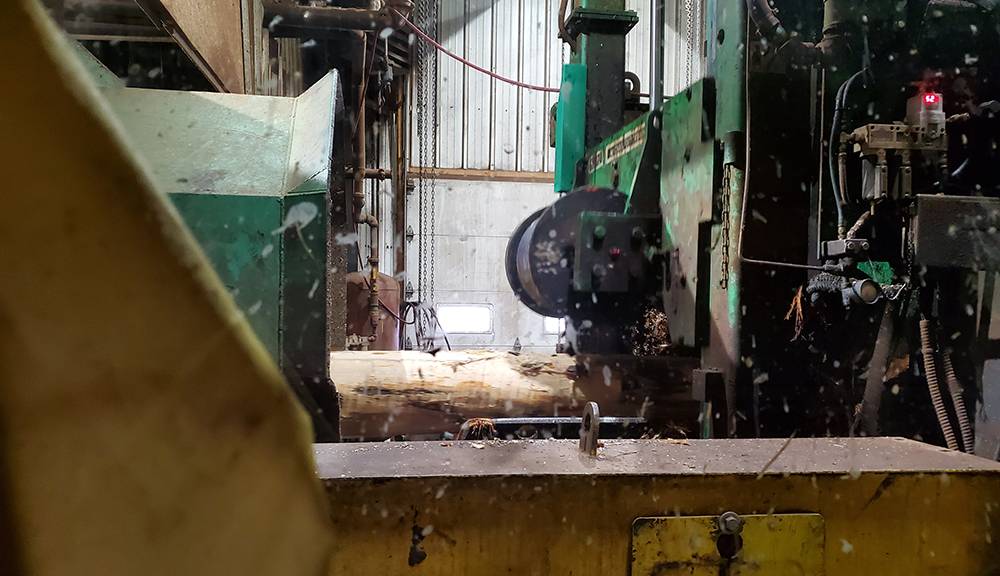
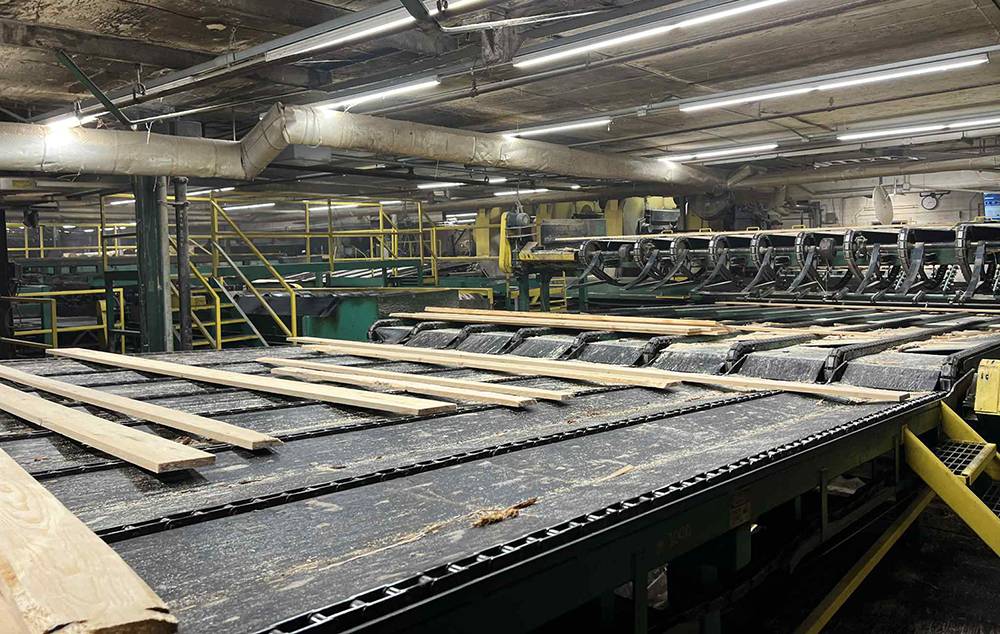
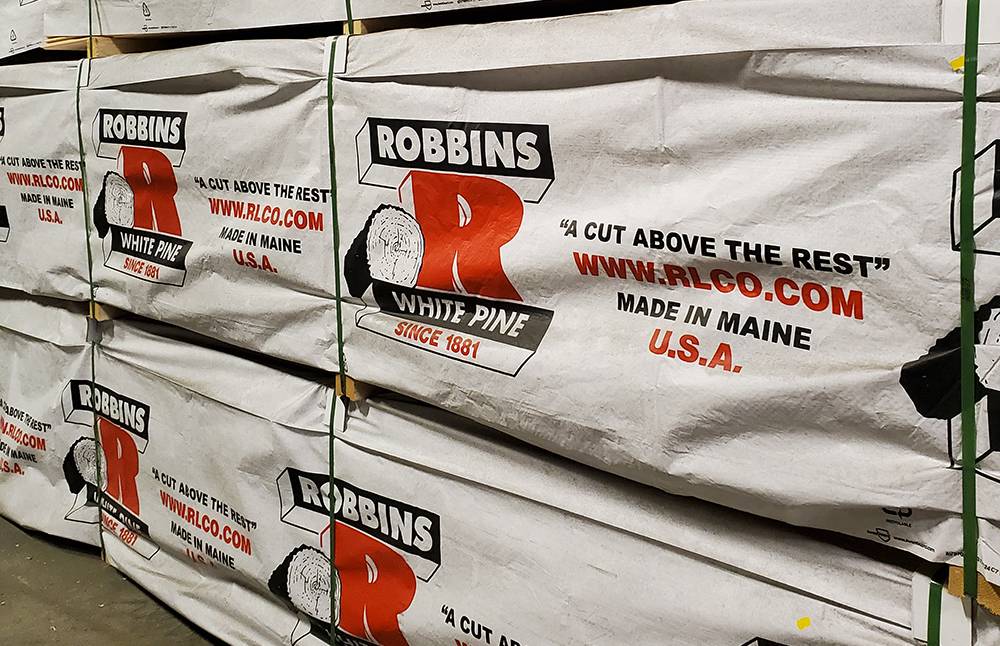
Robbins Lumber Inc. owns and runs an important sawmill for Maine’s white pine lumber industry, and also manages 30,000 acres across Maine and sources wood from forests within a 150-mile radius of their sawmill facility. On November 3, NEFF staff members — Jen Shakun, Dan Holt, Alec Giffen, Andi Colnes, Brian Milakovski, Colleen Ryan, and myself — visited their Searsmont facility, where the Robbins Family (Catherine Robbins-Halsted and Alden Robbins) walked us through their manufacturing process.
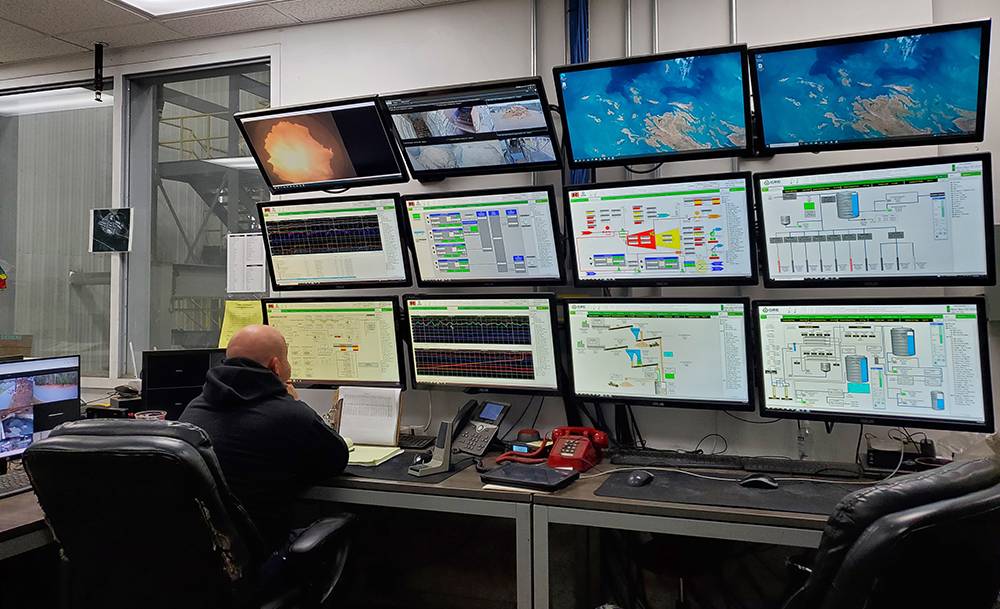
This included debarking machines, kiln drying furnaces, visual grading machines (that evaluate the timber quality using innovative scanning technology), cutting and sawing machines, and more — all of which sorted and tracked each wood board using unique bar codes. I was very excited to see the visual grading technology that scanned and projected each board on a screen showing its thickness, knots and other potential weaknesses, and where it recommended cutting each board to maximize economic benefit. The Robbins Family also shared insights on both the challenges and successes of local wood production.
One challenge that came up is New England’s white pine products face tough competition nationally and internationally, particularly from regions like Europe and the Pacific Northwest, where equivalent competing tree species tend to have less taper and yield more uniform lumber. The industry also increasingly contends with non-wood alternatives like composite siding. Ultimately, these problems echo across our Bioeconomy work, particularly in advancing local mass timber production.
However, on the flip side, Robbins is doing impressive work to improve the circularity (aka, efficiency and waste reduction) and market potential of local wood production by repurposing all of their residual materials. For example, bark from their harvested trees goes to landscaping companies, sawdust to wood pellets, shavings for animal bedding, and the rest is burned for energy at their 8.5MW bioenergy co-generation plant. The mill only consumes 2MW to power their facilities, so the rest is sold to the grid to be used as energy elsewhere in the region.
Ultimately, this provided insight into how manufacturing wood boards and other structural wood products can also complement low-grade wood markets and circular economies for the region — their manufacturing processes generate wood waste that could be captured and made into other kinds of products.
We also discussed understanding where there is opportunity to trace and track wood through the supply chain. While common in Europe, demand for tracking wood from where it was grown is likely to expand in the U.S. as climate commitments and green building certifications — like LEED and Living Future — begin to encourage more local and sustainable wood sourcing. Robbins already has a system and technologies in place using barcodes that track information such as board width, pattern, grade, and processing date with each load within the mill. It will be interesting to see in the future whether new digital tracking technologies could be useful for mills like this in New England and how existing systems can be integrated.
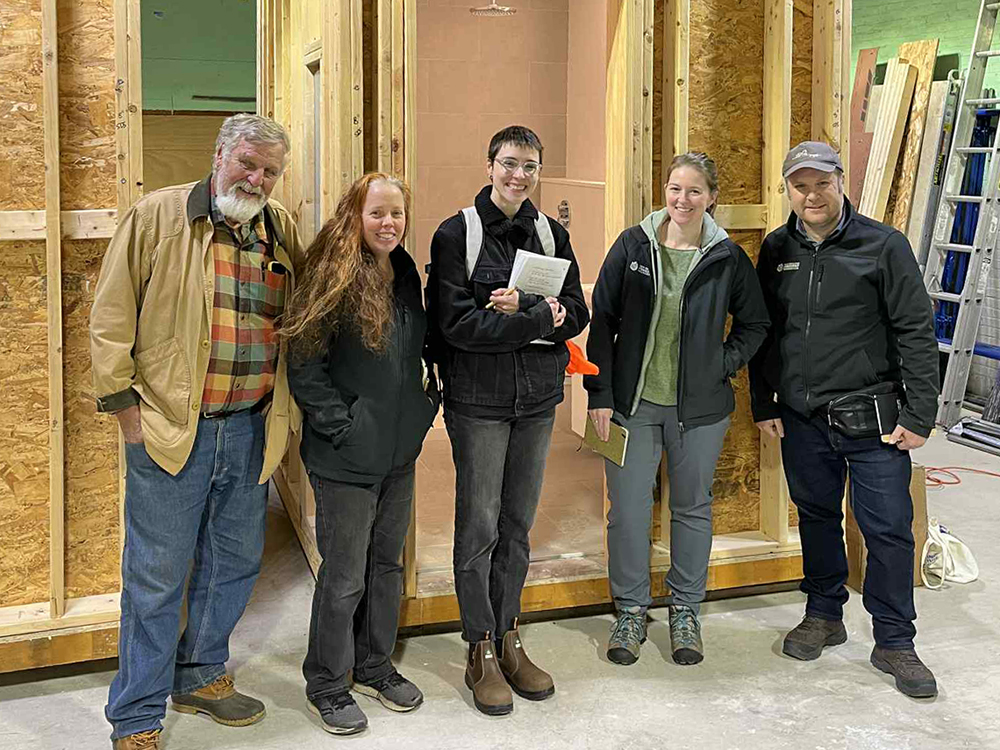
NEFF staff at NotchSB
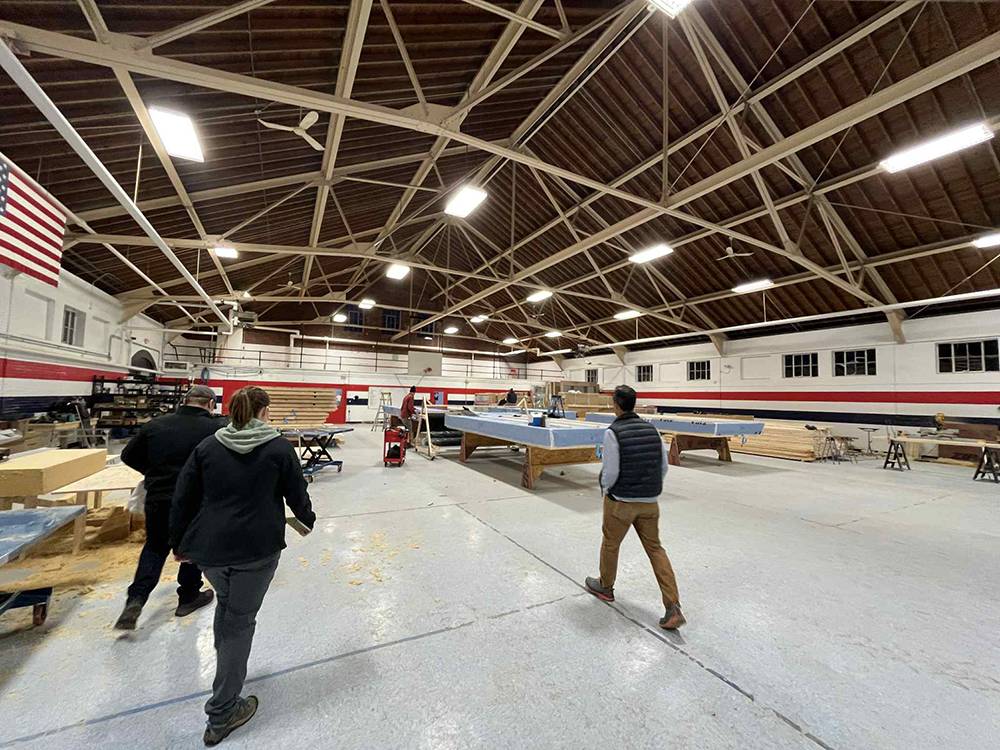
Later that afternoon, NEFF staff — Jen Shakun, Alec Giffen, Brian Milakovski, Colleen Ryan, and Vanessa Komada — drove to NotchSB in Belfast, Maine to meet with NotchSB founder Matthew O’Malia, president Nick Farmer, and other leadership team members to discuss the potential for sourcing local wood for upcoming building projects. Following this, Project Manager Cort Trejo showed our team around their facility to see their modular building construction and panelization in action.
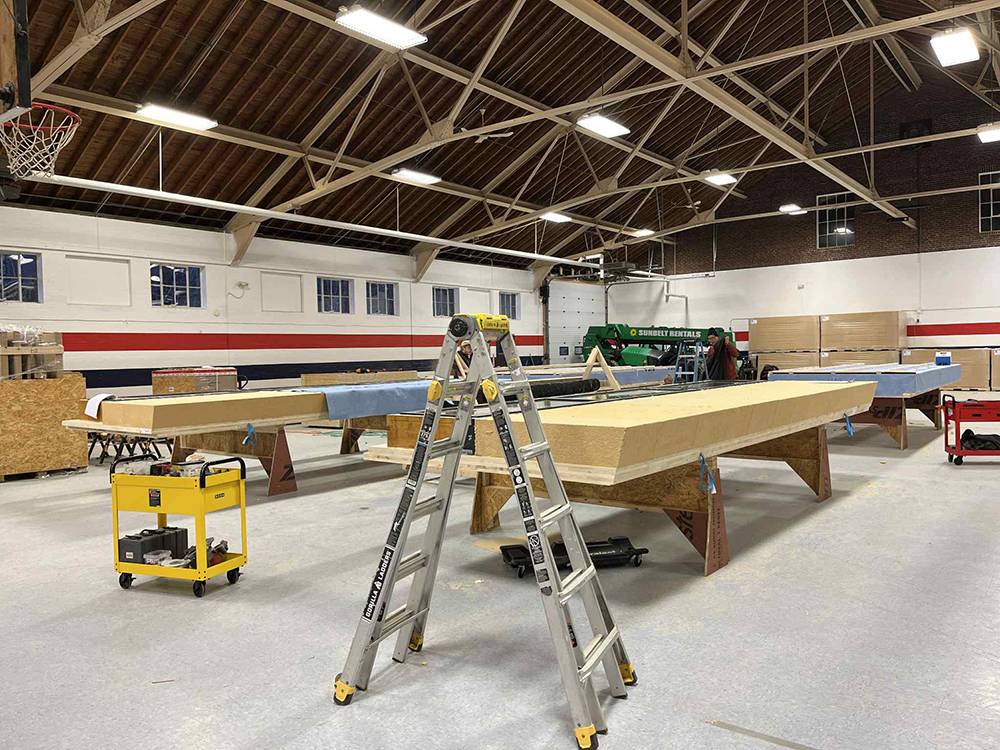
NotchSB is an innovative offsite panelized construction company. This means that instead of having construction crews build houses on-site piece by piece, sections of walls, floors, and roofs are built in a factory and then later assembled on-site to create the building’s structure. This is often seen as a much faster, safer, and more efficient method of construction and is growing in popularity. In the U.S., 75 percent of building projects miss deadlines and around 89 percent go over budget. NotchSB’s mission is to bring more predictable, fast, and sustainable construction to the U.S. through their integrated process by guiding clients from design all the way through to construction. This company is unique in that it utilizes 3D modeling, CNC machine fabrication, and mass timber to target and be cost competitive with high performance residential buildings. CNC machines are programmable machines that conduct precise cutting, drilling, and milling using digital code that guides the machine’s actions and are a particularly exciting piece of technology. NotchSB is currently focused on production of single-family and low-rise multi-family homes, but is beginning to expand into commercial services.
Each panel or “pod” they manufacture is pre-fabricated using cross-laminated timber (CLT) from Austria’s KLH Massivholz GmbH company, wood fiber insulation from Maine’s TimberHP, and a variety of other wood products from regional wood suppliers. While the company currently sources their CLT from Europe due to cost and appearance, they are building an important demand pipeline for any future CLT manufacturers that choose to locate here in the Northeast. In the meantime, there are windows of opportunity for showcasing New England wood in their other building components like siding, trusses, window bucks, insulation, and cabinetry.
As we toured the facility, it was helpful to see how they balance sourcing mass timber from abroad while still supporting the essential local market for low-grade wood, such as TimberHP’s wood-fiber insulation. Mass timber now appears in about 14.9 percent of new construction, and although demand has dipped due to an overall slowdown in the construction sector, and New England still lacks a CLT manufacturer, there’s reason for optimism. A regional producer — or partnerships with eastern Canada — could change the landscape. Europe’s decades of experience make their products highly cost-competitive, but growing markets here could help close that gap. In the meantime, we see partnership opportunities in the other wood products they utilize in their model.
We are so grateful for both of these companies for their time to meet our team and discuss potential collaboration opportunities in the future. We look forward to our AMP grant coming online and continuing the good work.
-Vanessa