The Whole Forest: A Unified Path for New England’s Landscapes
May. 19, 2026
A guest blog from Yale School of the Environment students
Read More


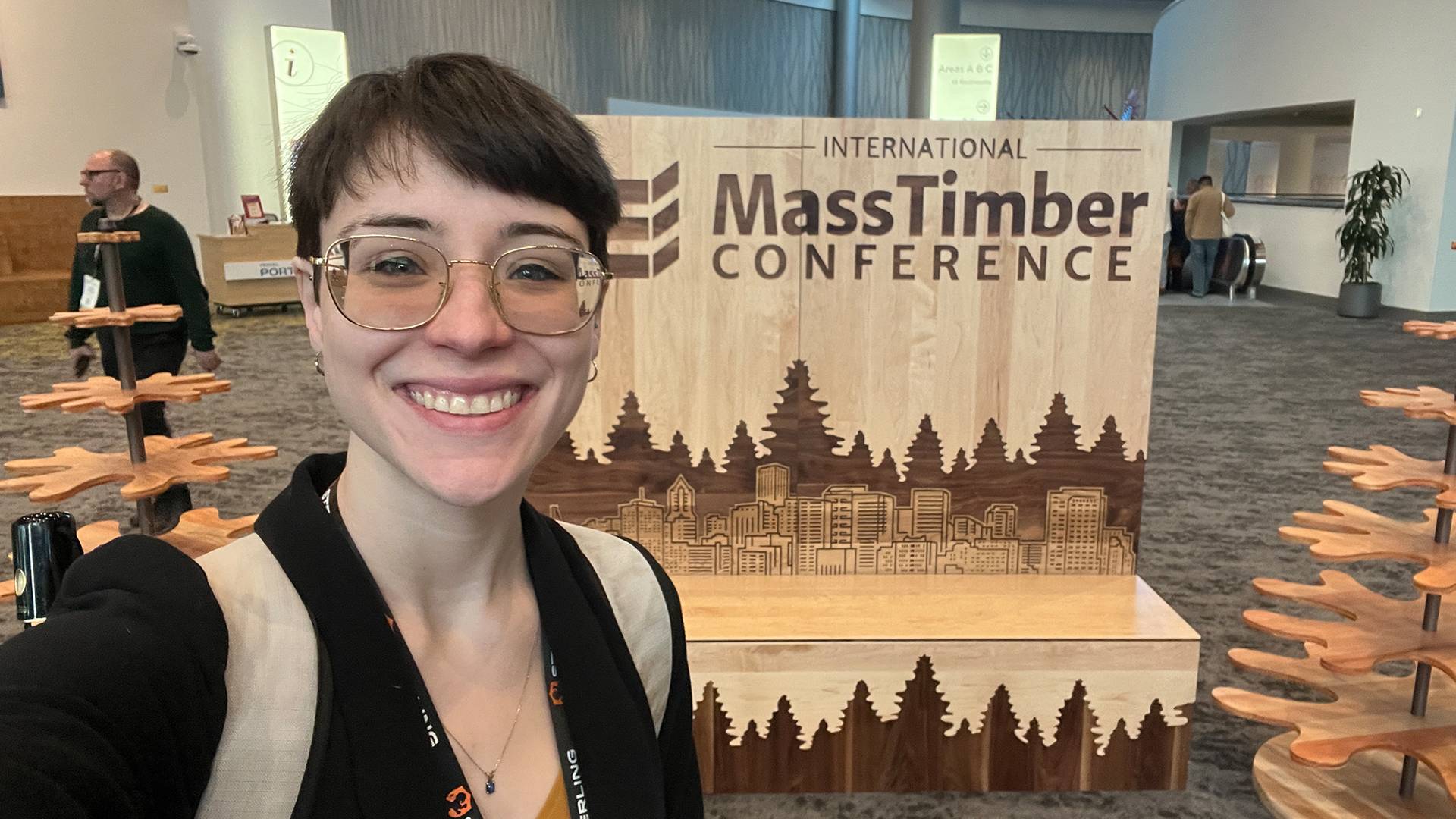
On March 26 and 27, I had the opportunity to attend the world’s largest gathering of mass timber experts and stakeholders: the International Mass Timber Conference (IMTC). Hosted at the Oregon Convention Center in Portland, around 200 exhibitors and 3,000 participants attended this year to discuss recent innovation, adoption, and market momentum in the mass timber industry.
Mass timber is a family of engineered wood products that are defined by their large dimensions and are created by gluing, doweling, or nailing smaller wood layers together to create a stronger product. Ultimately, they are appealing to the building industry due to their capability to replace steel and concrete and be used in structural applications such as beams and columns.
As NEFF’s Wood Sourcing Specialist, mass timber is a natural fit for my work in developing climate-smart wood supply chains given its inherently lower greenhouse gas emissions profile and capacity to store carbon long-term. For my second year in a row, I attended the IMTC to network and gather useful information on where the market is heading. In this blog post, I will give you a glimpse into some of the insights I gleaned from this year’s conference.
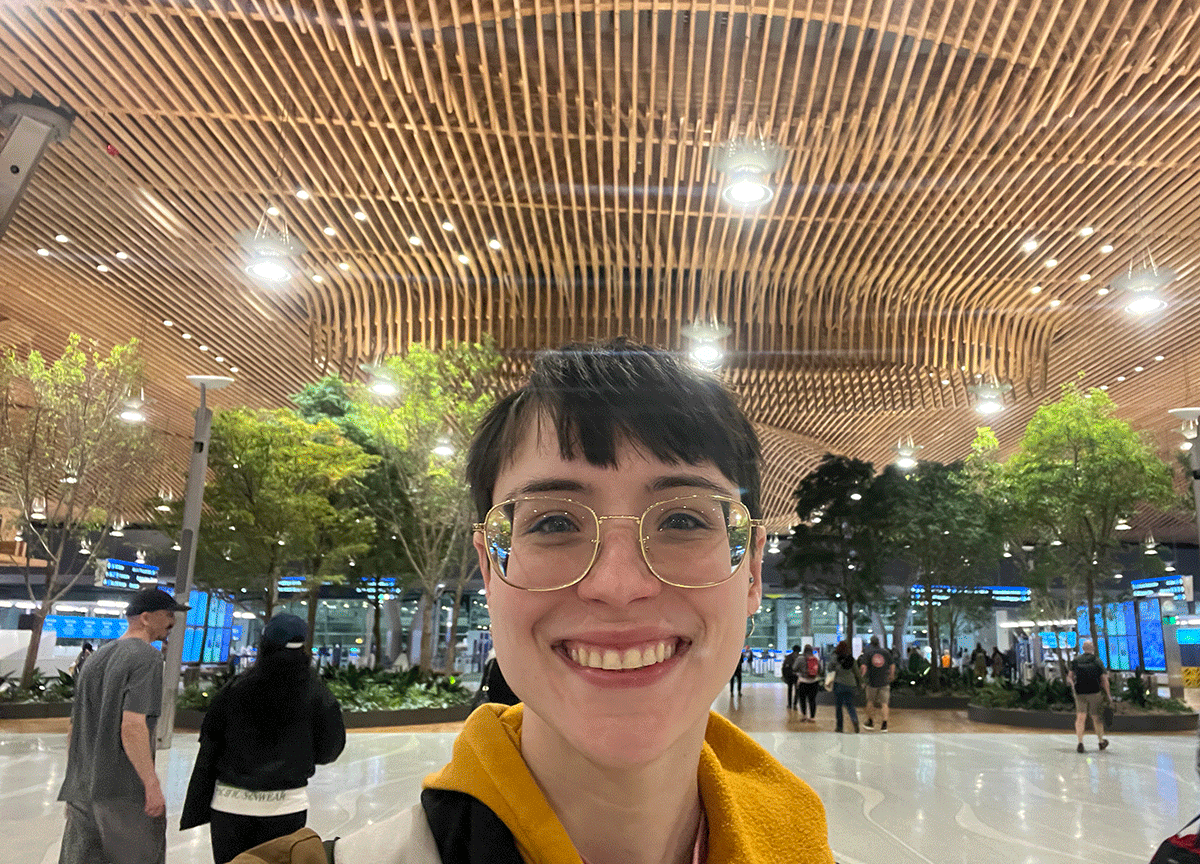
NEFF’s Vanessa Komada arriving at the Portland airport, with CLT mass timber panels on the ceiling. They’re sourced with local Oregon wood and tribal wood!
Currently, the majority of mass timber manufacturers are located and source wood from outside of New England. This is due to the larger presence, size, and productivity of softwood species in the Pacific Northwest and the South in comparison to the Northeast and Midwest. However, there are several innovative partnerships working on changing this dynamic by certifying local Northeastern species for use in structural CLT.
One such project, funded by the US Forest Service, has certified the use of eastern hemlock, a common Northeastern species with low commercial value. Lead by Dr. Peggi Clouston with the University of Massachusetts, two demonstration projects have been completed as of 2024 — a building addition to the Fairbanks Museum in St. Johnsbury, Vermont and a new five-story commercial building in Somerville, Massachusetts. Ongoing commercialization for this species is underway at Sterling Structural, a CLT manufacturer in Phoenix, IL.
Similarly, the Michigan DNR partnered with Lord Aeck Sargent Design Firm and Vaagen Timbers to manufacture the first building utilizing local Michigan-sourced red pine in cross-laminated timber (CLT) panels for its entire structure (column, beams, roof and wall panels). The project resulted in a new customer service center in Newberry, MI.
One of the main challenges of building demand for mass timber currently is the high insurance costs that comes along with it. While mass timber has been thoroughly tested and certified for concerns related to fire and water leakage, it is still a new product on the market. To insurance companies, mass timber is seen as volatile because first, there are not many experienced developers who have worked with mass timber, which can lead to unintentional mistakes or longer construction periods. Secondly, as a newer product, mass timber’s long-term performance is not well known. Ultimately, these costs will reduce with time as more buildings are built and architects, engineers, and developers gain experience. In the meantime, advocating for incentives that provide grants, loans, or policies on a regional level for utilizing mass timber in building construction will aid in closing the gap and speeding up the adoption process.
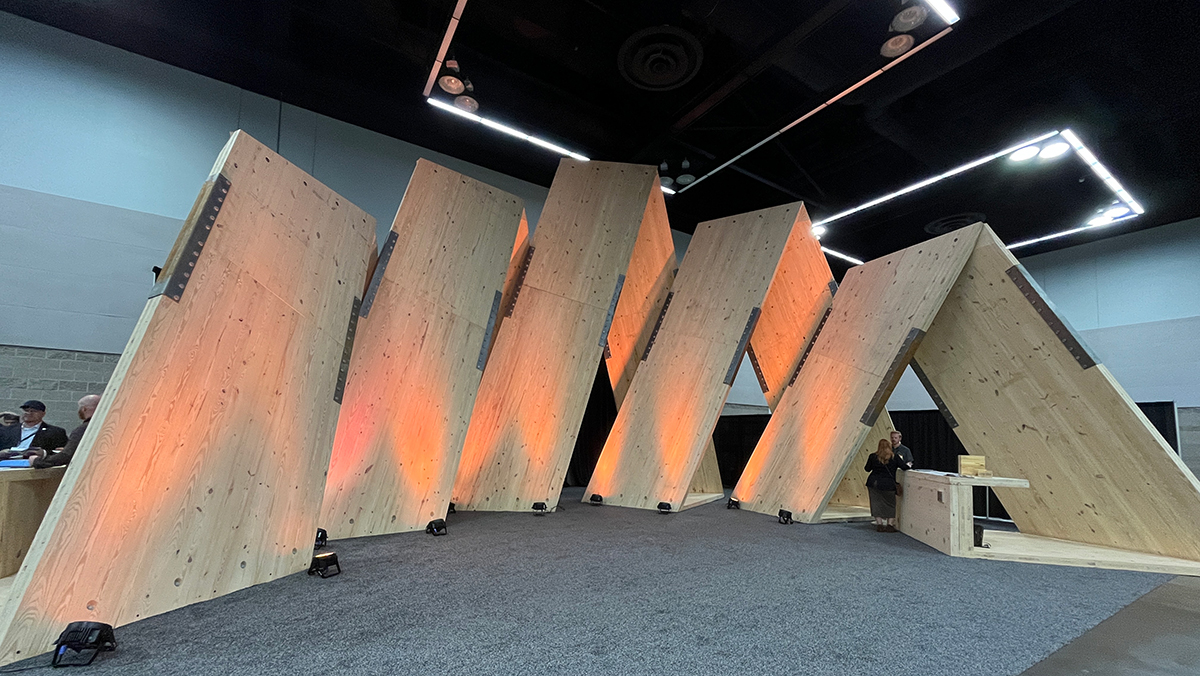
Sample mass timber structure | photo by Vanessa Komada | 2025 International Mass Timber Conference
Currently, mass timber is commonly used for mid-rise construction (5 to 10 floors) due to its capability to compete with steel and concrete at that scale. However, one company in Tennessee, Aera Living, is turning to pre-fabricated modular housing to expand the use of CLT for single-family homes. This is exciting from my perspective because it offers a potential avenue for affordable housing development in the more rural regions of New England. For example, while Boston may require mid-rise or high-rise multi-family housing, rural Maine would benefit from this type of smaller-scale construction. Aera Living first tested their system in 2024, so it will be interesting to see how their company model grows and shifts with the market.
Another innovation pathway mentioned during the conference was the creation of carbon registry systems that can provide credits for utilizing sustainable building materials. The recently approved addition to Georgia’s Carbon Registry would create a new economic incentive to use wood-based materials by allowing companies to purchase “credits” created from carbon amounts stored in wood building materials to offset their emissions. While verification methodology currently uses industry averages, this is a really exciting avenue for growing the economic value of timber products.
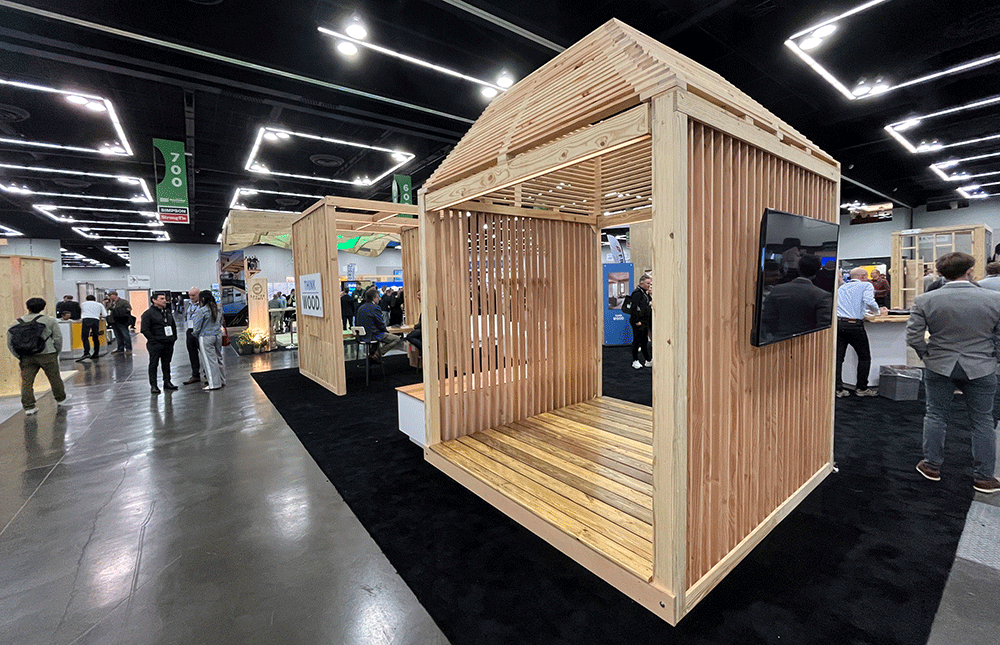
Sample mass timber structure | photo by Vanessa Komada | 2025 International Mass Timber Conference
Although mass timber has been gaining global interest because of its lower emission profile compared to other structural building materials, there is still a lack of attention to the quality of forest management needed to sustainably source it. This is partially due to concerns that we need to build enough interest in using wood-based products as a first step and avoid overwhelming the consumer with too many considerations. However, I believe there is room for conversation in this space to inspire stakeholders who would like to pilot sourcing with climate-smart wood. In the coming years, I hope to see some workshops, field tours, and panels related to this topic to build interest and demand for sustainable and climate-smart mass timber.
I really love my work here at NEFF and I look forward to reporting back next year on the advancements and innovations in this space. Til then—thanks for reading.
-Vanessa