The Whole Forest: A Unified Path for New England’s Landscapes
May. 19, 2026
A guest blog from Yale School of the Environment students
Read More


When I started at NEFF in 2019, one of my first major projects was to design and launch the Forest-to-Cities Climate Challenge. It was a NEFF initiative designed to break down barriers to mass timber construction and raise awareness of its advantages by organizing stakeholders in our region along the entire forest value chain — from forestry and land conservation to architecture, construction, and development. Through convenings, partnerships, and the coordination of a group of active volunteers, the Forest-to-Cities effort spearheaded several projects, including:
This initiative has now drawn to a close, but not before doing important and foundational work that has set up NEFF’s Bioeconomy Initiative and Advancing Markets for Producers (AMP) Program for success.
At that time, it was the early days of mass timber in the United States, although mass timber had been well-established in Europe for several decades. In the U.S., mass timber was a promising “new” innovative wood product that was just taking off and beginning to be recognized for its potential as a more sustainable, lower-carbon option for building construction that could be used in place of concrete and steel structures. The first International Mass Timber Conference — which would become a go-to annual event for mass timber enthusiasts — held its first convening in Portland, Oregon, in 2016 with roughly 500 attendees. Universities were some of the earliest to adopt this innovative building material, with one of the flagship buildings in our region — the John W. Olver Design Building at UMass Amherst — opening in 2017. But by 2019, only about 140 mass timber buildings had been constructed in the U.S. and Canada.
It was becoming clear that mass timber had great promise as a climate solution because of its ability to replace more emission-intensive, non-renewable materials and store carbon long-term in building structures. NEFF wanted to draw more attention to this potential and help accelerate its adoption, especially because we knew how important the next few decades would be for pivoting the building sector to more sustainable materials. At a time when a lot of new building was projected (and needed!), there was also a push to reduce carbon emissions, so we needed solutions for lower-carbon materials and building techniques that could deliver on both fronts — enter mass timber.
And we were not alone in seeing that mass timber could be a win for our forests, the forest industry and rural economies, communities, and the climate. There were a number of regional initiatives helping to push things forward, including the Maine Mass Timber Commercialization Center at UMaine that convened diverse stakeholders throughout Maine, or the Mass Timber Dialogue that convened folks from other parts of New England, to name only two. At the same time, two separate comprehensive analyses of the forest resources and industries in Maine and the other northern forest states flagged mass timber as one of the most promising product categories for the future forest economy in our region.
Relying on partnerships and research convened via the NEFF Forest-to-Cities effort, we mapped the major barriers to and many of the potential solutions for developing a truly sustainable local mass timber supply chain. Barriers were generally related to:
Through a series of stakeholder meetings, we selected the subset of these barriers and solutions that would be the best focus for a nonprofit with a conservation mission like NEFF. And that guided our work for the ensuing years as we focused on growing demand through outreach, education, and communications to key audiences, along with advancing work related to wood sourcing guidelines and goals.
So, what has changed in the seven intervening years since we launched the Forest-to-Cities Climate Challenge?
Collective effort across the mass timber industry and its allied stakeholders (like NEFF and its partners) has made progress in reducing nearly all of the barriers noted above. Mass timber has continued to take off, with an exponential rise in the number of mass timber buildings built or in design in the U.S.: today there are nearly 2,600. There are many more design and construction firms who now have direct experience building with mass timber. The most recent International Mass Timber Conference in Portland, Oregon, attracted more than 3,000 attendees and the major east coast conference on this topic, MassTimber+, had roughly 700 attendees. In addition to this rise in awareness and interest, code barriers have also been reduced, with nearly all New England states (except for Vermont) having adopted the 2021 International Building Code*, which allows for building up to 18 stories with mass timber.
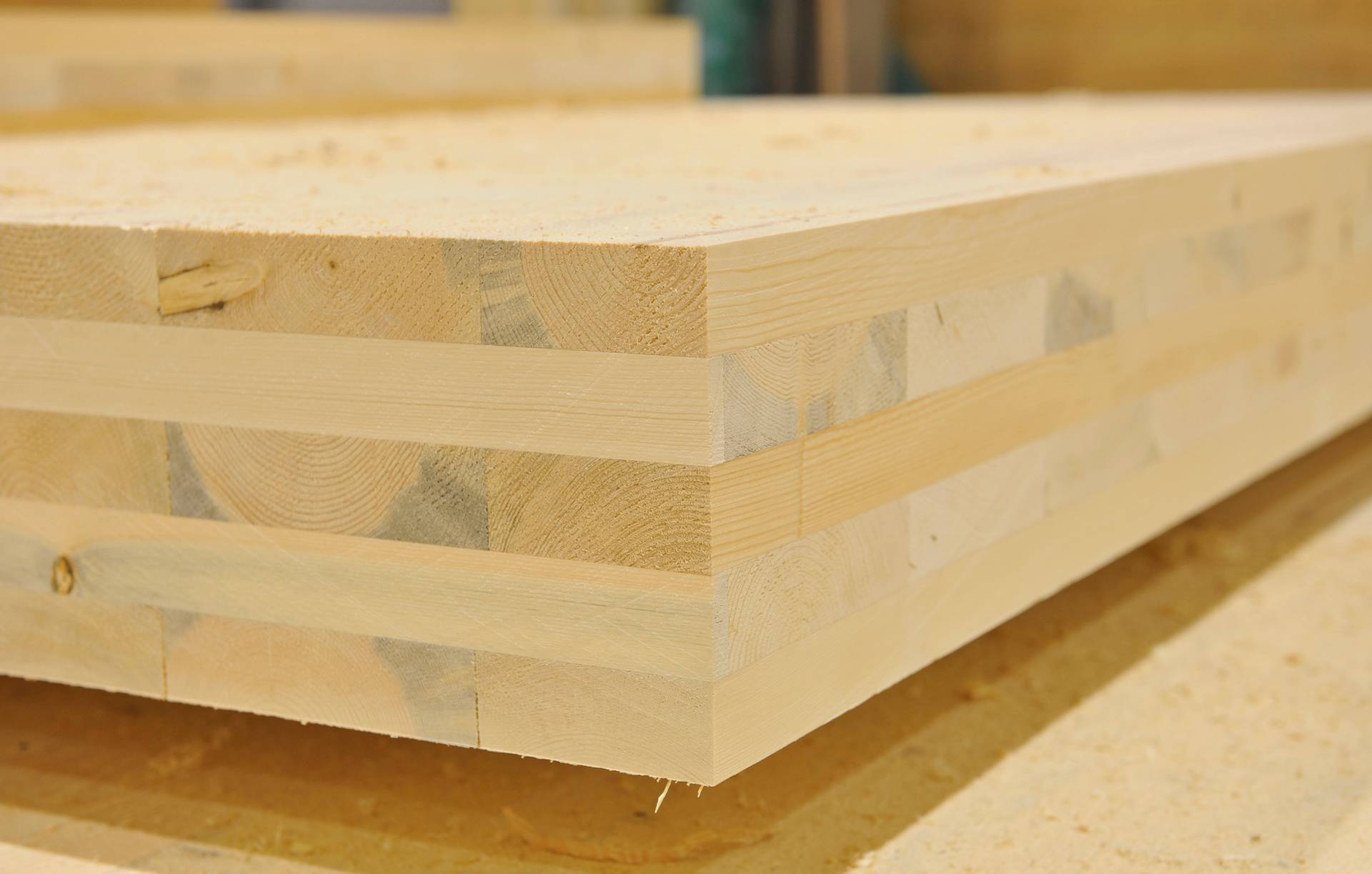
Another promising area of progress is the recent certification of several New England tree species for use in cross-laminated timber (CLT), which is one of the most significant mass timber products. This includes eastern hemlock and the Spruce-Pine-Fir species group. The certification of eastern hemlock was particularly exciting from a forestry perspective because it opens up a new market for the use of a relatively underutilized and low-value species (from an economic perspective). This gives foresters more options to retain hemlock where it makes sense for stand composition or wildlife habitat but remove it when that better serves long-term forest health and productivity goals. You can read more about the key partnerships and funding that led to eastern hemlock certification here.
There is also at least one CLT manufacturer, Sterling Structural, that is sourcing wood from our region and offering CLT panels made from trees grown and harvested in New England. And there continue to be active efforts to establish CLT manufacturing and fabrication here in New England.
Another trend that emerged in this period was a growing interest in regional mass timber supply chains and considerations around how the wood for mass timber projects is procured. A bellwether example was a project commissioned by Amazon in 2024 and coordinated by ZGF Architects, which brought together a team of regional consultants — including NEFF — to help the company develop criteria for sustainable wood sourcing as they prepared for a potential ramp up in their use of mass timber for new facilities. NEFF helped assess the supply chain in the Northeast and develop regionally specific sourcing guidelines tied to the ecological and climate goals of the underlying forest management. You can read a great overview of that project (including a link to the final report) on Sustainable Northwest’s website; they’re an organization that was a fellow consultant on the project.
While many of us had a vision for a regional mass timber ecosystem with local supply serving local demand in New England, other regions were developing the same vision for their forests and cities. Examples include the work of the Colorado Mass Timber Coalition and the Great Lakes Mass Timber Collaborative led by MassTimber@MSU. In 2025, NEFF joined these initiatives and others throughout the U.S. in the WoodWorks Innovation Hub (WIH). The effort is led by WoodWorks — a nonprofit that provides free technical support for commercial and multi-family wood building projects — and the WIH brings together organizations that are committed to expanding the growth and adoption of mass timber in U.S. construction by fostering open communication, strategic alignment, and the exchange of ideas. The need for such a hub speaks to the proliferation of interest across the U.S. and all the momentum in the direction of fostering sustainable mass timber solutions.
Yet, despite the notable progress on so many fronts, there is still a need and desire to speed up the development of mass timber. And this was highlighted by two recent reports that provided an updated look at the state of the industry across the U.S. and within the Northeast.
Last summer, an impressive 100+ page report called Mass Timber Tipping Point was published, which summarized insights from dozens of architectural and engineering firms across the country and identified 25 key challenges that are currently limiting the adoption of mass timber in the building industry. They grouped these into six themes: Experience, Cost, Confidence, Sourcing, Policy, and Carbon. While far more detailed and comprehensive than our high-level survey of the mass timber landscape in 2020, the report echoes many of the same themes we highlighted in our Forest-to-Cities barrier mapping.
More recently, the Northern Forest Center published A Current‑to‑Future Analysis for Mass Timber in the Northern Forest, which was a more in-depth look at the outlook for mass timber demand and supply in our region (specifically CLT and glulam products). They too flagged a number of challenges, but also highlighted the opportunity and laid out recommendations for moving the needle. One of which was “Market Development and Continuous Demand Generation,” which has been and continues to be an area where the NEFF Bioeconomy Initiative focuses a lot of our efforts and looks for opportunities to join forces with other partners in the region.
The work that began with the Forest-to-Cities Climate Challenge laid the foundation for what has now become a broad and deep network of colleagues and contacts within the architecture, engineering, and construction industry, and among nonprofit and forest conservation partners working on similar issues in other regions of the country. Cross-sector partnerships with folks in the building sector are particularly powerful because they are our allies in building wood supply chains that can help local economies and forests thrive. NEFF continues to be a voice for the vision behind Forest-to-Cities, and I’m looking forward to reporting on even more progress made in this arena over the years ahead. You can read more about the original initiative and its accomplishments here.
*Based on information from the International Code Council as of February 2026