The Science and Beauty of Flowering Trees
May. 18, 2026
The trees within our forests are in full bloom, and color is now dotting the…
Read More


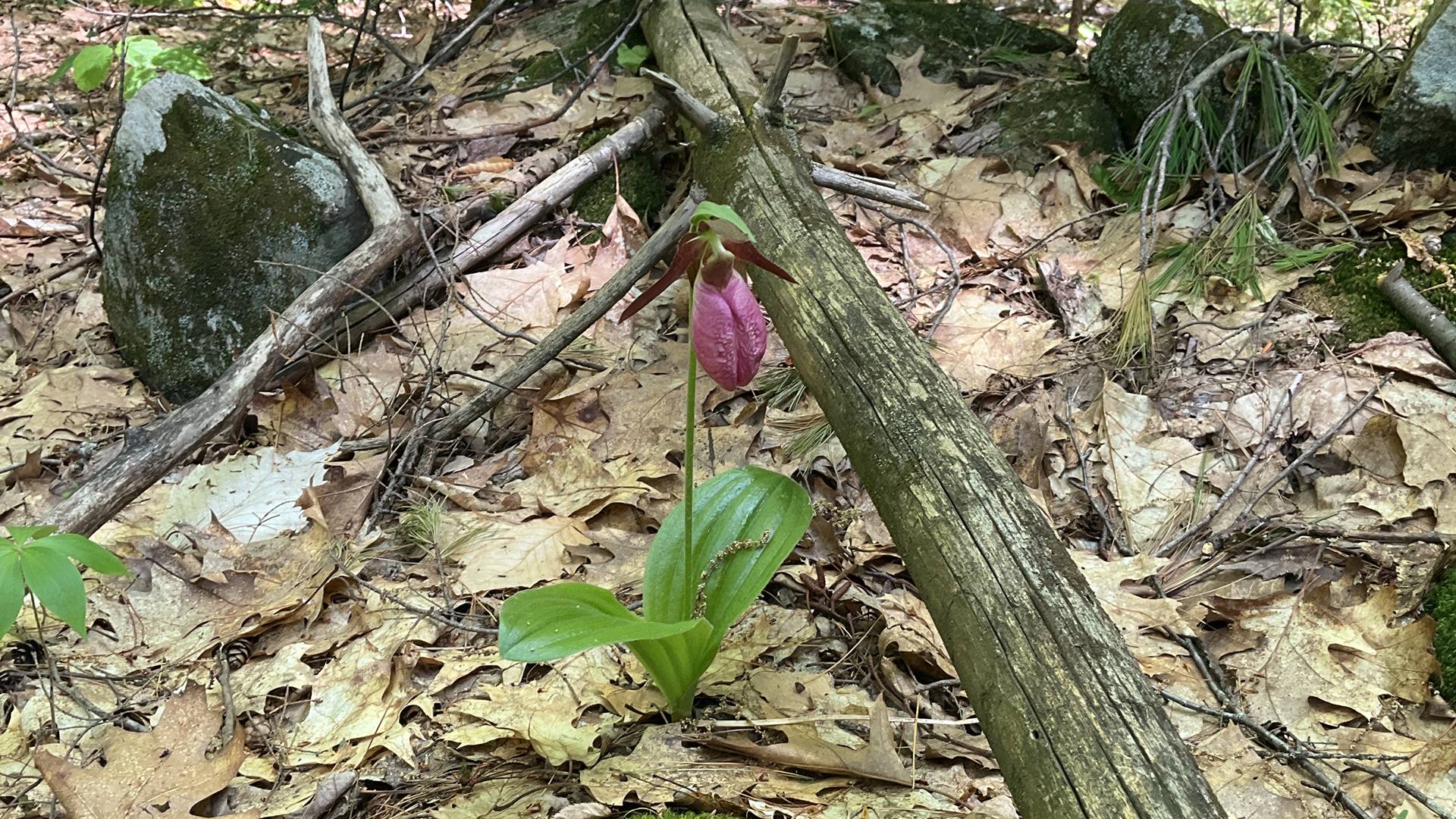
Each year, the beautiful palette of New England’s spring greenery sneaks up on me, as I spend late winter preparing for fieldwork and overseeing the stewardship of New England Forestry Foundation’s 165 conservation easements. Flower and leaf buds have been quietly growing plump, even while the stark grays, yellows, and browns of “stick season” can seem permanent. When April arrives, I’ll be ready to head out and experience spring in our forests — and having learned the hard way, will remember sunscreen when looking for spring ephemeral flowers like trout lily and trillium, which emerge before leaves shade the forest floor.
The sounds I anticipate most as signs along the path towards spring come from vernal pools — like the cacophonous choruses of spring peepers in April — and the songs of arriving migratory birds. I know leaf-out will come soon when I start to hear the laconic trill of pine warblers and the “teeyay” of blue-headed vireos.
And of course, nature’s schedule isn’t the only one changing in the spring — NEFF’s stewardship department goes back into the field. Since I started working for NEFF in 2017, I’ve made an annual easement visit each May to a New Hampshire woodlot that’s interspersed with a couple fields — one that includes huge ornamental spruces from a former Christmas tree farm, and another most often occupied by a large flock of turkeys.
Visits like this are part of NEFF’s long-term stewardship of conserved lands. Over time, they help ensure these forests remain protected and continue to grow and change as forests should. Supporters like you make this ongoing stewardship possible.
Today, the property is a well-stocked second-growth forest, grown back from former farmland, as is typical in much of New England. Some areas now have a very mature white pine and mixed hardwood canopy. One stand is dominated by towering hemlock — what the landowner calls their “cathedral.”
Each time I walk the property, I find something new. For two years running, there was a prairie warbler in the same spot near a scrubby field edge; this land is at the very edge of their typical breeding range, so this is a remarkable sighting. Another time, I flushed an American woodcock hidden among saplings. Some years, the vernal pools in the southern white pine grove hold water in May, while in other, drier years, stained dry leaves are the telltale sign.
The forest is changing in quieter ways, too. In 2020, the landowner harvested the white pine groves to promote establishment of a multi-aged stand.
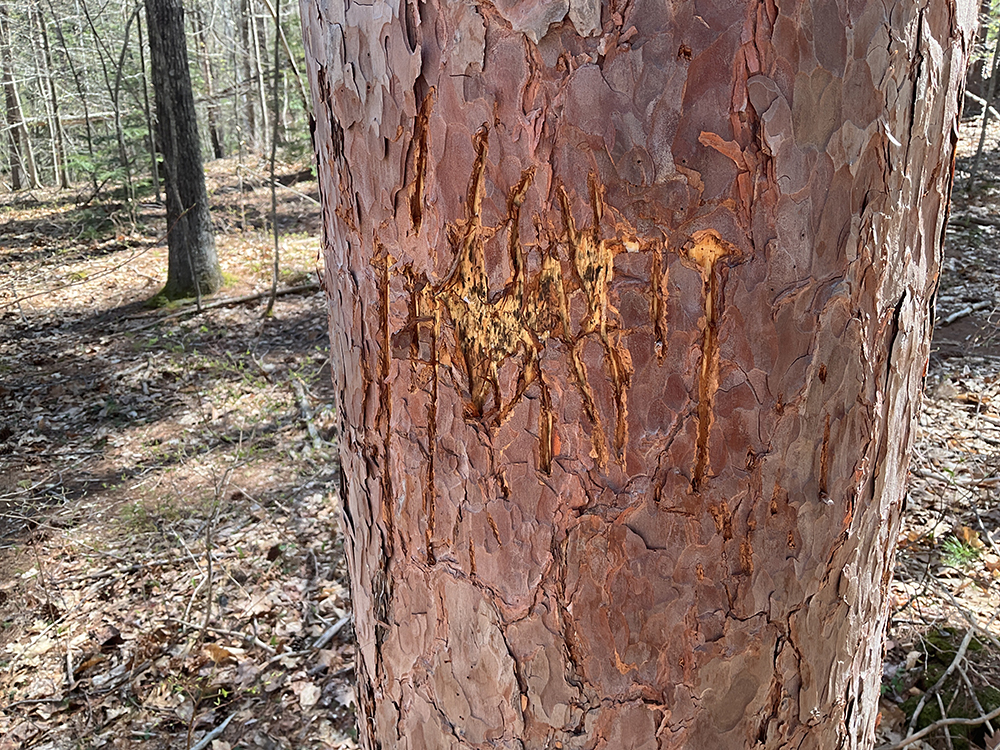
These claw marks on a red pine remind us conserved forests provide essential habitat for wide-ranging wildlife like black bears. Photo by Andrew Bentley.
This landowner has committed to two additional easements with NEFF since I joined the staff, ensuring permanent protection of the family’s remaining land. Each time, they hiked the land with us and shared deep knowledge of the forest and hints of the farm that preceded it, pointing out the imprints that their family forebears left on the land, like old cart roads and a farm pond turned shrub swamp. Last year, they introduced me to a potential successor owner of the western woodlots who would be a like-minded fit to continue the family’s legacy on the land.
NEFF’s land stewardship team has worked tirelessly to build relationships with easement landowners. Returning to this forest each spring reminds me how meaningful and enduring this work is.
As another field season approaches, I’m grateful to tend to the forests entrusted in our care. Your gift helps ensure NEFF can keep showing up for these forests, year after year, and sustaining their care for generations to come.