The Science and Beauty of Flowering Trees
May. 18, 2026
The trees within our forests are in full bloom, and color is now dotting the…
Read More


Towards the end of the calendar year, our work on the stewardship team focuses on whittling down the list of annual property monitoring visits that need to be completed by the New Year. Scheduling trips also requires keeping a keen eye on the weather forecast. While it’s typically ideal for monitoring purposes to see the land without snow cover, winter weather does offer some advantages. Frozen ground allows travel over wetlands that are otherwise inaccessible the rest of the year, for example. And experiencing the forest in all seasons is also a joy in itself. A layer of snow provides a fascinating glimpse into the busy lives of wildlife that we can’t always directly witness or don’t pay attention to.
“Never forget the trail, look ever for the track in the snow; it is the priceless, unimpeachable record of the creature’s life and thought, in the oldest writing known on the earth,” Ernest Thompson Seton, naturalist and author quoted by Mary Holland in Naturally Curious (rev 2019, page 420).
Beth Gula
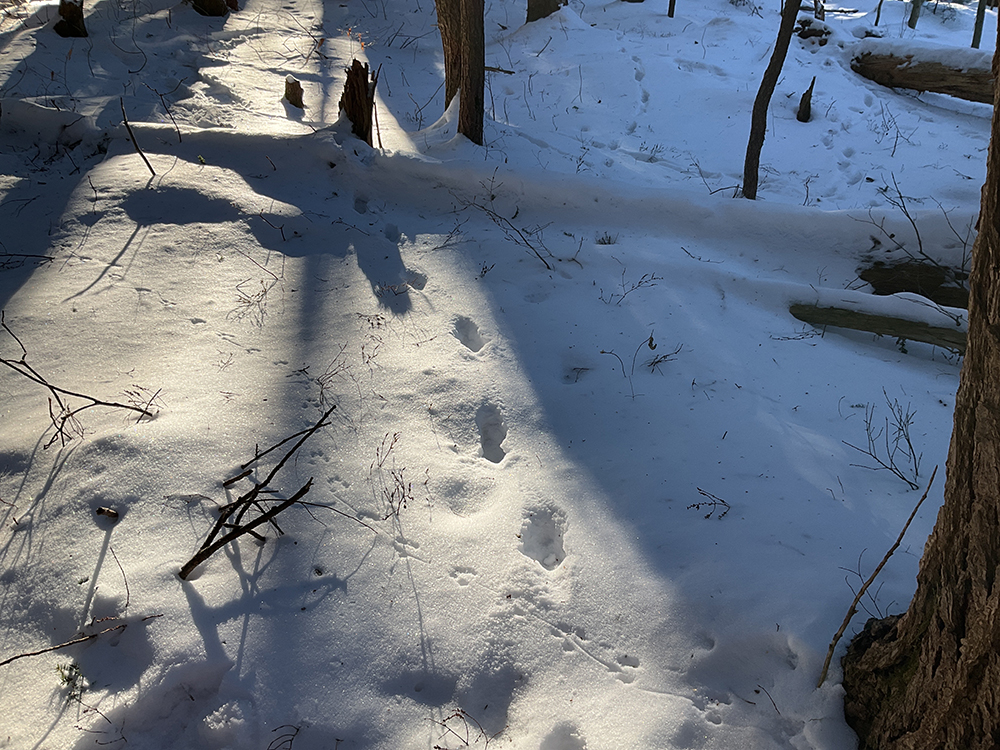
Winter arrived with a snowstorm right on the heels of Thanksgiving, so one day this past December, I set off on a loop through western Massachusetts to monitor several NEFF forests with my snowshoes, microspikes, and skis at the ready. With a blanket of white and under a bright morning sun, conditions were perfect to see tracks criss-crossing the forest floor.
Monitoring visits usually have specific goals, like walking boundary lines or checking on issue areas, and limited daylight doesn’t allow me to divert my route to just follow the tracks. If I could, I would put myself in the animal’s place, wondering why they climbed over that rock instead of going around, or why they lingered around that tree. Looking closely at track size, shape, gait pattern, straddle width, stride length, and more can clue you into who was there and what they were up to.
Beth Gula
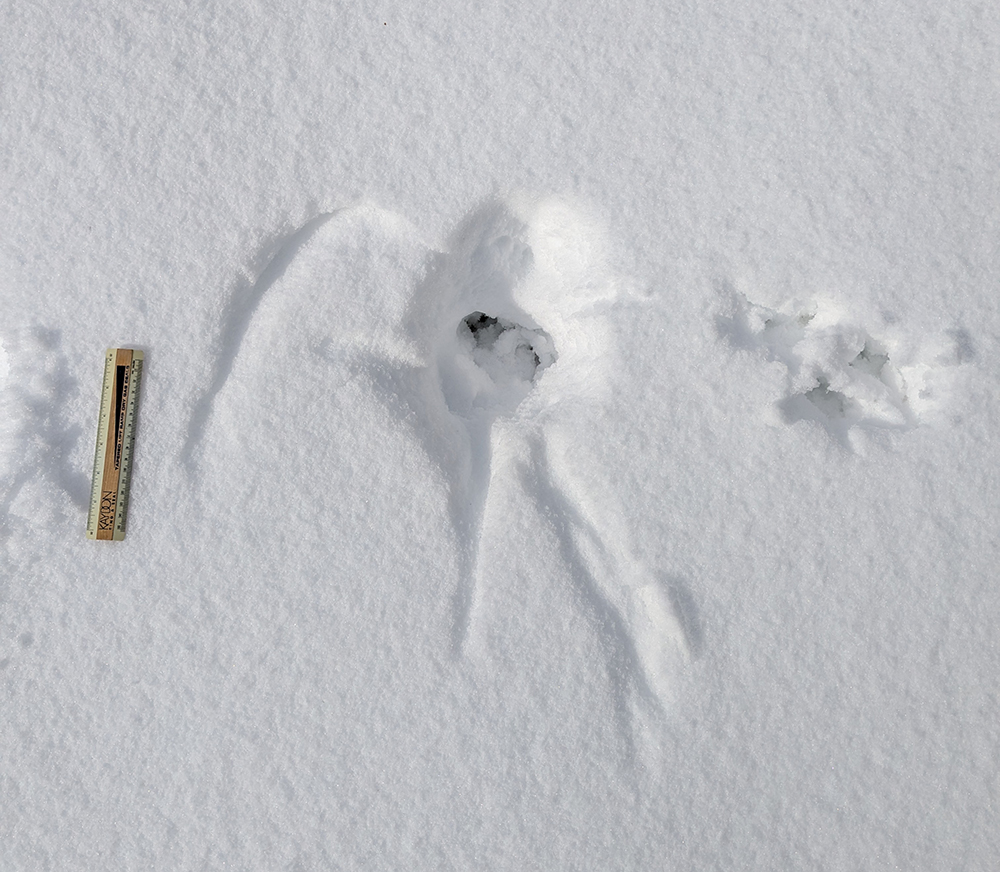
Tracks and prints are one form of animal sign to look for in winter. Others include scratch marks on bark. Scat and urine. Holes in the snow may be entrances or exits for small mammal tunnels or a ruffed grouse “snow roost.” A single hole may tell a dramatic story, like this apparent owl print in my yard last winter, which shows the beak piercing into the snow and wing prints on either side.
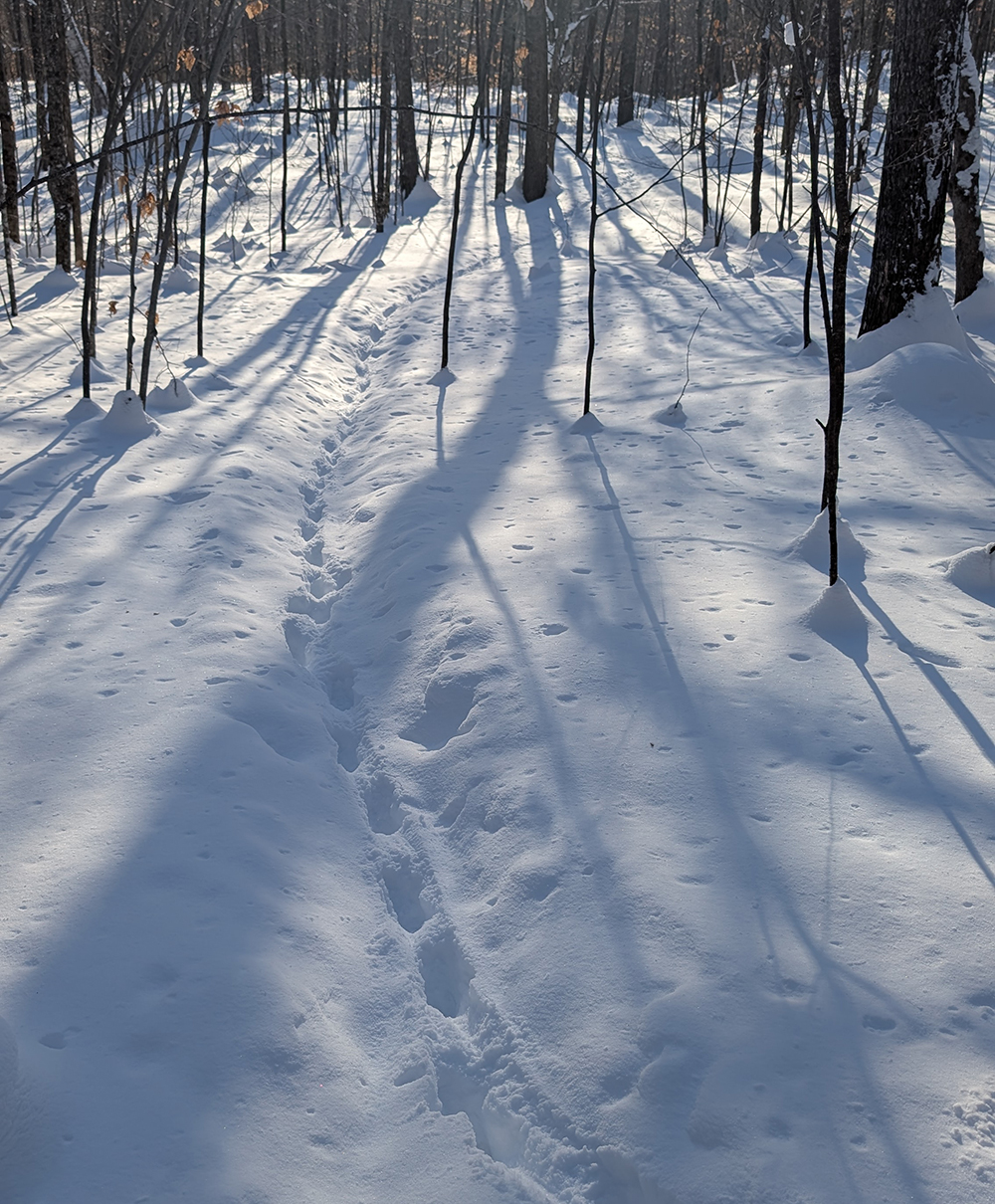
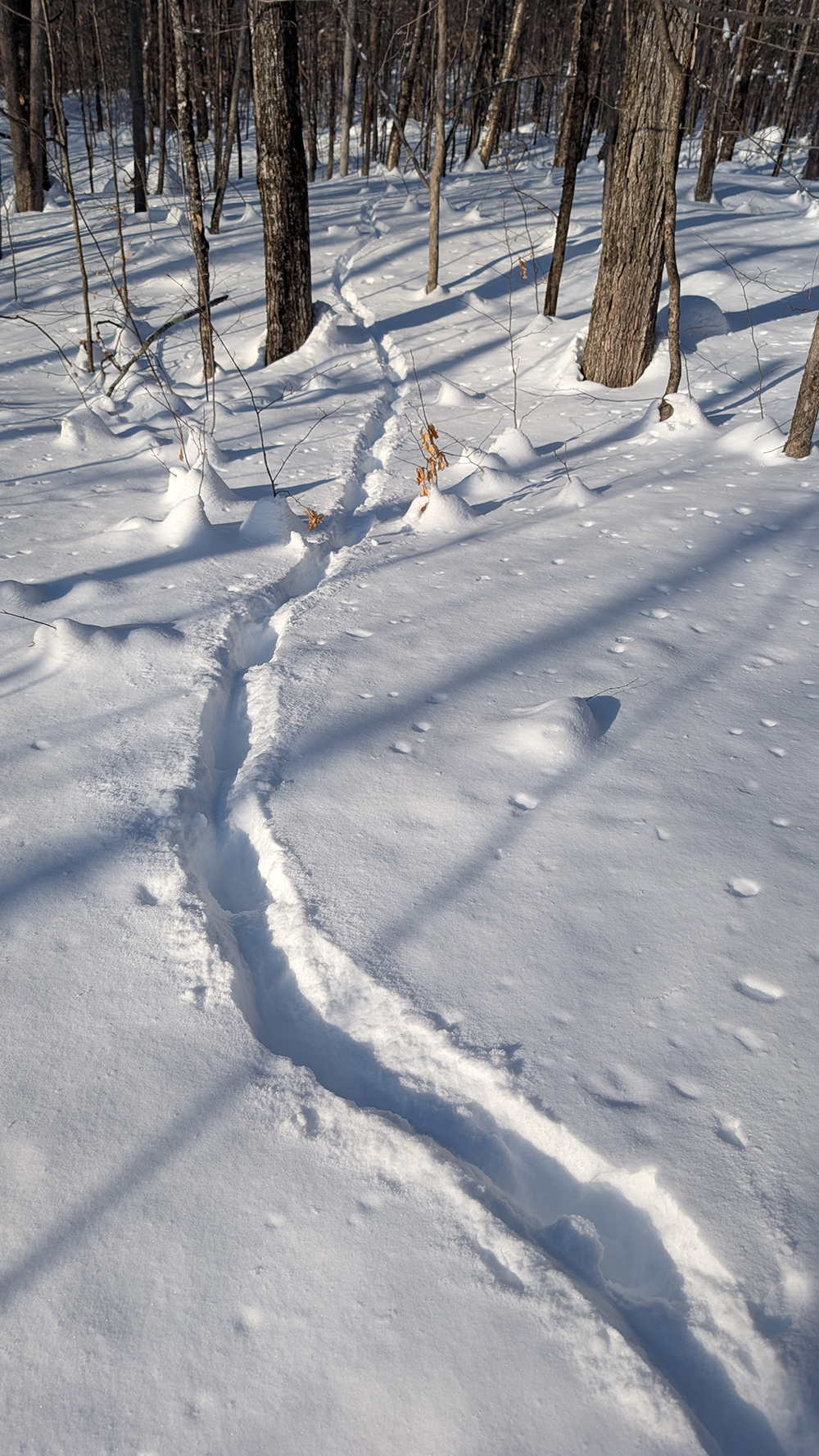
In January I signed up for a short, half-day tracking workshop to help hone my eye for these details, but with temperatures barely above zero that morning I decided to stay home. That meant I was working on the computer when I heard my family shout from the living room. I hurried over in time to see a coyote trotting across the field in the backyard and up into the woods. A while later, I bundled up to go look at the traces left in the snow. The coyote cut through some deep sections, but also trotted along the compacted snow of our ski trail through the woods, which makes for much easier walking.
Beth Gula
Beth Gula
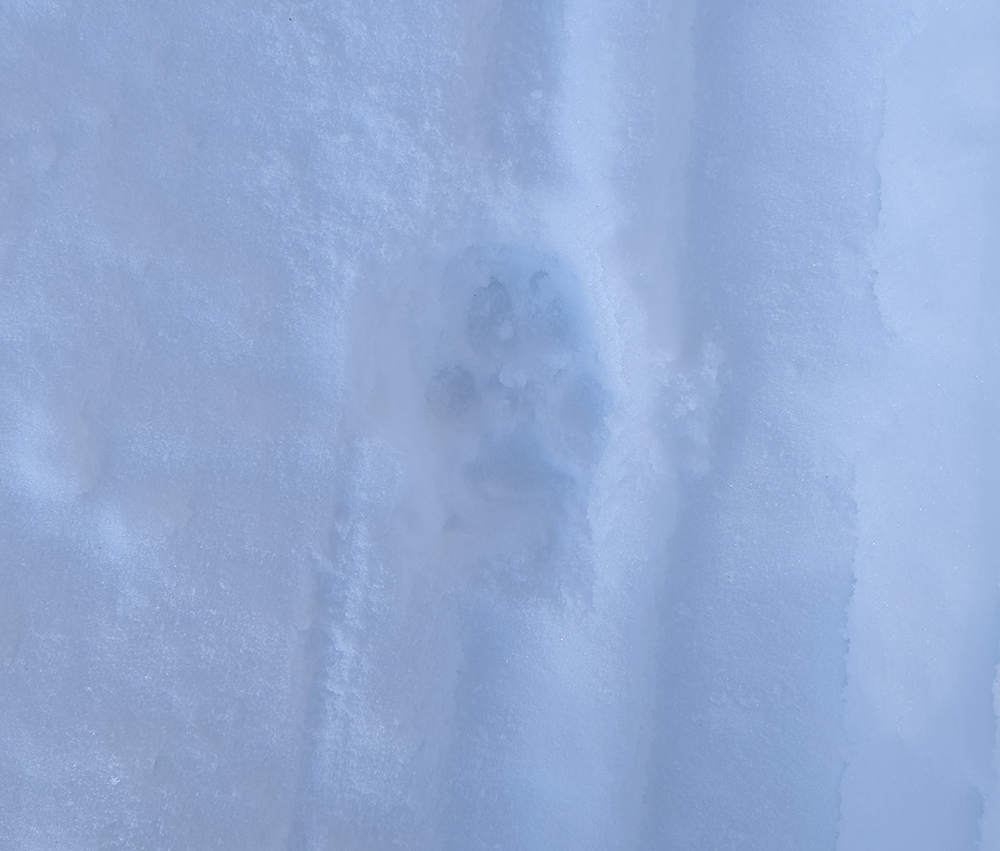
Beth Gula
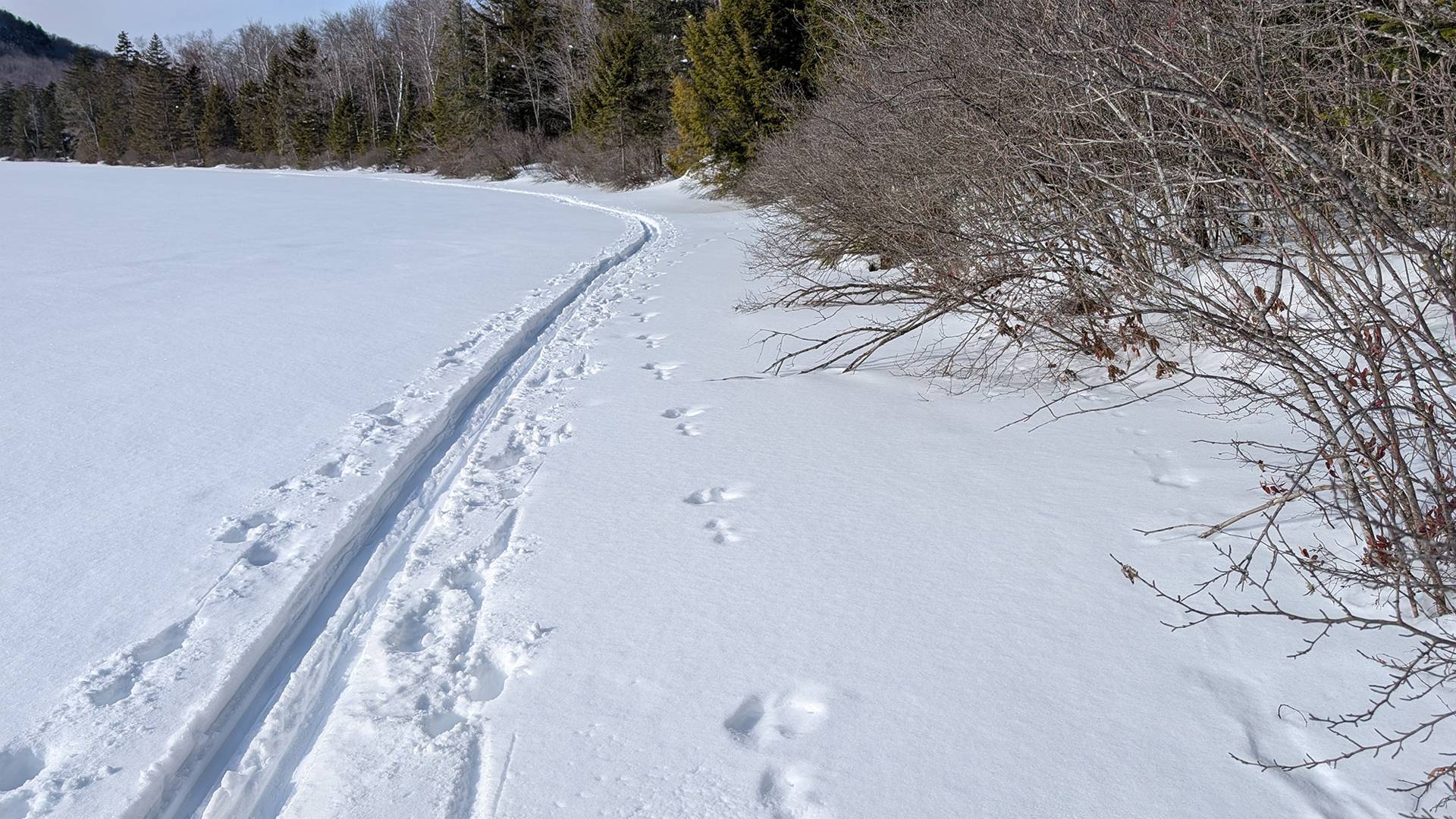
This past weekend, I spent a sunny Sunday at Kettle Pond in Vermont’s Groton State Forest. “When you are near water,… think mink,” says the Stokes Nature Guide to Animal Tracking and Behavior (1986, page 340). “Look for their tracks in winter in the snow, right beside the edge of the ice where a pond or stream has frozen over.”
At the shoreline, evidence of human skiers and snowshoe hare stands out, but a subtler track to the right under the shrub branches could be that telltale mink Stokes refers to. (See the photo at the top of this blog post and the following.)
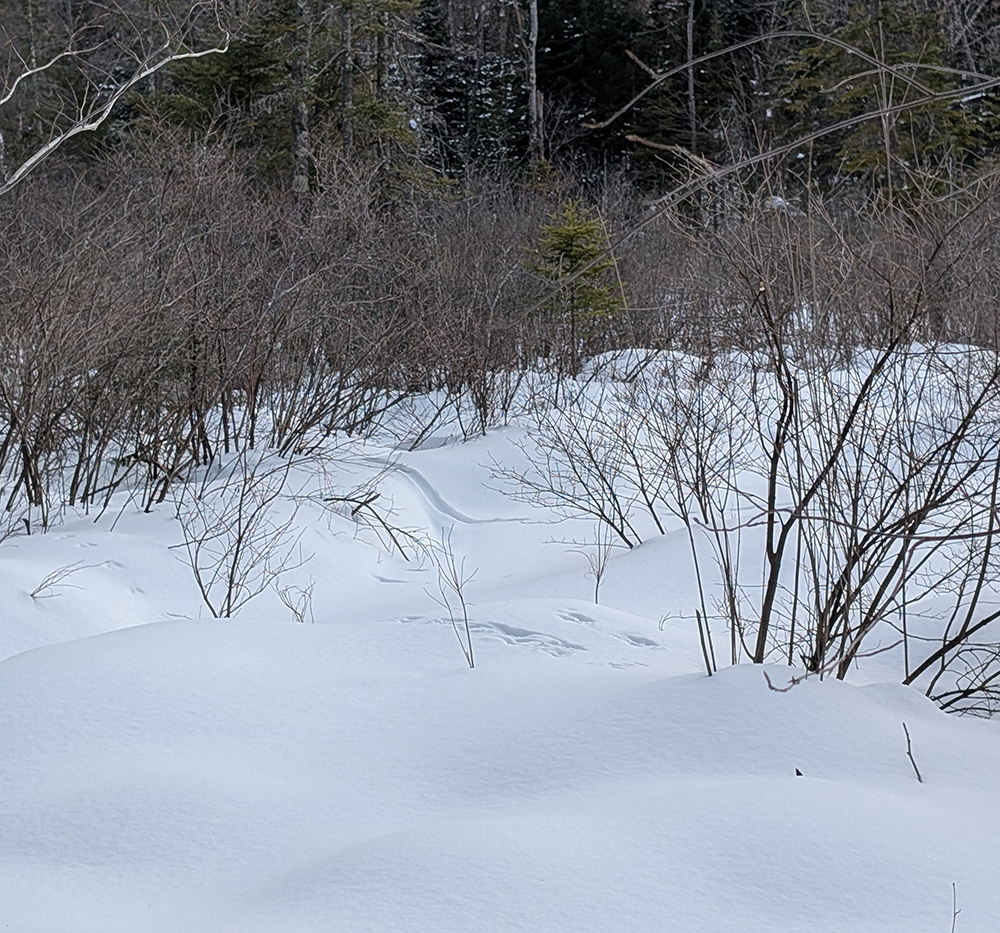
Beth Gula
On our hike past a wetland, a small slide catches the eye — maybe that mink? “Like otters, mink may often slide down snow-covered slopes on their bellies,” says Stokes (page 341). We think so, since it seems smaller than otter — like the slides NEFF forester Mike Redante encountered at the Peggy Welz-Roberts Memorial Forest in West Winsor, Massachusetts, earlier this season.
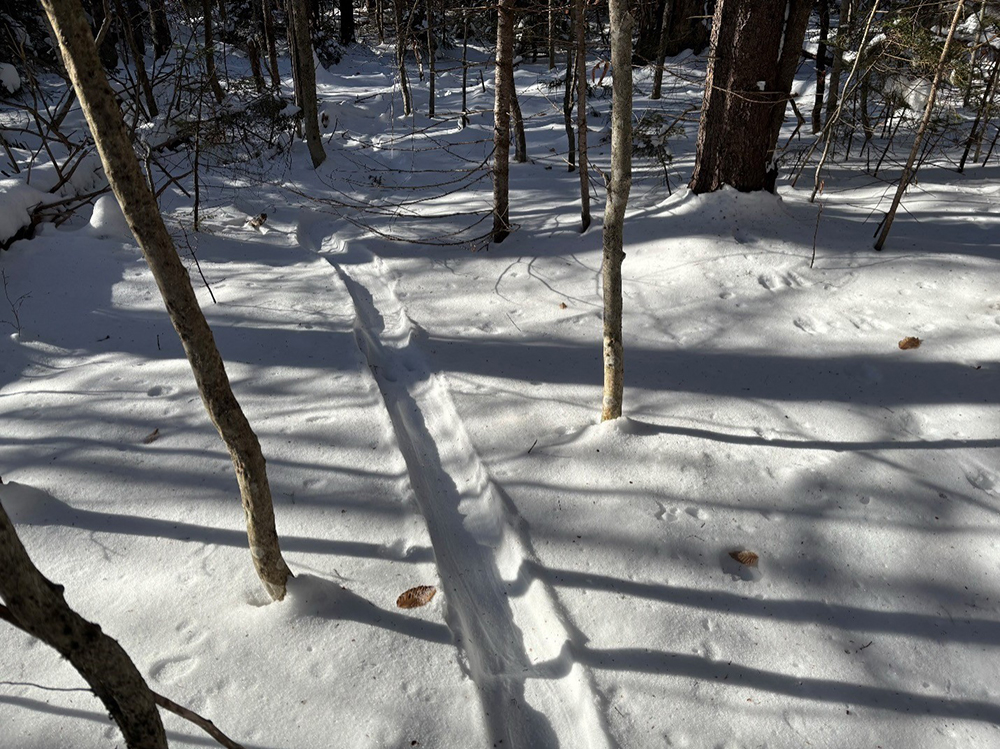
Mike Redante
While our stewardship field work schedule has definitely slowed down, it’s fun to keep paying attention to the ways that life in the forest doesn’t always go dormant through these cold months.